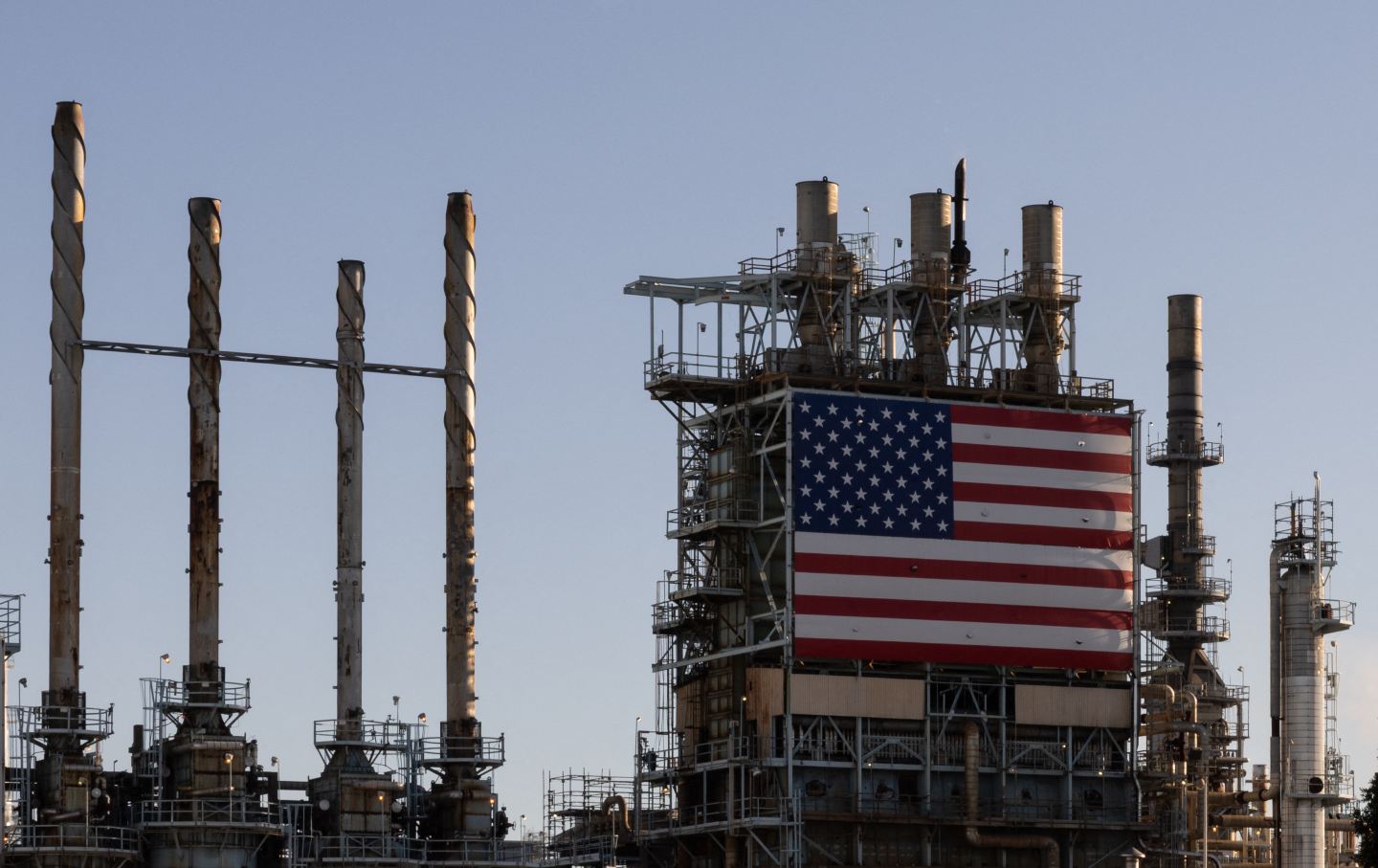
The United States may have ceded leadership to China during the Iran war era, following Donald Trump’s departure from Beijing after a summit with Xi Jinping. Long-running U.S. debates about China have emphasized economic strength and military might, but the focus here is energy as the lifeforce behind both. Since the Industrial Revolution, controlling energy supply has been central to geostrategic thinking, historically centered on oil. The global economy is shifting from burning oil, gas, and coal toward generating solar, wind, and other renewable energy. These changes have major implications for limiting temperature rise to survivable levels. The argument connects historical conflicts and modern oil profits to the social context of preserving a livable planet.
"“One of the cornerstones of geostrategic thinking since the start of the Industrial Revolution, 250 years ago, is that the country that controls energy supply controls the world,” he points out. “For most of the past century, that has centered on oil.”"
"But the era of oil is ending, Watts contends, as the global economy “shifts from molecules to electrons”-or from burning oil, gas, and coal to generating solar, wind, and other forms of renewable energy. The implications are profound, not least for the chances of limiting global temperature rise to a survivable level."
"Watts presents his argument across a broad intellectual canvas, ranging from Britain's opium wars against China in the 1850s to the gargantuan short-term riches that oil companies are gobbling as the Strait of Hormuz remains blocked to the plummeting costs of clean energy, all which illustrate that the fight to preserve a livable planet cannot be understood outside its social contexts."
Read at The Nation
Unable to calculate read time
Collection
[
|
...
]