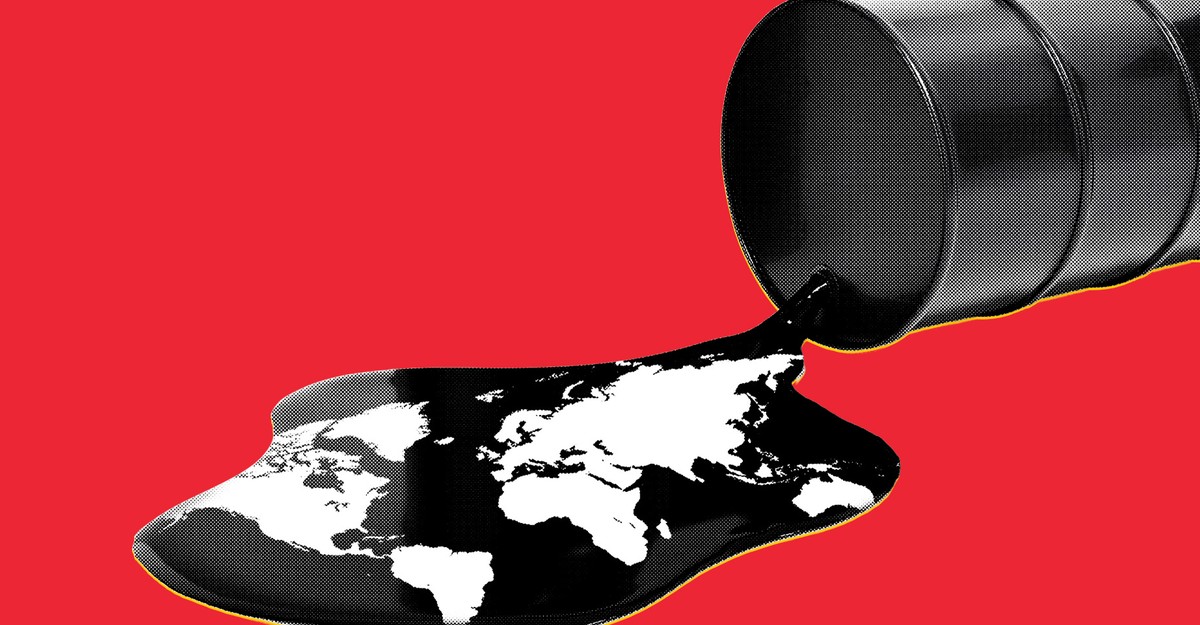
"The Iran war has already created the "largest supply disruption in the history of the global oil market," according to the International Energy Agency, and the situation could still get much worse. Iran has vowed to sink any ship trying to pass through the Strait of Hormuz, the waterway responsible for carrying a fifth of the world's oil supply."
"Before the United States attacked Iran, crude oil was trading at around $65 a barrel. Yesterday it hovered in the $90 to $100 range. According to several energy experts, if the strait remains closed for even a month-if the U.S. and Israel don't swiftly defeat Iran's navy and neutralize its sabotage ability-that might not be hyperbole."
"In that scenario, sustained higher oil prices could plunge the world into a recession, raise borrowing costs, alter the outcome of ongoing wars, and shift the balance of global-power competition in favor of Russia and China. "We would be entering a completely different world," Meghan O'Sullivan, the director of the Geopolitics of Energy Project at Harvard Kennedy School, said."
The Iran conflict has triggered the largest oil supply disruption in global market history, according to the International Energy Agency. Iran has threatened to sink ships through the Strait of Hormuz, which carries one-fifth of the world's oil supply. The U.S. Navy declined to escort vessels through the strait due to safety concerns. Crude oil prices have surged from $65 to $90-$100 per barrel, with Iranian officials predicting $200 per barrel prices. Energy experts warn that if the strait remains closed for even one month, sustained higher oil prices could trigger global recession, increase borrowing costs, destabilize ongoing conflicts, and shift geopolitical power toward Russia and China. Oil impacts virtually every U.S. economic sector, including agriculture, transportation, and manufacturing.
Read at The Atlantic
Unable to calculate read time
Collection
[
|
...
]