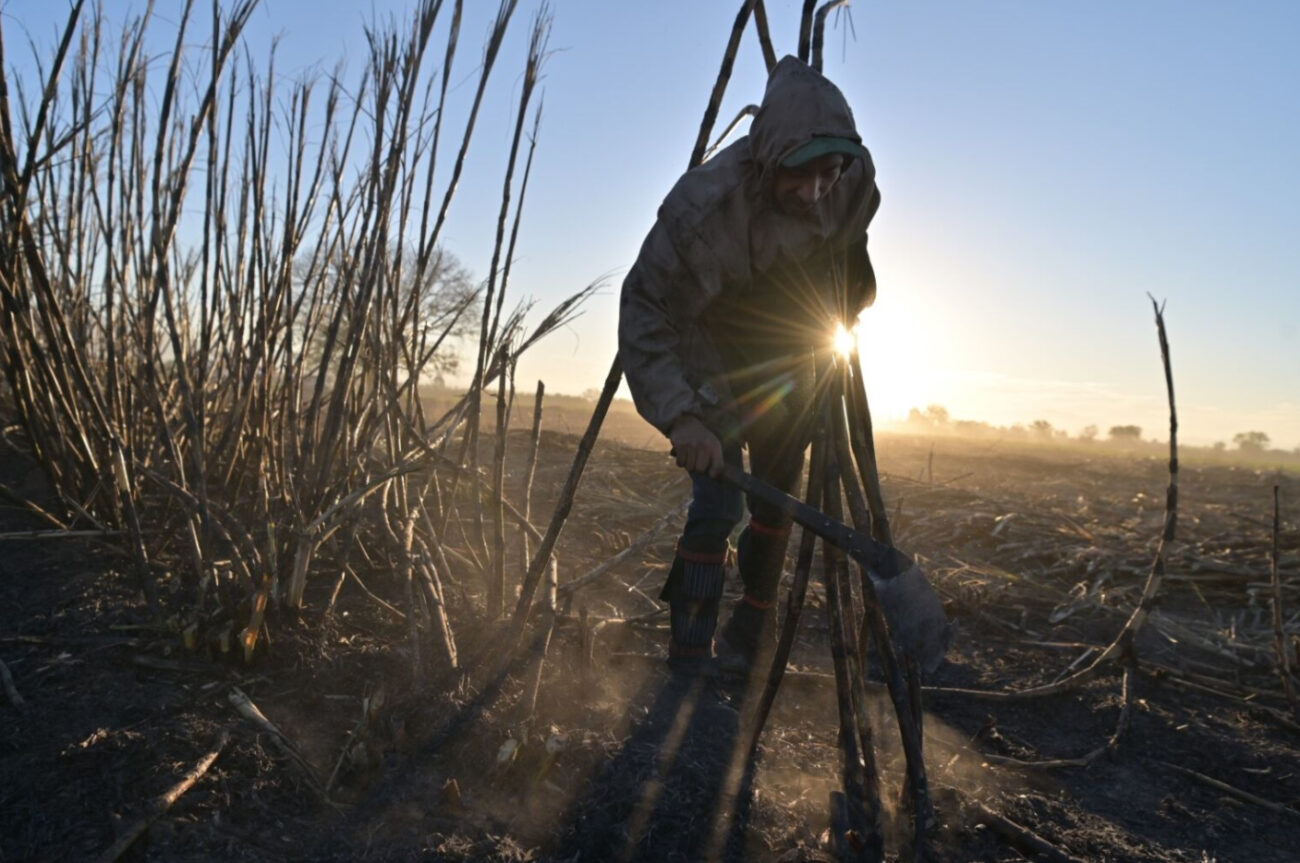
"In rural Mexico, climate change doesn't just bring more frequent and extended droughts or increasingly unpredictable rain. It also reveals the fractures beneath the surface: the corruption, the inequality and the everyday barriers that shape who benefits and who is left behind. When the government tries to address a big challenge like water scarcity, the underlying problems rise with it, making clear that climate adaptation isn't only about technology or policy. It's about the systems that determine who gets access in the first place."
"He is a 42-year-old sugarcane farmer and owner (third generation, inherited) of six hectares in the small town of Tala, Jalisco in Mexico. We talk in the shade of a tree on the edge of his field. He is wearing dusty jeans and boots, a sweat-stained hat and a long-sleeved hoodie, despite the intense heat."
Climate change in rural Mexico increases droughts and unpredictable rainfall while exposing corruption, inequality, and everyday barriers that shape resource access. Government irrigation subsidy programs aim to help small-scale farmers adopt technified systems like drip or sprinkler irrigation to use water more efficiently and increase yields. Many farmers face obstacles to accessing subsidies because of poverty, informality, limited schooling, and low digital literacy. A 42-year-old sugarcane farmer from Tala, Jalisco lacks computer skills and cannot navigate the subsidy process. Effective adaptation requires addressing governance, inclusion, and distributional systems that determine who receives technology and water access.
Read at State of the Planet
Unable to calculate read time
Collection
[
|
...
]