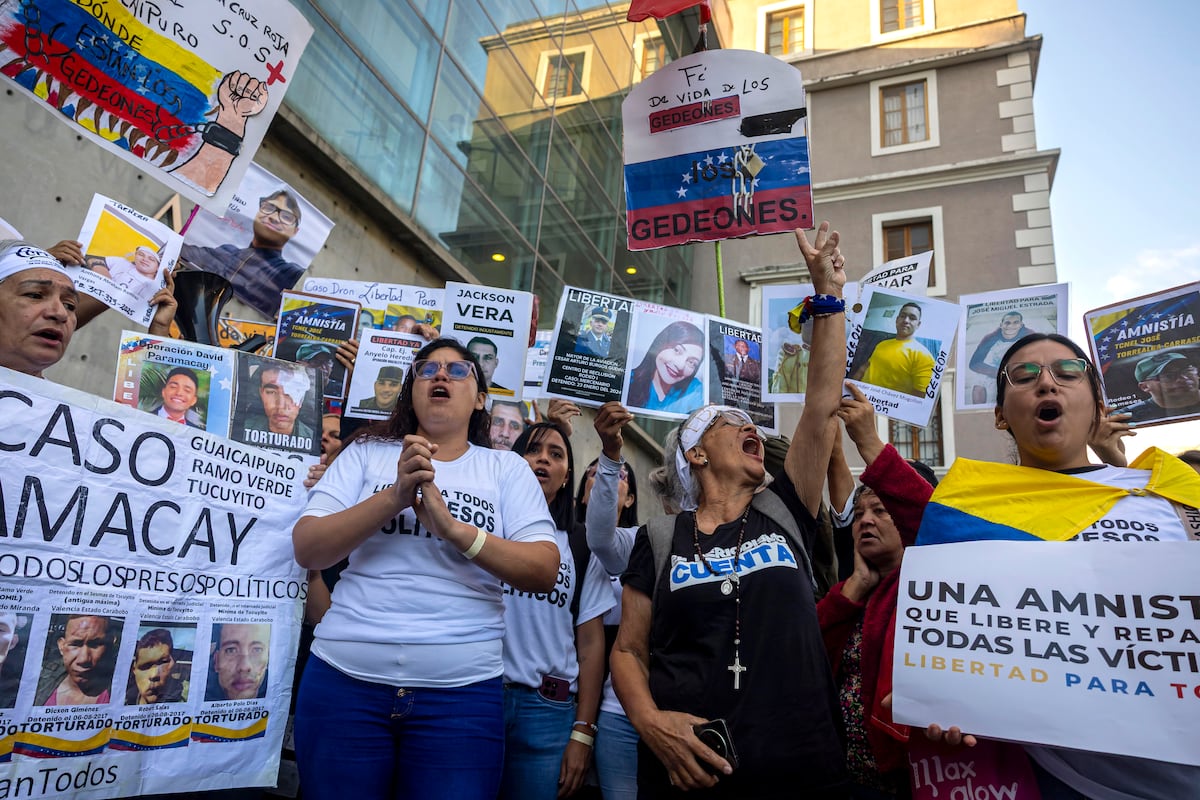
"The amnesty law for political prisoners in Venezuela is delayed. The Chavista regime had hoped for a swift debate of the bill, but the suspension of Tuesday's parliamentary session made it clear that it won't be so simple. The issue is even at risk of not being included on the agenda of the National Assembly meeting scheduled for Thursday. These delays stem from conflicting views within Delcy Rodriguez's government regarding the scope of ending years of political persecution in Venezuela."
"The promise to approve it last Tuesday, made by Jorge Rodriguez, the head of the National Assembly, to soothe desperate relatives of the detainees, has crashed against the complexity that legislation like this entails in a country that is supposed to be taking its first steps towards a political transition. Interior Minister Diosdado Cabello and the most radical Chavista figures argue that the law will have limitations because it grants pardons to people who have committed crimes,"
"The journalists' union, for example, is calling for a broad amnesty for people who were persecuted for exercising their freedom of speech, and says that there are still at least 59 reporters facing legal proceedings, four in prison, two under house arrest, at least 20 in exile due to persecution, and others with canceled passports. Last weekend, in a session lasting over four hours, various organizations outlined the serious limitations of the bill in its first version, which was unanimously approved."
Debate over an amnesty law for political prisoners in Venezuela has been delayed after a suspended parliamentary session and disagreements within the Chavista government. Conflicting positions pit Interior Minister Diosdado Cabello and radical Chavista figures—who demand limits because pardons could apply to crimes—against National Assembly leadership promising full releases. Parliamentary consultations have involved NGOs, unions and the journalists' union, which reports at least 59 reporters facing legal actions, including imprisonment, house arrest and exile. A first draft reviewed limits the period to protest-related months between 1999 and 2026 and faces criticism for excluding many cases.
Read at english.elpais.com
Unable to calculate read time
Collection
[
|
...
]