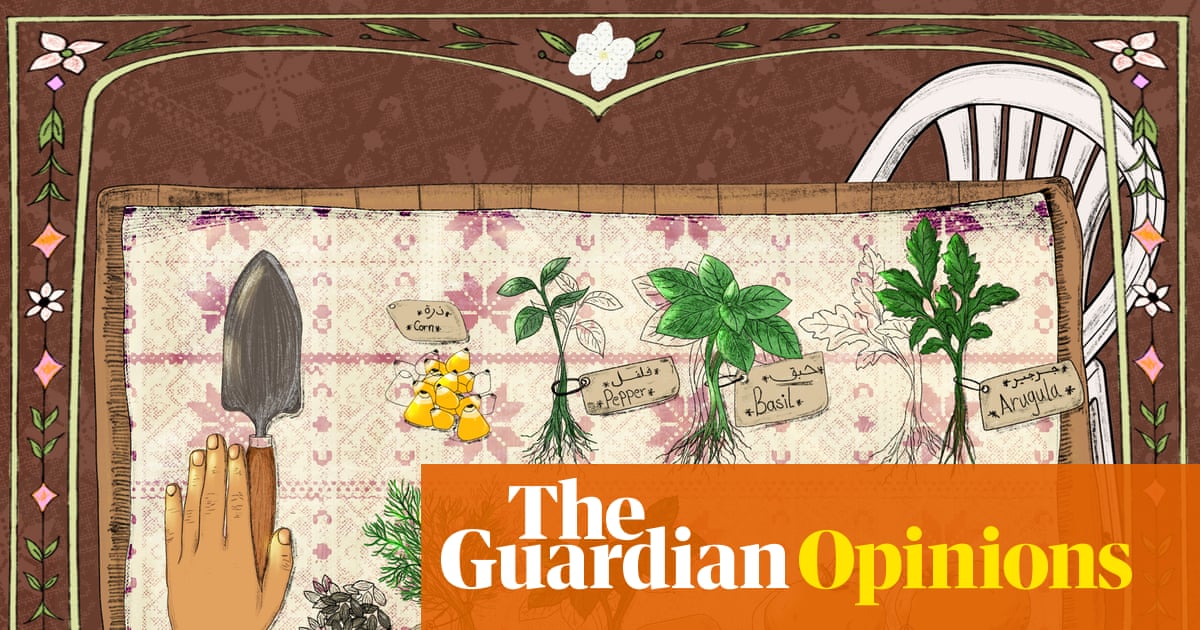
"My 12-year-old brother Mazen ran into the kitchen, shouting that the eggplants were sprouting. He held up the tiny green shoots, his hands shaking. My older brother Mohammed and I rushed outside, laughing despite the fear that had become our constant companion. Each sprout was a victory. Before Gaza's skies darkened with smoke and the ground shook with bombs, our garden was a lush tapestry of trees and plants, each leaf and branch woven into our family memory. Birds danced above the branches."
"When the genocide came, it ravaged buildings, tore through markets, disrupted supplies and inflated prices beyond reason. Food became a luxury, and the simple act of eating turned into a daily struggle. The weight of hunger was heavy, occupying every corner of our lives. It was a constant companion, reminding us of what we lacked and how powerless we often felt."
A 12-year-old named Mazen discovered tiny eggplant sprouts, and the family celebrated each new growth despite pervasive fear. The family garden had once been lush with olive trees, fruit trees and herbs, forming a deep part of daily life. During intense bombardment, the father and older brother bought seeds and seedlings from a local farmer and planted them carefully to extend the crop. War destroyed markets, disrupted supplies and drove up prices, making food scarce. Planting became both a practical response to hunger and a symbolic act of faith in a future.
Read at www.theguardian.com
Unable to calculate read time
Collection
[
|
...
]