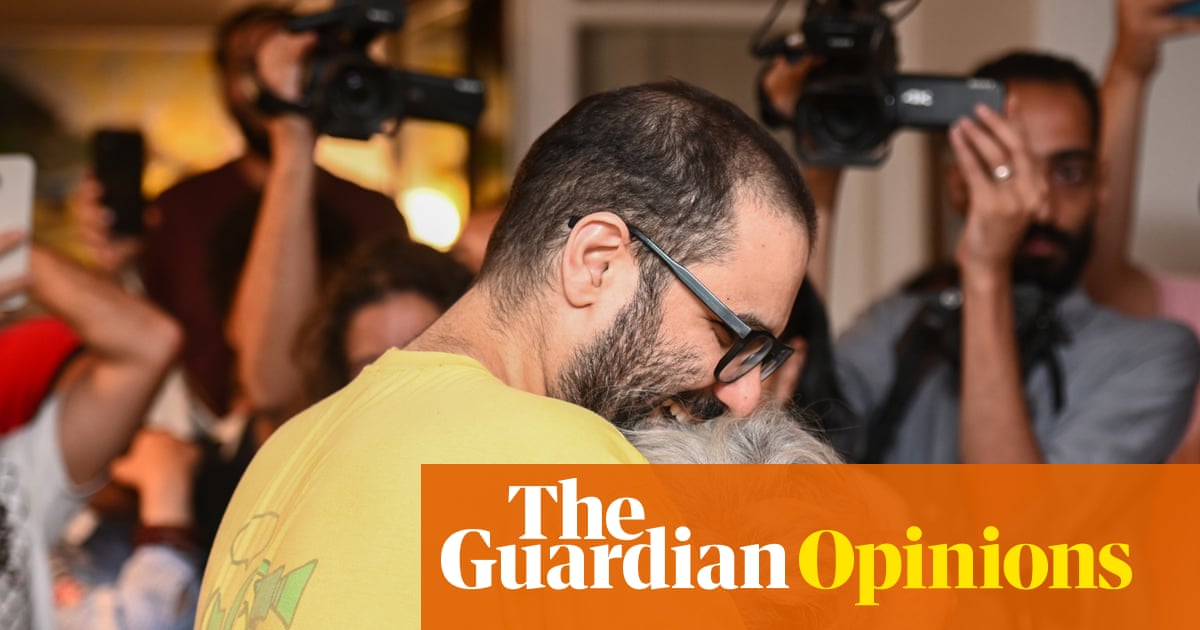
"Alaa Abd el-Fattah came to global attention because he was a leading figure in the 2011 pro-democracy revolution that turned Cairo's Tahrir Square into a surging sea of young people. The demonstrators chanted Down with corruption, Down with autocracy and Down with dictators. When the uprising succeeded in toppling Egypt's dictator Hosni Mubarak, the world rejoiced, including Europe and North America. Abd el-Fattah was all over the media, a voice for the part of the movement that was committed to building an accountable, participatory democracy"
"I have no interest in defending the awful tweets in question, which Abd el-Fattah posted in the early 2010s. Many are indefensible and he has apologised unequivocally for them. He has also written movingly about how his perspective has changed in the intervening years. Years that have included more than a decade in jail, most of it in Egypt's notorious Tora prison where he faced torture; missing his son's entire childhood and very nearly dying during a months-long hunger strike."
Calls for extreme punishments target a British‑Egyptian activist who posted offensive tweets in the early 2010s and has apologised and changed his perspective. The activist endured more than a decade in jail, much of it in Egypt's Tora prison, where he faced torture, missed his son's childhood and nearly died during a months‑long hunger strike. Campaigners seek to strip his British citizenship and deport him to Egypt, which could expose him to grave danger. The activist was a prominent figure in the 2011 pro‑democracy uprising in Tahrir Square and a voice for building accountable, participatory democracy.
Read at www.theguardian.com
Unable to calculate read time
Collection
[
|
...
]