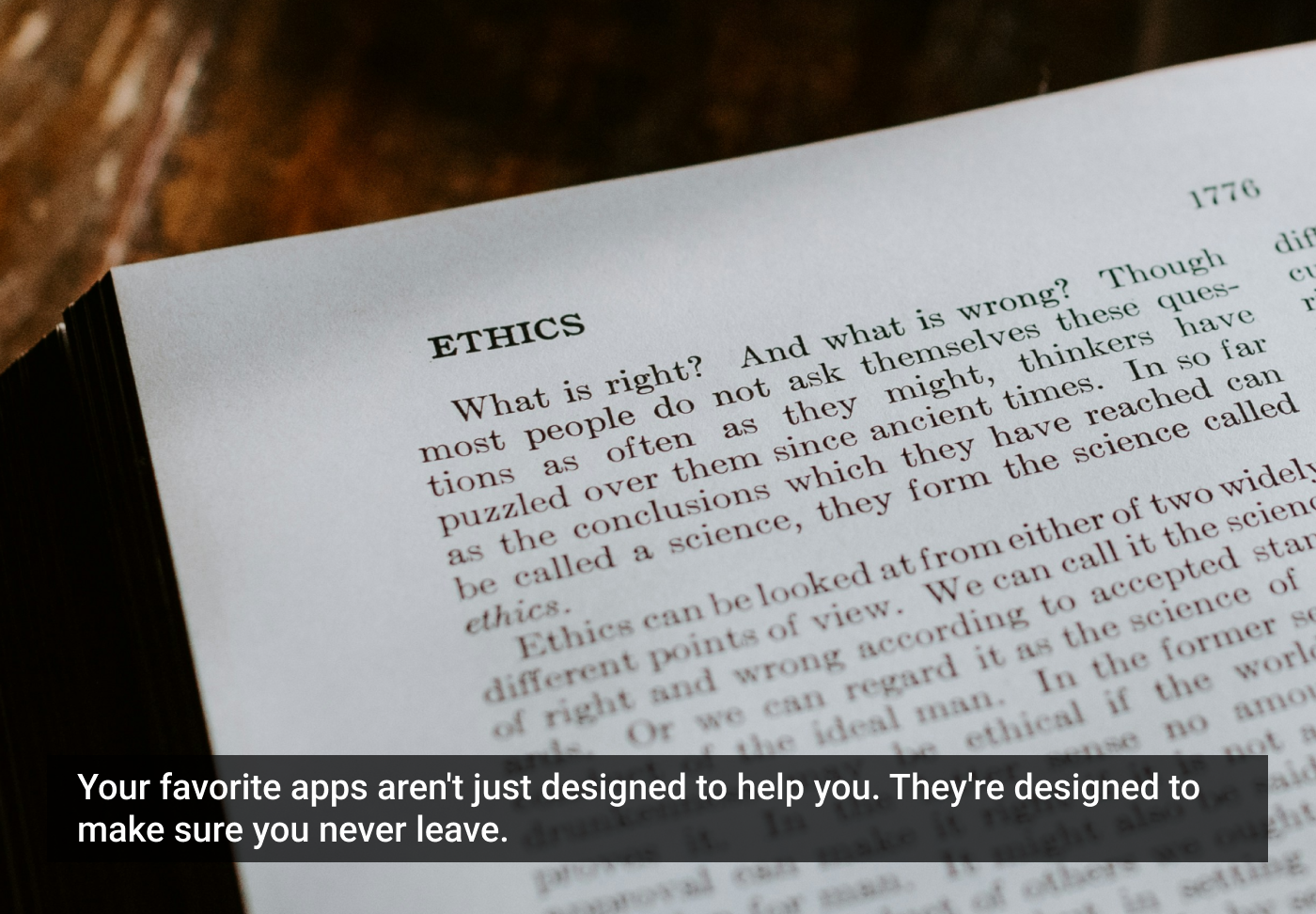
"The Hooked model, made popular by Nir Eyal, has become the blueprint for countless digital products. It's deceptively simple: Trigger → Action → Variable Reward → Investment. It works because it mirrors how our brains form dopamine-driven loops. But when design focuses on habit for the sake of retention, it bypasses intention - and crosses into manipulation."
"A 2022 Journal of Behavioral Addictions study found variable rewards increase compulsive checking by 37%, even when users report no enjoyment. UX Tip for Designers & Researchers: Always assess whether the behavior loop serves the user's goal - not just product stickiness. Evaluate this in usability testing and post-task interviews."
"Ease of use is a core UX value. But when over-optimized, frictionless interactions remove moments of user reflection. Instant access without friction enables manipulation by removing the cognitive pause that might otherwise prompt users to question their engagement."
Modern digital design increasingly prioritizes user retention and engagement over genuine utility, employing psychological manipulation tactics to create dependency. The Hooked model—Trigger, Action, Variable Reward, Investment—has become standard practice, leveraging dopamine-driven loops to bypass user intention. Companies like Instagram, Duolingo, and Snapchat use variable rewards, emotional nudging, and FOMO-driven streaks to compel repeated use. Research shows variable rewards increase compulsive checking by 37% despite users reporting no enjoyment. Frictionless design, while appearing user-friendly, removes reflection moments and enables manipulation. Designers face an ethical choice between creating empowering experiences and building addictive systems that prioritize product stickiness over user wellbeing.
Read at UX Magazine
Unable to calculate read time
Collection
[
|
...
]