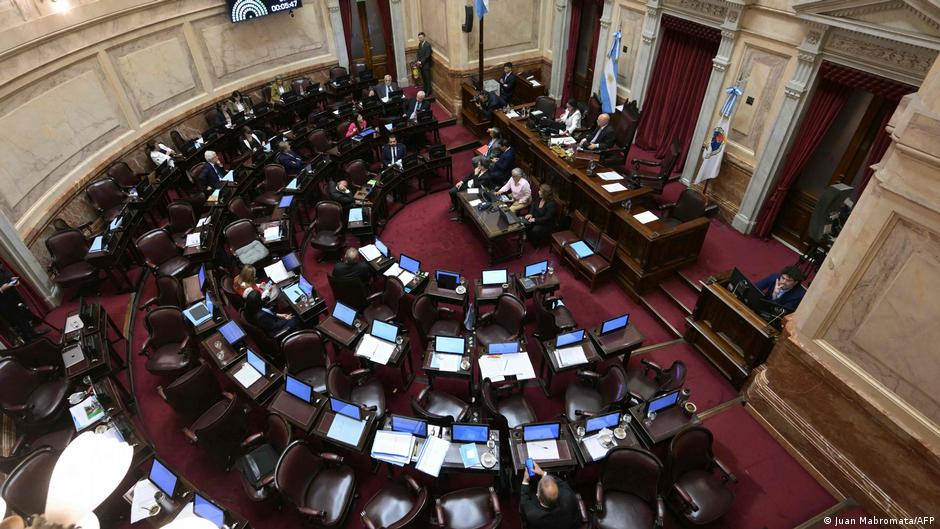
"The reform is part of Milei's free market agenda and aims to boost hiring by loosening employers' liabilities and limiting workers' rights. The law will: Limit the right to strike, Reduce unions' bargaining power, Make it easier for companies to fire workers, Extend probation periods, Curb workers' ability to sue employers upon dismissal, Cut severance pay, which is traditionally high in Argentina, Empower employers to mandate 12-hour workdays (instead of the current eight), Reduce salaries for employees on sick leave."
"About 40% of Argentina's workers do not have formal employment contracts. Unions warn the new bill would only exacerbate the situation. However, the government argues it will reduce under-the-table employment and create new jobs by lowering taxes on employers."
"Recent polls showed Argentina was split on the reform, with 48.6% in favor and 45.2% against it. Sergio Emiliozzi, a 60-year-old teacher, said that while the law was being promoted as a job creation tool, 'it's quite the opposite.'"
Argentina's Senate passed President Javier Milei's labor reform bill with 42 of 72 votes, advancing his free market agenda. The law limits strike rights, reduces union bargaining power, makes worker dismissal easier, extends probation periods, cuts severance pay, and allows 12-hour workdays. The government argues these changes will reduce informal employment and create jobs by lowering employer taxes. However, unions warn the reform will worsen informal employment conditions. Approximately 40% of Argentine workers lack formal contracts. Public opinion remained divided at 48.6% in favor and 45.2% against. Thousands protested the legislation, viewing it as a rollback of worker rights.
Read at www.dw.com
Unable to calculate read time
Collection
[
|
...
]