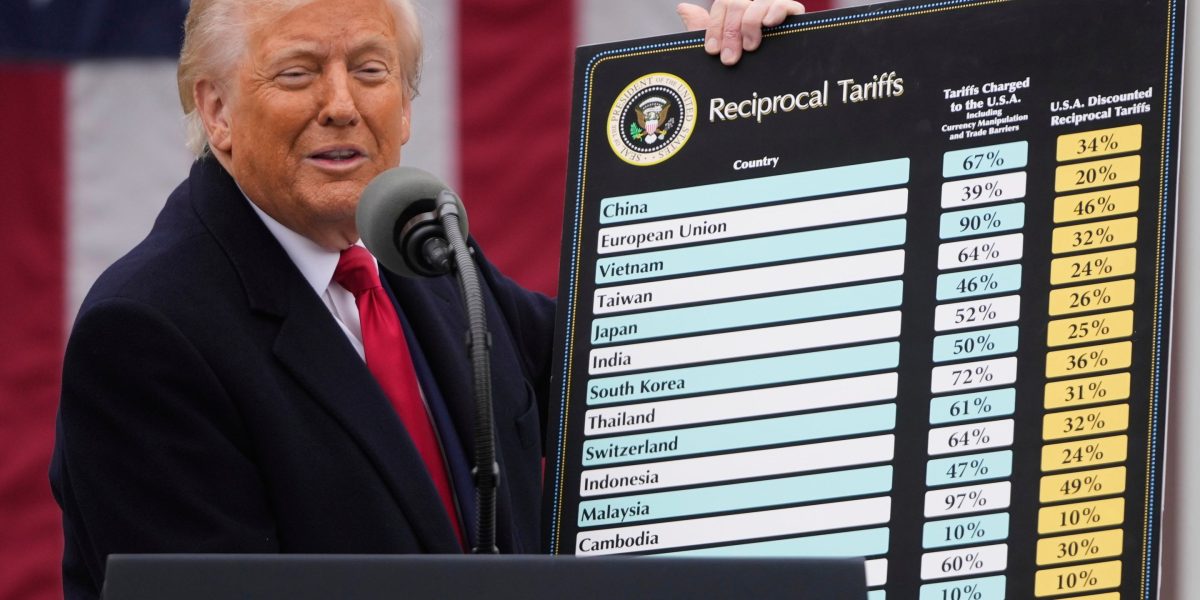
"Tariffs are a tax on you, the consumer. That's the undisputed fact about how tariffs function, with the levies falling on companies, which then typically pass a great percentage on to the final shopper. Voter anger about affordability built throughout 2025, culminating in offyear elections that swept Democrats such as New York City's new Mayor Zohran Mamdani into office, prompting an angry President Trump to complain that affordability is a "hoax" when Democrats talk about it, as he's vanquished inflation since coming into office."
"The widely-held "cost-push" theory posits that tariffs drive up domestic production costs by making imported input more expensive. That entails a drop in economic activity and higher inflation in the short run. A new analysis from the San Francisco Federal Reserve Bank, an economic letter titled " What Can History Tell Us About Tariff Shocks? " contradicts the longstanding economic consensus that tariffs raise inflation. In fact, it claims the opposite will result: higher tariffs will lead to lower inflation (and higher unemployment)."
"Prevailing wisdom has offered a pessimistic outlook on the state of the economy following President Donald Trump's 15% increase in the average U.S. tariff rate last year, up from a rate of less than 3% at the end of 2024, a rate not matched since 1935, according to Yale Budget Lab. If accurate, the San Francisco Fed's report offers a glimmer of hope that a tariff shock may not in fact increase inflation as much as some economists fear."
Tariffs act as a consumer tax because firms typically pass levies onto final shoppers. Voter anger over affordability rose through 2025 and influenced off‑year elections and political responses. A large 2025 tariff increase lifted the average U.S. tariff from under 3% to about 15%. Cost‑push theory predicts higher production costs, reduced activity, and higher inflation. A San Francisco Fed analysis finds tariff shocks can instead generate uncertainty that suppresses demand, exerting downward pressure on inflation while putting upward pressure on unemployment. The historical evidence suggests tariff shocks can have deflationary demand effects despite cost‑side pressures, creating tradeoffs for policy.
Read at Fortune
Unable to calculate read time
Collection
[
|
...
]