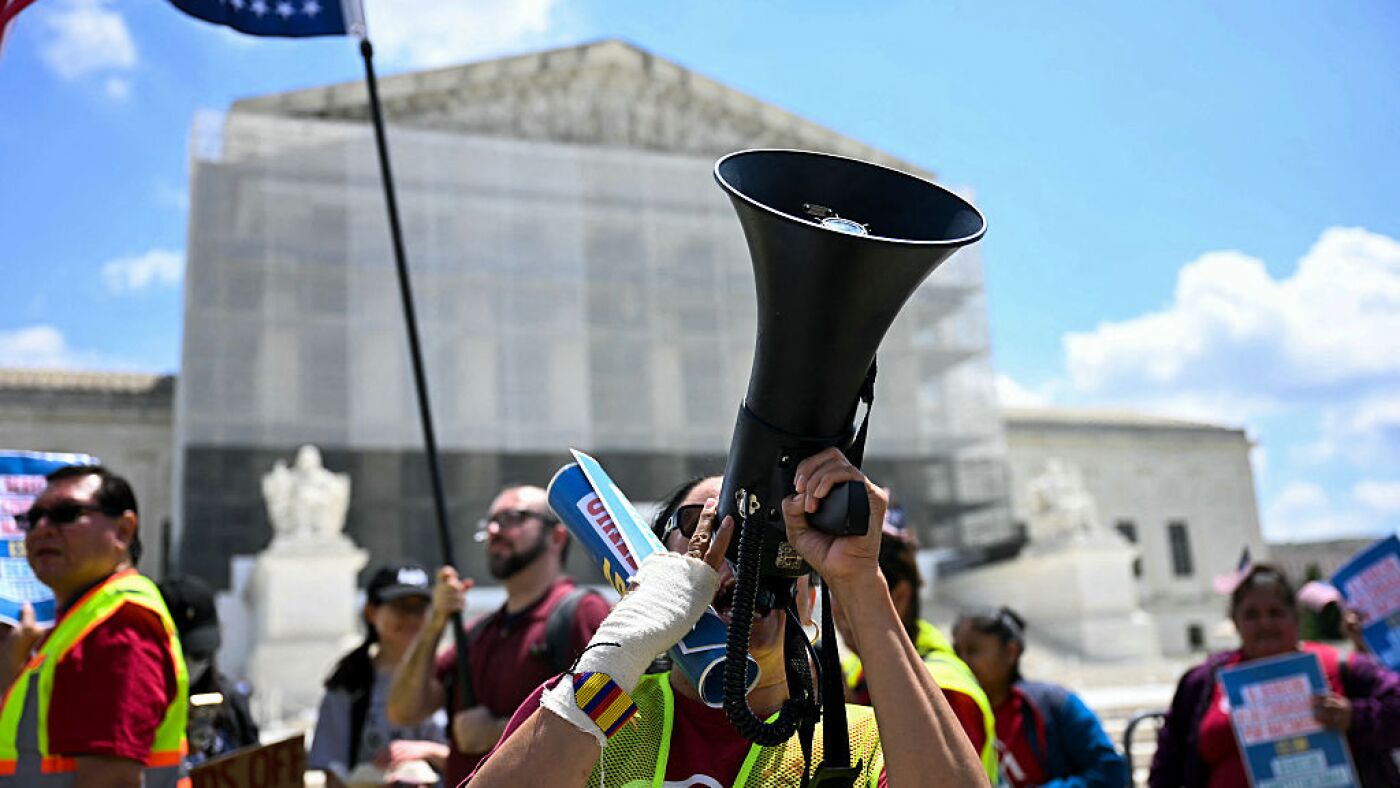
"Public opinion on birthright citizenship is complicated, with Americans favoring citizenship for children of U.S.-born or legally immigrated parents, but being split on those born to undocumented immigrants."
"Only about three dozen countries offer automatic birthright citizenship, primarily in the Western Hemisphere, while many others have shifted to citizenship through familial lineage."
"Birthright citizenship in the U.S. was established in 1868 through the 14th Amendment, aimed at protecting the rights of recently freed slaves."
"Countries like Ireland, the United Kingdom, Australia, and New Zealand have abolished birthright citizenship in recent decades, opting for citizenship based on bloodline instead."
The Supreme Court will hear arguments regarding the automatic citizenship of children born in the U.S., a practice that may change due to challenges from the Trump administration. Public opinion is divided, with strong support for citizenship for children of U.S.-born or legally immigrated parents, but less support for those born to undocumented immigrants. Birthright citizenship, known as jus soli, is rare globally, with many countries opting for jus sanguinis instead. The U.S. adopted this practice in 1868 through the 14th Amendment to protect freed slaves.
Read at www.npr.org
Unable to calculate read time
Collection
[
|
...
]