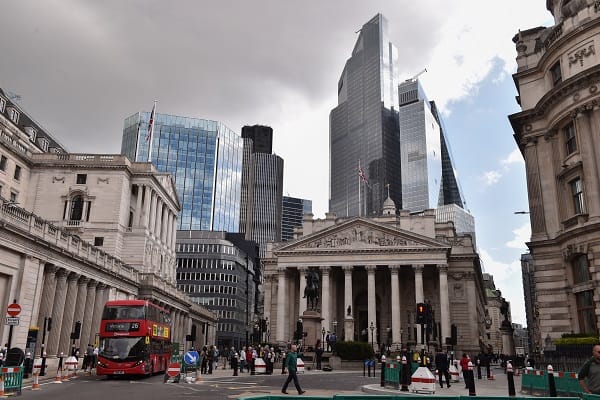
"The think tank highlighted that the Bank of England may face a new inflationary "shock" from rising energy costs, which could complicate Chancellor Rachel Reeves's economic plans. Energy markets have become volatile since tensions escalated between the United States, Israel, and Iran. Iran has threatened to block the Strait of Hormuz, a vital global shipping route, while Qatar Energy has suspended liquefied natural gas production following reported attacks on its facilities."
"In the second scenario, where elevated energy prices persist for a full year, CPI inflation could be 0.7 percentage points higher in 2026 and 0.5 percentage points higher in 2027. Additionally, 0.2 percentage points would reduce UK GDP in 2026 and 0.3 percentage points in 2027. Under this prolonged shock, NIESR indicated that UK interest rates could potentially rise by approximately 0.8 percentage points above previous forecasts."
Middle East tensions have created energy market volatility, with Brent crude rising 15% and European gas prices surging 75% since fighting escalated. The NIESR analyzed two scenarios for sustained energy price impacts. A temporary three-month spike would increase 2026 CPI inflation by 0.3 percentage points, likely prompting the Bank of England to maintain current rate plans. However, if elevated prices persist for a full year, 2026 CPI inflation could rise 0.7 percentage points and 2027 by 0.5 percentage points, while GDP would decline 0.2-0.3 percentage points across both years. This prolonged scenario could force interest rates approximately 0.8 percentage points higher than previously forecast, potentially reversing anticipated rate cuts.
#uk-interest-rates #energy-price-inflation #middle-east-conflict #monetary-policy #economic-forecasting
Read at London Business News | Londonlovesbusiness.com
Unable to calculate read time
Collection
[
|
...
]