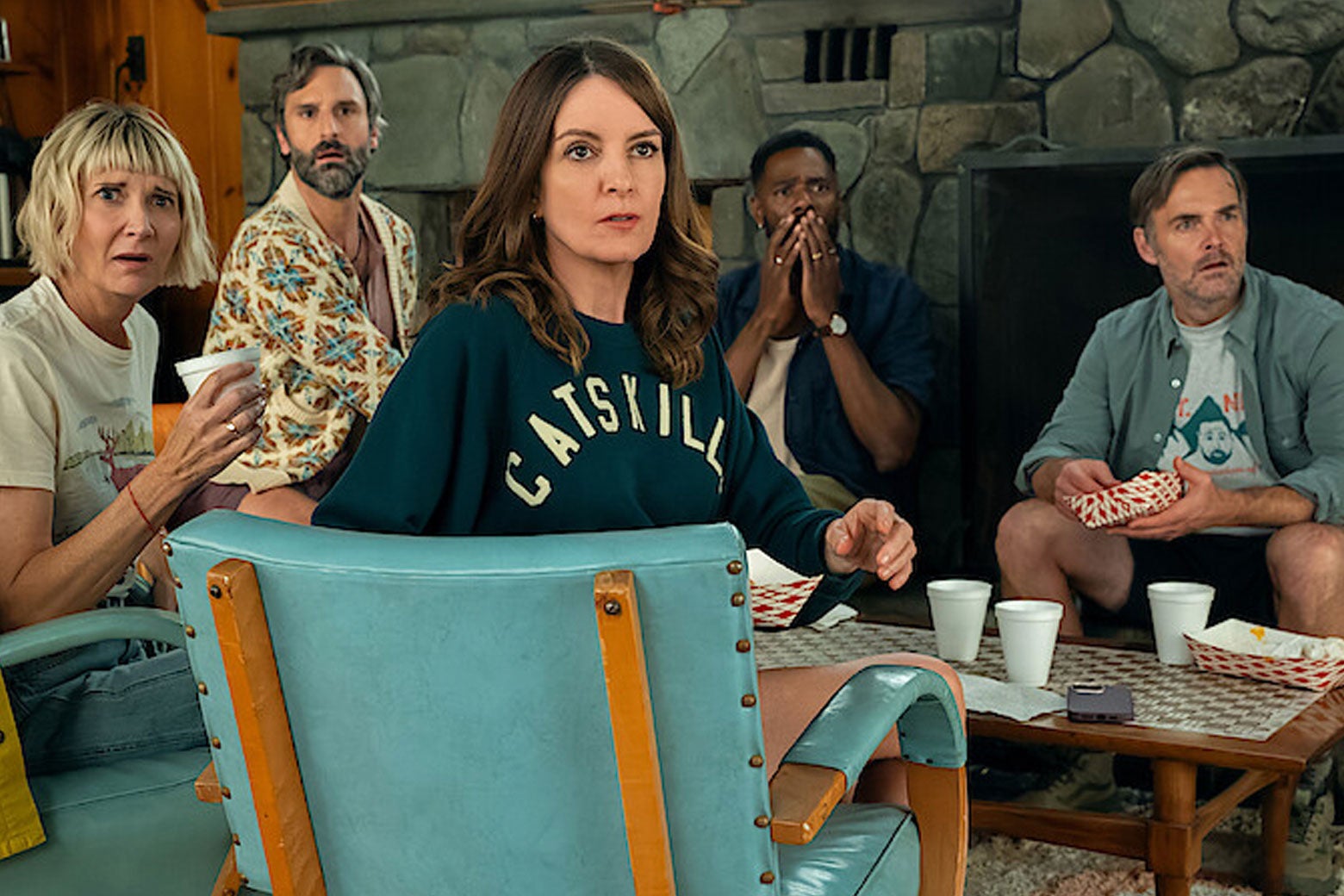
Characters in The Four Seasons face third-act problems that trace back to earlier choices, leaving them unable to revise how their lives began. Nick’s attempt to escape panic by leaving his wife for a younger partner ends quickly, and his friends mourn him while recognizing the freedom was temporary. Jack’s pursuit of happiness disrupts friends who had settled into complacency, allowing minor disappointments to accumulate. In the second season, their lives become unsettled and previously closed questions return, including where to live, whether to adopt, and whether to remarry. The season keeps the same structure of two episodes per year with couples traveling to new locations, while shifting the emotional focus from one marriage to another.
"There's a saying among screenwriters that third-act problems are first-act problems, which is to say that if you're having trouble with how your story ends, the issue is probably with how it began. The characters in The Four Seasons, whose second season is now streaming on Netflix, are, statistically speaking, entering their third acts, the period after youth and parenthood where their lives are once again their own. But unlike a screenwriter, they can't go back and fix the mistakes they made in their first acts. They're stuck in the present, facing down an unsatisfying conclusion and forced to wonder: Is this really how it ends?"
"In the show's first season, Nick (Steve Carell) coped with third-act panic in the most predictable of ways: by leaving his wife, Anne (Kerri Kenney-Silver), for Ginny (Erika Henningsen), a woman half his age. But Nick's new life didn't last long, and his friends, longtime couples Kate (Tina Fey) and Jack (Will Forte) and Danny (Colman Domingo) and Claude (Marco Calvani), start the second season mourning his death, their envy for his brief spate of freedom muted by the knowledge of how it ended."
"In the first season, Jack's unashamed pursuit of his own happiness upset his friends' complacency, the way they'd settled into a comfortable groove and let minor disappointments pile up like unpaid parking tickets. In the second, their lives are unsettled, and questions long closed are open again. But revisiting those fundamental issues-Where are we going to live? Should we maybe adopt? Do I even want to be married again?-is unnerving enough to make them think they might have been better off when they were just content with what they already had."
"The new season's structure remains the same as the first's: two episodes for each season of the year, with the couples vacationing in a different locale each time. But the show's emotional center has shifted ever so slightly. The first was centered on Kate and Jack's marriage, the long-term heterosexual coup"
Read at Slate Magazine
Unable to calculate read time
Collection
[
|
...
]