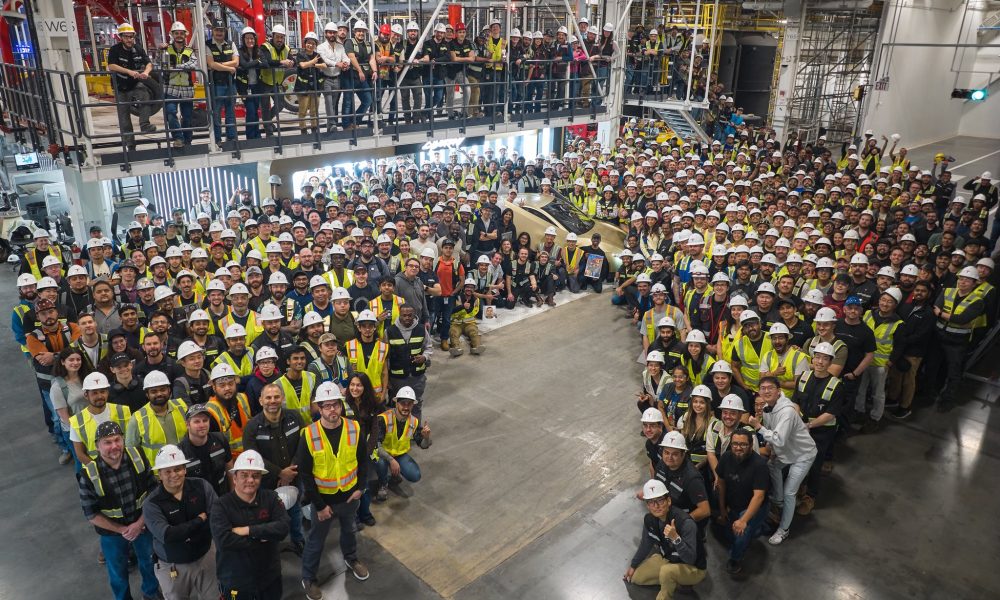
The first Tesla Cybercab began production at Gigafactory Texas and targets volume manufacturing in April at a price under $30,000. The vehicle is steering-wheel-free and pedal-less, optimized as a two-seat Robotaxi with inductive charging, about 300 miles of range on a small battery, half the parts of a Model 3, and unboxed manufacturing for rapid production. Shared fleets and high utilization could lower transport costs to around $0.20 per mile, making personal car ownership optional. Potential benefits include cheaper rides, reduced congestion, reclaimed urban space, and environmental gains. The shift also threatens widespread job losses in ride-hailing, taxi, and related sectors.
"The first Tesla Cybercab rolled off of production lines at Gigafactory Texas yesterday, and it is more than just a simple manufacturing milestone for the company - it's the opening salvo in a profound economic transformation. Priced at under $30,000 with volume production slated for April, the steering-wheel-free, pedal-less Robotaxi-geared vehicle promises to make personal car ownership optional for many, slashing transportation costs to as little as $0.20 per mile through shared fleets and high utilization."
"While this could unlock unprecedented mobility abundance - cheaper rides, reduced congestion, freed-up urban space, and massive environmental gains - it risks massive job displacement in ride-hailing, taxi services, and related sectors, forcing society to confront whether the benefits of AI-driven autonomy will outweigh the human costs. Let's examine the positives and negatives of what the Cybercab could mean for passenger transportation and vehicle ownership as we know it."
"Tesla has geared every portion of the Cybercab to be cheaper and more efficient. Even its design - a compact, two-seater, optimized for fleets and ride-sharing, the development of inductive charging, around 300 miles of range on a small battery, half the parts of the Model 3, and revolutionary "unboxed" manufacturing - is all geared toward rapid production. Operating at a fraction of what today's rideshare prices are, the Cybercab enables on-demand autonomy for a variety of people in a variety of situations."
Read at TESLARATI
Unable to calculate read time
Collection
[
|
...
]