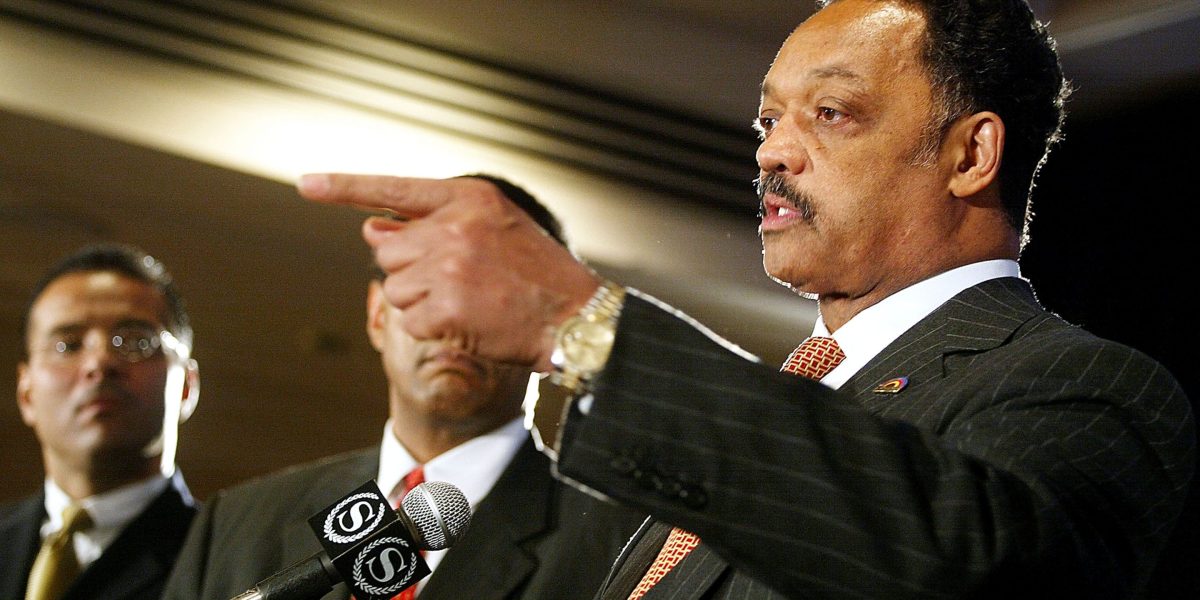
"In the 1960s, the SCLC launched Operation Breadbasket, a campaign to desegregate jobs and increase employment opportunities for Black Americans. Jackson and his team advocated for local grocery chains in majority Black neighborhoods in Chicago to hire more Black employees and partner with Black-owned business contractors and banks. Jackson met directly with business owners and inked deals with companies, under threat of or actual boycott or strike."
"Civil rights activist Rev. Jesse Jackson, who died at 84 on Tuesday, may be best known as a political organizing powerhouse, but he began his career by increasing workplace diversity in the business world. In 1966, Martin Luther King Jr.'s Southern Christian Leadership Conference handpicked a 24-year-old Jackson to lead a campaign to increase economic opportunity for Black Americans in Chicago. The cause remained a strong throughline of his six-decade-long career."
"High-Low grocery stores, a white-owned chain, agreed to hire Black Americans for 184 new jobs and opened accounts at two Black-owned banks. By July 1967, Breadbasket had secured 2,200 jobs worth more than $15 million in annual income.. The movement's success pushed Jackson into the spotlight as one of Chicago's most influential civil rights leaders and established a strategy of combining public action with face-to-face meetings with business leaders, which he employed throughout his career. From Chicago to Wall Street Breakbasket was the first of many Jackson-led campaigns to not just increase employee diversity but ensure long-term investment in Black businesses and entrepreneurs."
Rev. Jesse Jackson began his career increasing workplace diversity and economic opportunity for Black Americans, starting with a 1966 SCLC campaign in Chicago. He led Operation Breadbasket to desegregate jobs and press local businesses to hire Black employees and use Black-owned contractors and banks. Breadbasket secured agreements such as High-Low creating 184 jobs and, by July 1967, 2,200 jobs worth over $15 million in annual income. Jackson combined public pressure with direct meetings with business leaders, earning corporate respect and later extending efforts from small businesses to Wall Street to broaden opportunity for minorities and women.
Read at Fortune
Unable to calculate read time
Collection
[
|
...
]