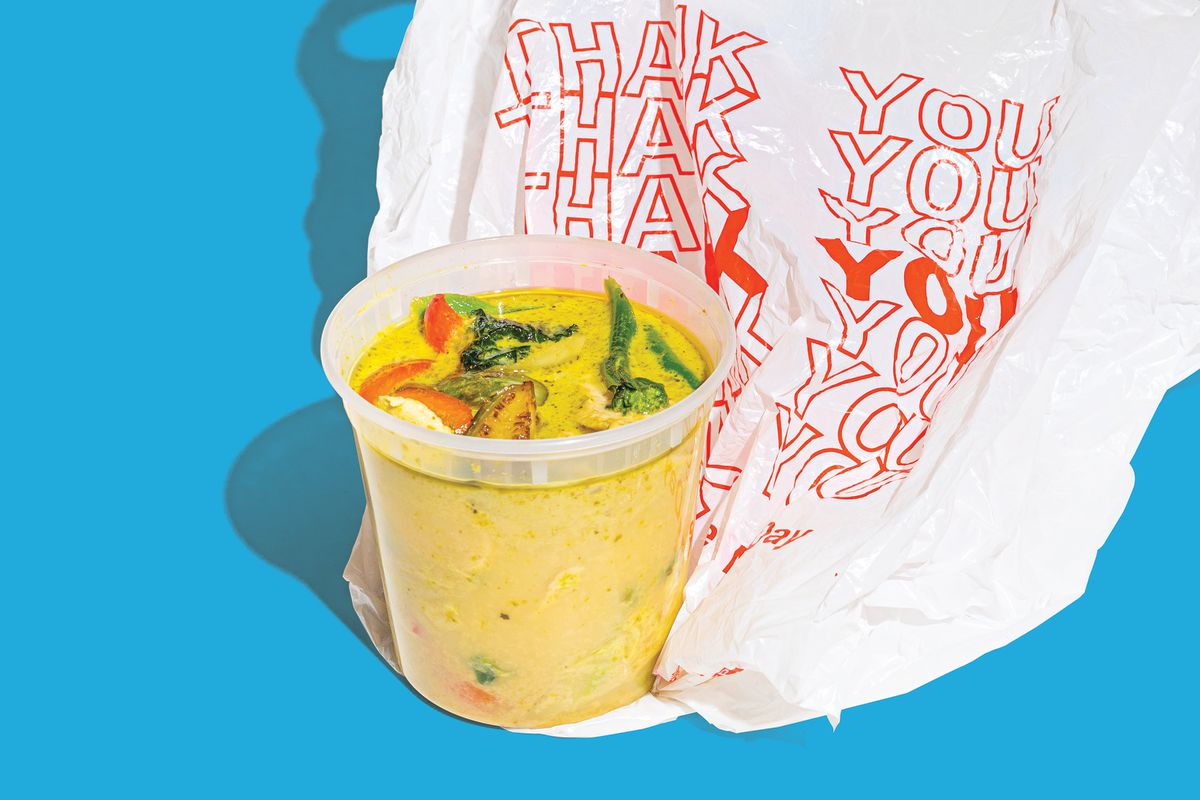
Thai dishes travel well because Thailand’s food culture relies heavily on market stalls, open-air storefronts, and pushcarts, while sit-down restaurants are less common and newer. In the early 2000s, Thailand invested 500 million baht to promote Thai food globally through a government-sponsored Global Thai Program launched in 2002. The program provided grants and training for people opening Thai restaurants abroad, using three state-designed “master restaurant” formats ranging from formal to contemporary to fast-food. Educational materials and traveling instructors taught recipes and example dishes such as green curry, tom yum soup, and som tum. Over time, the US gained more than 10,000 Thai restaurants, with Thai cuisine becoming the third-most common Asian restaurant cuisine. Thai food had already been present through immigrant-run restaurants, sometimes serving US soldiers familiar with Southeast Asia.
"In the early aughts, Thailand spent 500 million baht ($15 million USD) to bring Thai food to the world. The Global Thai Program launched in 2002 as a government-sponsored culinary diplomacy initiative, providing grants and training to people who wanted to open Thai restaurants outside ofThailand. There were three state-designed formats deemed “master restaurants.” Golden Leaf was more formal, with “luxurious surroundings” and meals clocking in at about $25-30 per person, while Cool Basil skewed more contemporary and casual, “blending...Thai identity and international styling.”"
"The cheapest, fast-food version had the name Elephant Jump. Educational materials and traveling instructors offered recipes and example dishes, things like green curry, tom yum soup, and som tum, or Thai papaya salad. Other countries used the Thai program as a model for culinary diplomacy programs, including South Korea, Peru, and Taiwan, but Thailand had a real head start. Some 25 years later, there are more than 10,000 Thai restaurants in the US, where Thai food is today the third-most common Asian restaurant cuisine, behind Chinese and Japanese."
"It’s no accident that most Thai dishes travel well. While takeout gets a bad rap in some places, in Thailand sit-down restaurants are generally less popular and have existed for far less time compared to market stalls, open-air storefronts, and pushcarts. We might not have the same setup here, but in the US it’s also no accident that there’s probably a Thai place or two (or 20) on your way home where you can pick up dinner."
"Of course, Thai food wasn’t “introduced” to the United States in 2002. Thai immigrants had opened restaurants long before, occasionally with US soldiers who had spent time in Southeast Asia among their early customers. Many specialized in dishes like pad thai, which was also developed by the Thai government (in response to a rice shortage in the 1930s, to encourage consumption of rice nood"
#thai-cuisine #culinary-diplomacy #restaurant-expansion #takeout-and-food-culture #us-thai-restaurants
Read at Portland Monthly
Unable to calculate read time
Collection
[
|
...
]