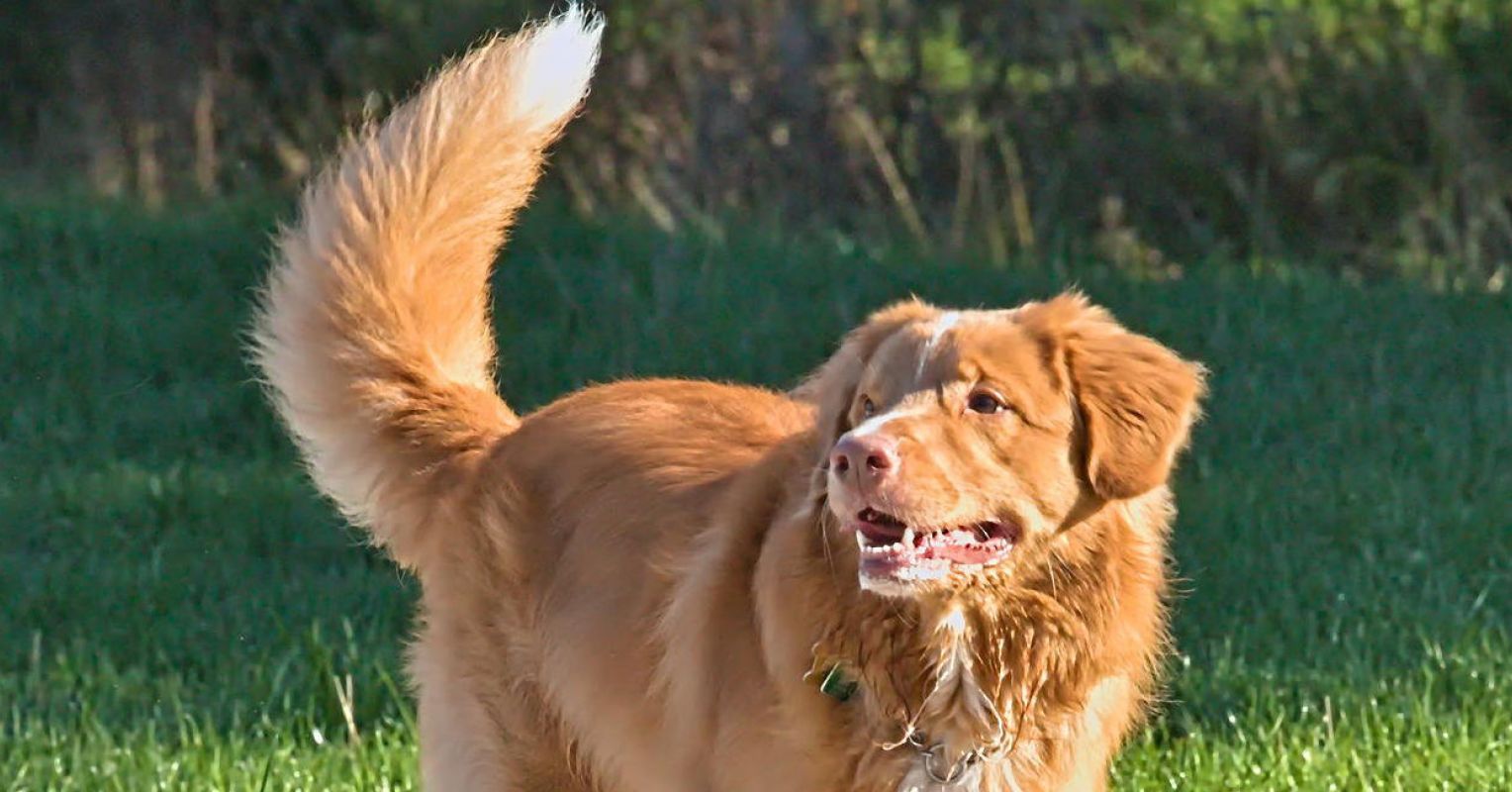
"Careful kinematic research, such as that done by a Japanese team headed by Naomi Wada, has determined that the dog's tail was designed to assist the dog with balance. When a dog is running and turns quickly, he throws the front part of his body in the direction he wants to go. This causes his back to bend; however, the forward velocity is such that his hindquarters will tend to continue in the original direction."
"When moving at lower speeds, dogs also use their tails to assist them when walking along narrow or unstable surfaces. By swinging the tail to one side or the other (in the direction opposite to any tilt in his body) the dog helps to maintain his balance. This is much the same way that the circus tight rope performer uses his balance bar. However, the tail is not particularly important on flat surfaces at normal speeds."
Most dogs naturally have tails that serve functional roles beyond ornamentation. Kinematic research shows tails act as counterweights during high-speed turns, reducing rear swing and preventing toppling. At lower speeds tails assist balance on narrow or unstable surfaces by swinging opposite body tilt, similar to a tightrope performer's balance bar. On flat surfaces and during normal speeds tails become available for other functions. Tail carriage height signals emotional state like a thermometer. Tail wagging rate indicates excitement level, and lateral bias in wagging direction reflects specific feelings. Human breeding has altered tail presence in some breeds.
Read at Psychology Today
Unable to calculate read time
Collection
[
|
...
]