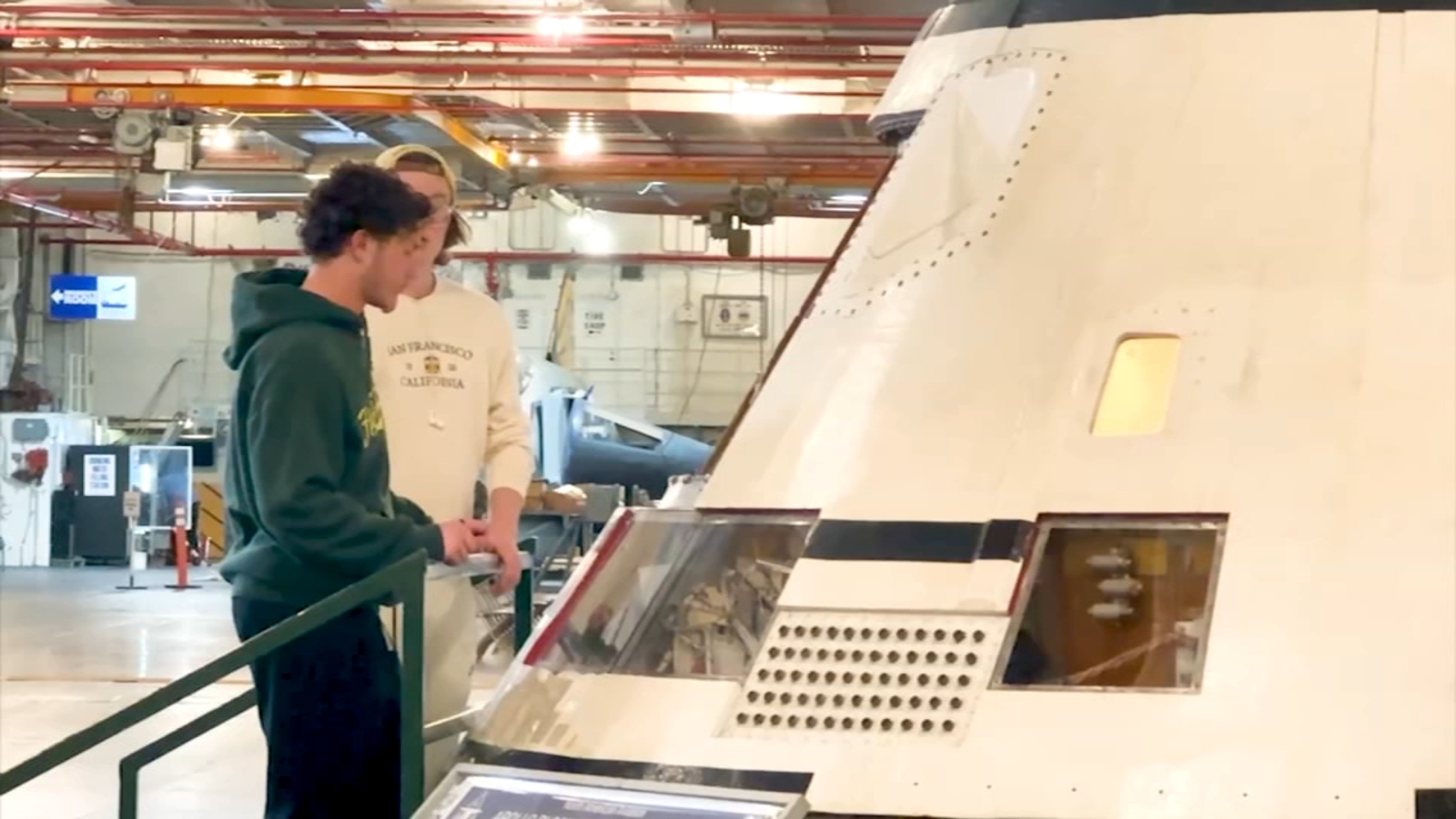
"The USS Hornet played a critical role in NASA's earliest human spaceflight missions, serving as the recovery ship for the Apollo 11 moon landing in 1969, retrieving astronauts Neil Armstrong, Buzz Aldrin, and Michael Collins after their historic journey."
"Back then, splashdown recovery was even more of a complex operation. Astronauts landed in the ocean inside their command module, which was then located, secured and lifted out of the water using a massive crane on the Hornet's deck."
"Today, the fundamentals remain the same: land in the ocean and recover the crew -- but the technology has evolved, allowing for a faster and more streamlined recovery process."
The USS Hornet Museum in Alameda commemorates its role in NASA's early space missions, including the Apollo 11 recovery. Crowds gathered to witness the Artemis II splashdown, reflecting on advancements in recovery technology. In the past, astronauts were retrieved using a crane after landing in the ocean, while today’s methods involve modern vessels and streamlined processes. Despite technological advancements, the fundamental recovery principles remain unchanged, emphasizing the ship's historical significance in space exploration.
Read at ABC7 San Francisco
Unable to calculate read time
Collection
[
|
...
]