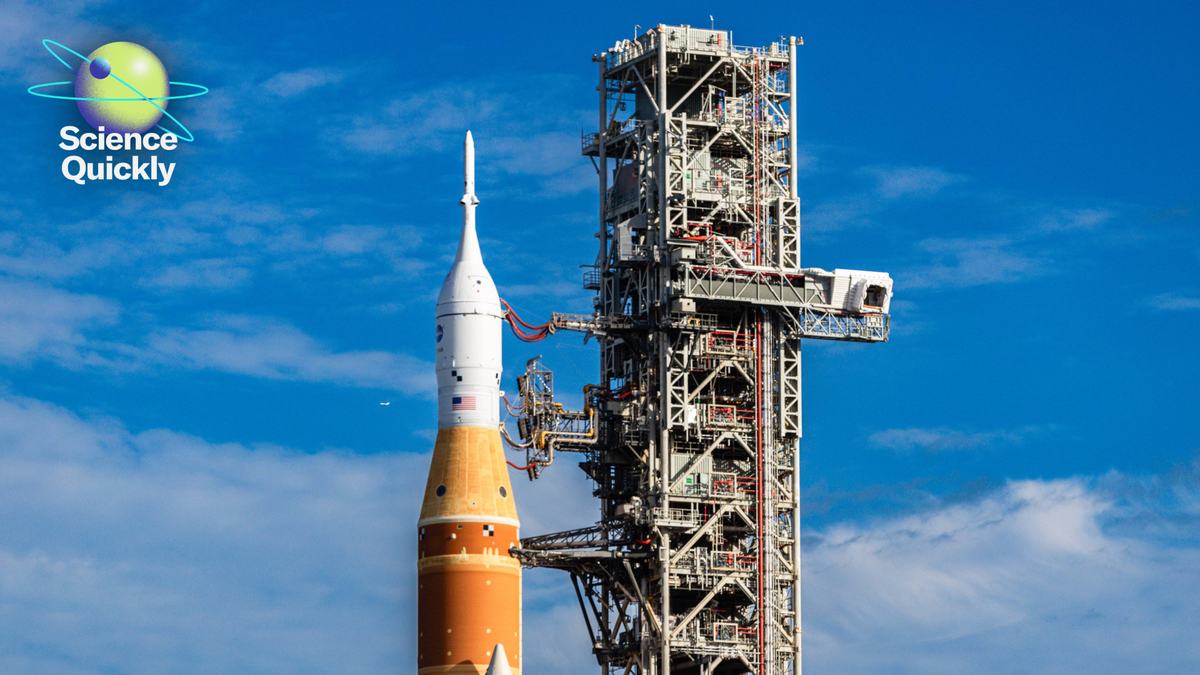
"Artemis is NASA's mission to send astronauts back to the moon. It's been in development in various forms, under various guises, for 20 years now. Artemis II is really where the rubber meets the road. There was, obviously, Artemis I, but Artemis I was uncrewedthere were no astronauts on board. It was just meant to show that the key hardware components work properly, that they can get into space and go to the moon and come back."
"And now we are doing that with humans on board, so it's much higher stakes. Artemis II is not going to land on the moon. It's not even going to orbit the moon. Some people get confused about that. It's going to be on what's called a free-return trajectory, which means it's going to use the moon's gravity to loop around our natural satellite and then send the Orion capsule, the Orion spacecraft, back to Earth at very high speeds."
The first launch window for NASA's Artemis II mission will open in the coming weeks. Artemis II will be the first crewed mission to go beyond low-Earth orbit since Apollo 17 in 1972. The Artemis program has been in development in various forms for about 20 years, and Artemis II represents a critical test with crew aboard. Artemis I was uncrewed and validated key hardware components and trajectories. Artemis II will not land on or orbit the Moon; it will follow a free-return trajectory that uses lunar gravity to loop the Orion spacecraft around and return it to Earth at very high speeds. The mission carries higher stakes because astronauts will be on board and will set distance and speed records.
Read at www.scientificamerican.com
Unable to calculate read time
Collection
[
|
...
]