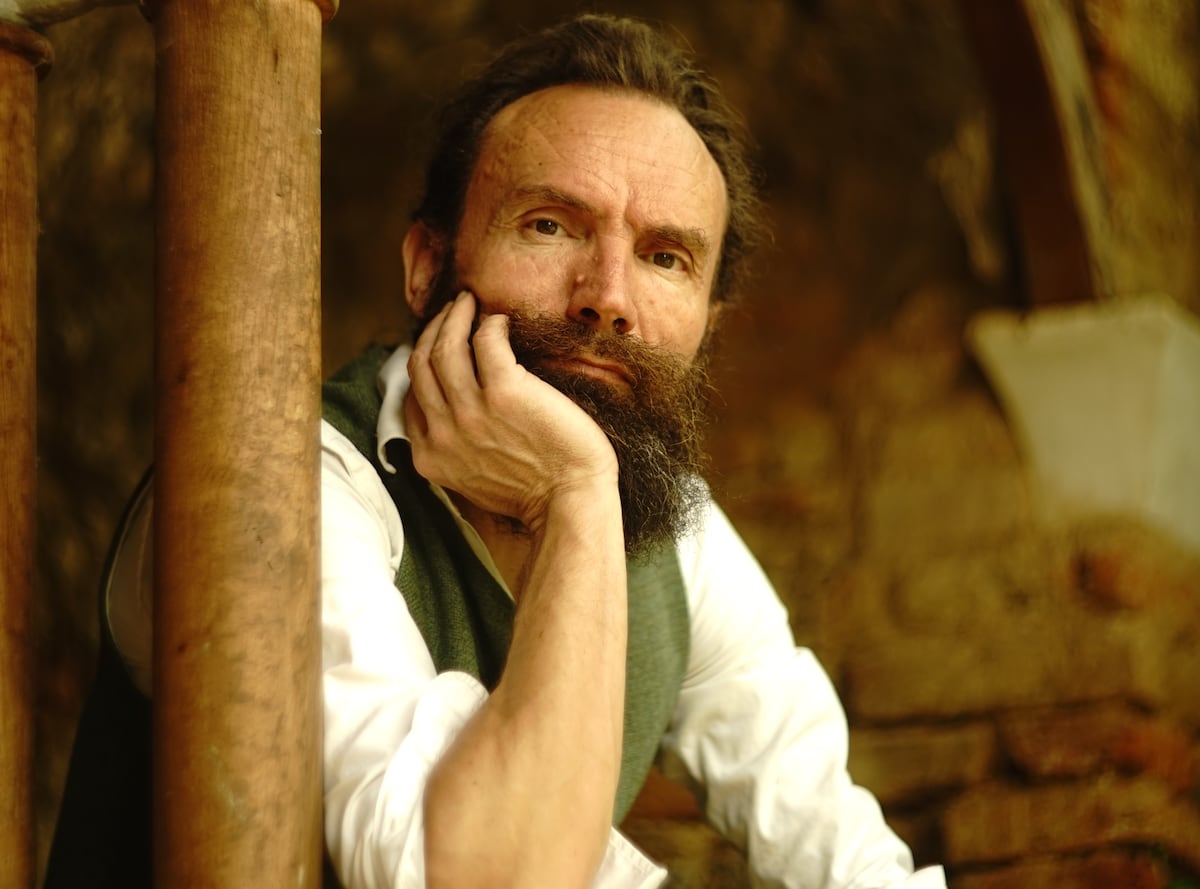
"In his latest book, the paleoanthropologist Ludovic Slimak recounts how, as a young man, he spent his time observing people as he played the bagpipes in a kilt on the dirty streets of Marseille. Driven by an unconscious impulse, he had decided to master the instrument, and he succeeded, even leading a famous band in France. Then his first child was born, he found himself traveling from gig to gig, and eventually, he gave it up."
"The French scientist has been able to spend the last 30 years observing and studying one of the most decisive moments in the history of evolution: the encounter between our species and the Neanderthals, our closest human relatives. One of his latest discoveries is Thorin, a Neanderthal who lived around 42,000 years ago, very close to the moment of extinction. From then on, Homo sapiens became the only human species on the planet."
"In his new book The Last Neanderthal: Understanding How Humans Die, Slimak, 52, reflects on the reasons for the disappearance of these human cousins, and what it reveals about ourselves. It's a sad book, he underscores, because despite the latest evidence that Neanderthals controlled fire, created cave art, and had sex and children with our own species leaving a trace of their DNA in our genome this scientist from the French National Center for Scientific Research believes they went extinct in isolation and abandonment."
A French paleoanthropologist spent his youth playing bagpipes to observe people and used his music earnings to fund a PhD. He then devoted around 30 years to studying the encounter between Homo sapiens and Neanderthals. The researcher identified Thorin, a Neanderthal who lived roughly 42,000 years ago near the time of extinction. Evidence attributes fire control, cave art, and interbreeding with modern humans to Neanderthals, leaving DNA traces in present genomes. Despite cultural complexity, Neanderthals appear to have died out in conditions of isolation and abandonment, with Thorin belonging to a distinct, isolated group.
Read at english.elpais.com
Unable to calculate read time
Collection
[
|
...
]