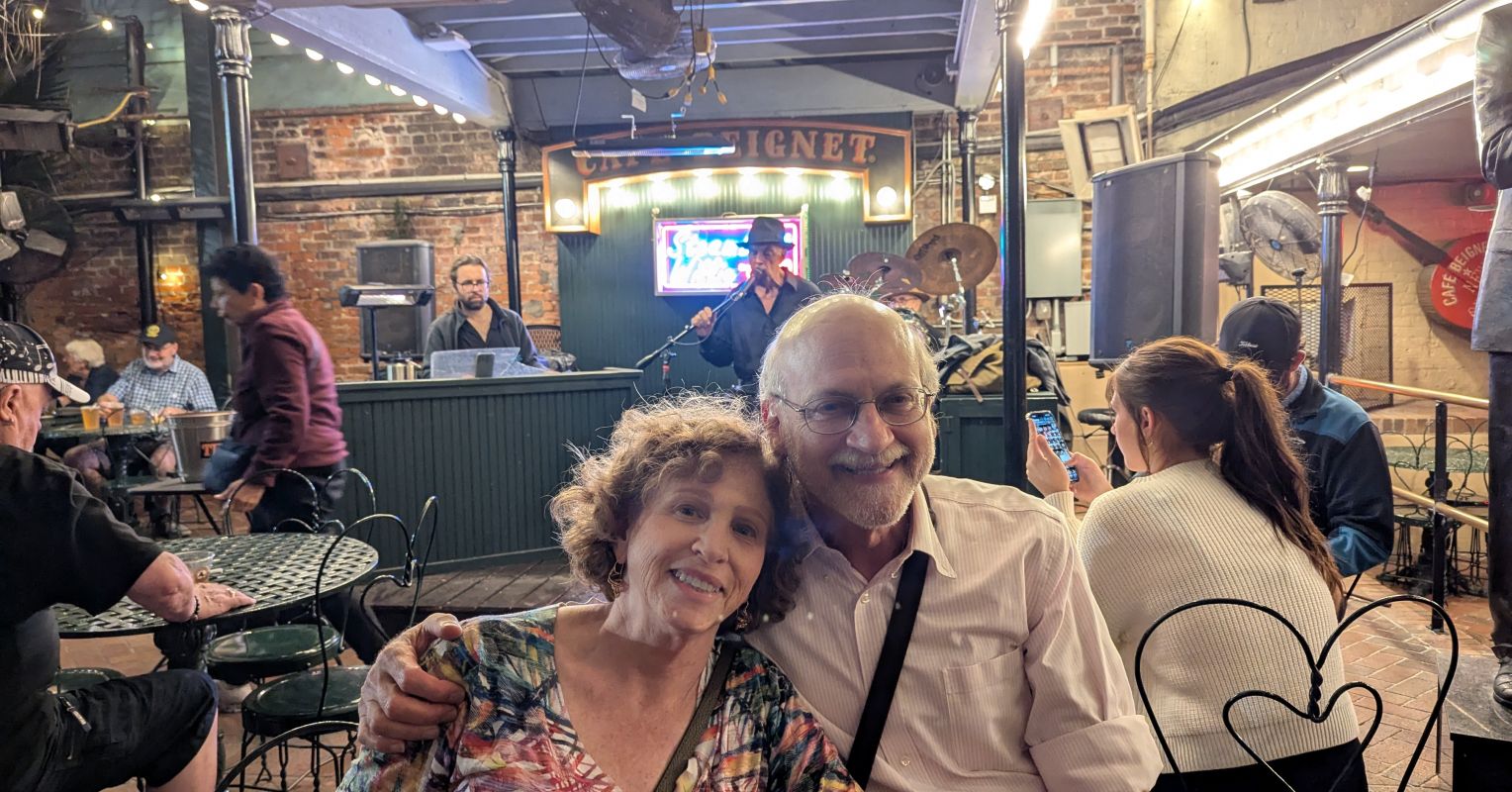
"New Orleans. Just hearing the city's name brings music to mind. This is, after all, where jazz was born. On any given day, music flows out of clubs in the French Quarter and beyond. What a tailor-made place to study music and the brain, I thought. So I reached out to a local neuroscientist during a recent visit. Paul Colombo, PhD, grew up near Buffalo, New York."
"Trained in cellular neuroscience, he focused for the first half of his professional life on how memory works at the cellular and genetic levels. In a study with young and old rats, he found that memory formation is related to concentrations of an enzyme, protein kinase C, in the brain. 1 In another study, he showed that learning activates the synthesis of proteins necessary for memory formation. 2"
Paul Colombo trained in neuroscience at UC Berkeley under Mark Rosenzweig, moved to Tulane drawn by New Orleans music culture, and is a drummer. He began studying music and the brain later in his career after focusing on cellular neuroscience and memory. Rat studies linked memory formation to concentrations of the enzyme protein kinase C and showed that learning activates synthesis of proteins necessary for memory. Those studies also found that multiple memory systems interact rather than operate independently. Music training generates brain rhythms important for memory and may help those rhythms resist aging; music-based mentoring is being assessed.
Read at Psychology Today
Unable to calculate read time
Collection
[
|
...
]