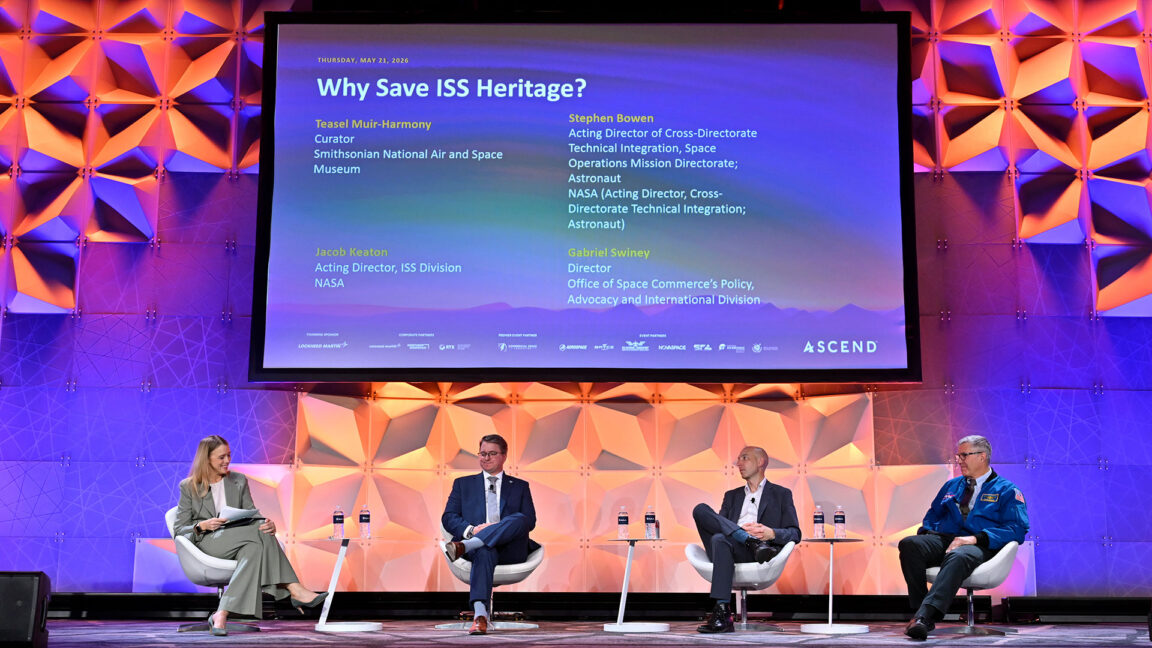
The International Space Station enables the longest continuous human presence in space, and preparations are underway for its destructive end as soon as 2030. Museum professionals, space program officials, an archaeologist, and an astronaut are working to determine why, what, and how the ISS could be preserved. The station is too large and complex to keep intact, so preservation must focus on historic and culturally significant elements rather than the entire structure. The Smithsonian National Air and Space Museum hosted a three-part panel discussion to begin answering preservation questions. The ISS is described as having become “boring” through technical competence and as part of national identity, reflecting a shift from extraordinary achievement to routine presence in space.
"With NASA and its partners beginning preparations for the destructive end of the International Space Station (ISS) as soon as 2030, those who collect, curate, and study the station are now asking how to preserve the historic and culturally significant artifact, given that it is far too large and complex to keep intact."
"“I had a friend who works on the Artemis [moon] program come up to me when we had 25 years [of continuous human residency]. 'Congratulations, guys! You made space boring.' And we did-and that's a good thing, actually,” said Jacob Keaton, acting director of the International Space Station for NASA's Space Operations Directorate at the agency's headquarters in DC. “Not only did we make it boring because of the technical competence that the team brings to the table, we made it boring because it became part of our national fabric, almost.”"
"“This is just something that we do. We have people in space,” said Keaton. “The ticket tape parades after Apollo were wonderful. That's a historic achievement-for Artemis, too, absolutely. But for the space station, this is just who we are now. I think it's underappreciated the amount of work that it took to become boring.”"
#international-space-station #space-heritage-preservation #nasa #museums-and-curation #human-spaceflight
Read at Ars Technica
Unable to calculate read time
Collection
[
|
...
]