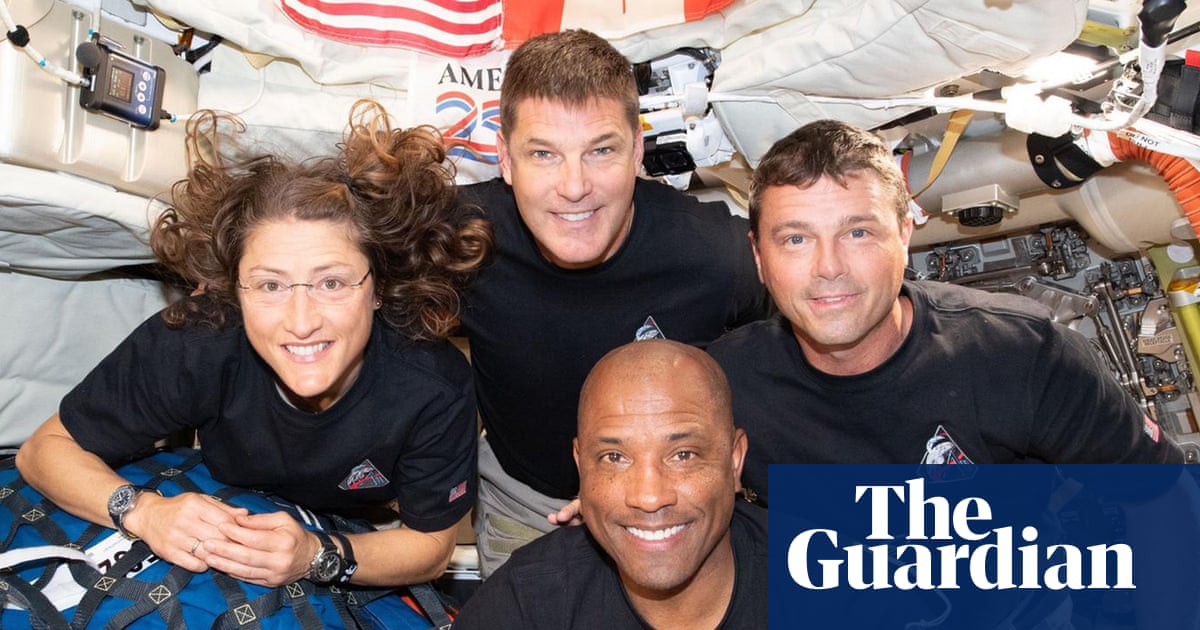
"NASA has proven it can once again send humans safely to and from cislunar space, the void between Earth and its nearest celestial body, and will build on the knowledge gained to further propel the Artemis program towards a scheduled crewed moon landing in 2028, 56 years after the last."
"I just had an overwhelming sense of being moved by looking at the moon, the NASA astronaut Christina Koch said of her first impressions of Orion's closest approach on Monday, 4,067 miles (6,545km) above the lunar surface."
"The rest of humanity, meanwhile, has received memories of a week and a half in which the world appeared to come together for a rare moment of unity to enjoy stunning video footage and high-resolution images of the lunar surface and Earth from afar."
NASA's Orion capsule is set to return four astronauts from the Artemis II mission, increasing the total number of moon travelers to 28. This mission marks the first human journey beyond low Earth orbit since 1972. The successful lunar flyby has demonstrated NASA's capability to send humans safely to cislunar space, paving the way for future crewed moon landings planned for 2028. The mission has also fostered a sense of global unity as people shared in the awe of stunning lunar imagery and astronauts' emotional reflections.
Read at www.theguardian.com
Unable to calculate read time
Collection
[
|
...
]