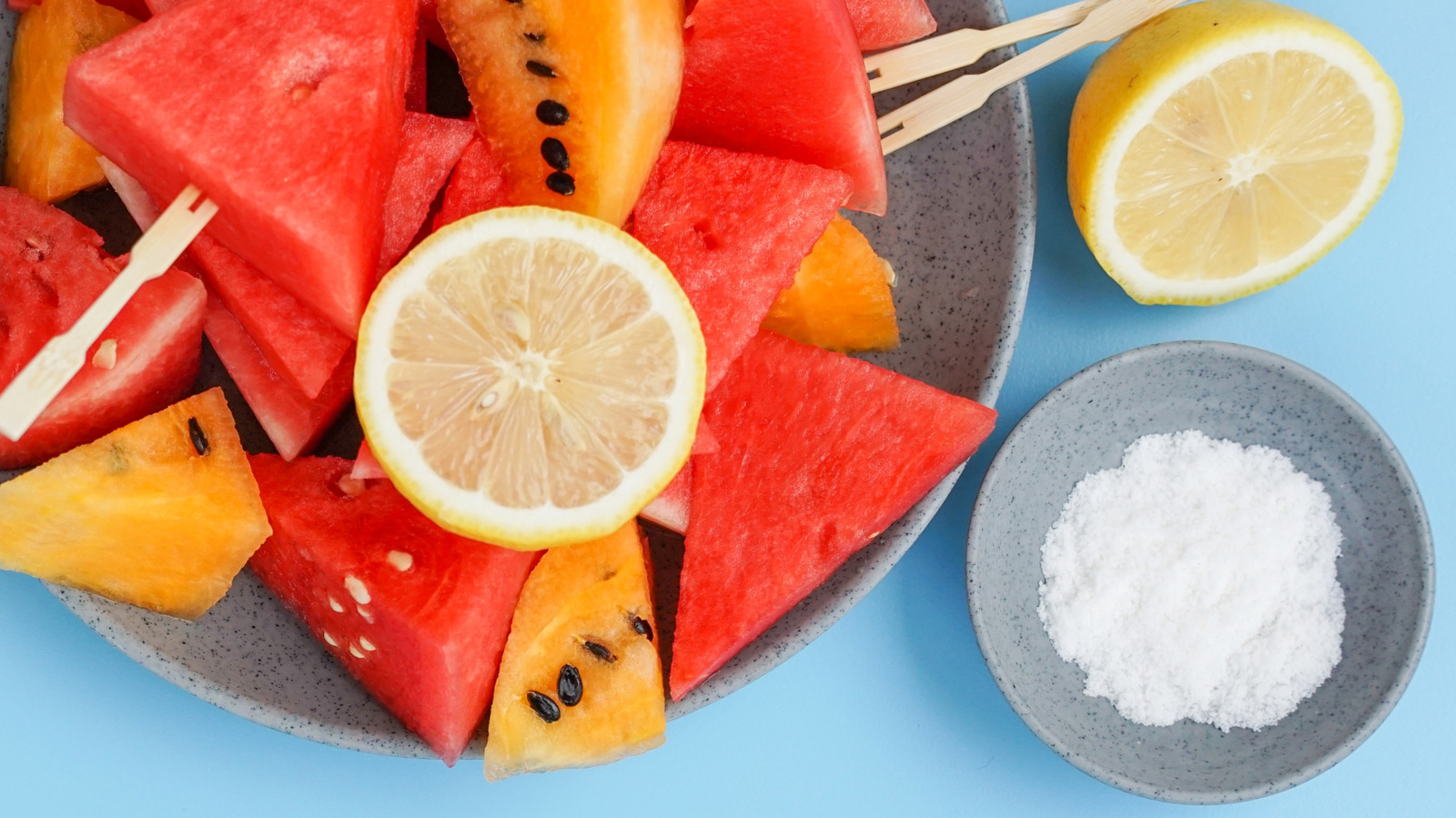
"Even if you have never added salt directly to fruit, maybe you have tried a bite of prosciutto-wrapped cantaloupe or a grilled watermelon salad sprinkled with salty cotija. To get away from fruit, the experience of bacon served alongside syrupy pancakes or dark chocolate topped with coarse sea salt delivers the same effect. The easiest explanation has always been that these contrasting flavors play off one another, and this idea gets bandied about quite a bit. In truth, it is much more complex than that, with the salt enhancing your experience of sweetness through several different channels."
"We will start with the simplest: Salt is a universal flavor enhancer. The more salt you use, the more it reduces our ability to taste sweetness while enhancing umami. At lower concentrations, however, it reduces our experience of bitterness while increasing sweet, sour, and umami flavors. When the bitterness receptors on your tongue are inhibited, many things are likely to taste a bit sweeter. But there is still more to it. Researchers have shown a clear physiological link between salt and sweet with one particular neurological pathway."
"Sweetness is a universally adored flavor, and for good reason. Sweetness has always been an indicator of good, carbohydrate-rich foods. On our tongues, we have several types of receptors, each of them operating a little bit differently, and responsive to different sorts of flavors. The group that is responsible for detecting sweetness from both sugars and artificial sweeteners is kno"
Salt can make sweet foods taste sweeter without any magical effect. Salt acts as a universal flavor enhancer by reducing the ability to taste sweetness at higher amounts while enhancing umami. At lower concentrations, salt reduces bitterness and increases perceived sweet, sour, and umami flavors. Inhibiting bitterness receptors can make many foods seem sweeter. Research also shows a physiological link between salt and sweetness through a neurological pathway. Sweetness detection relies on multiple tongue receptors that respond differently to sugars and artificial sweeteners, and salt can engage additional mechanisms that influence how sweetness is experienced.
Read at Tasting Table
Unable to calculate read time
Collection
[
|
...
]