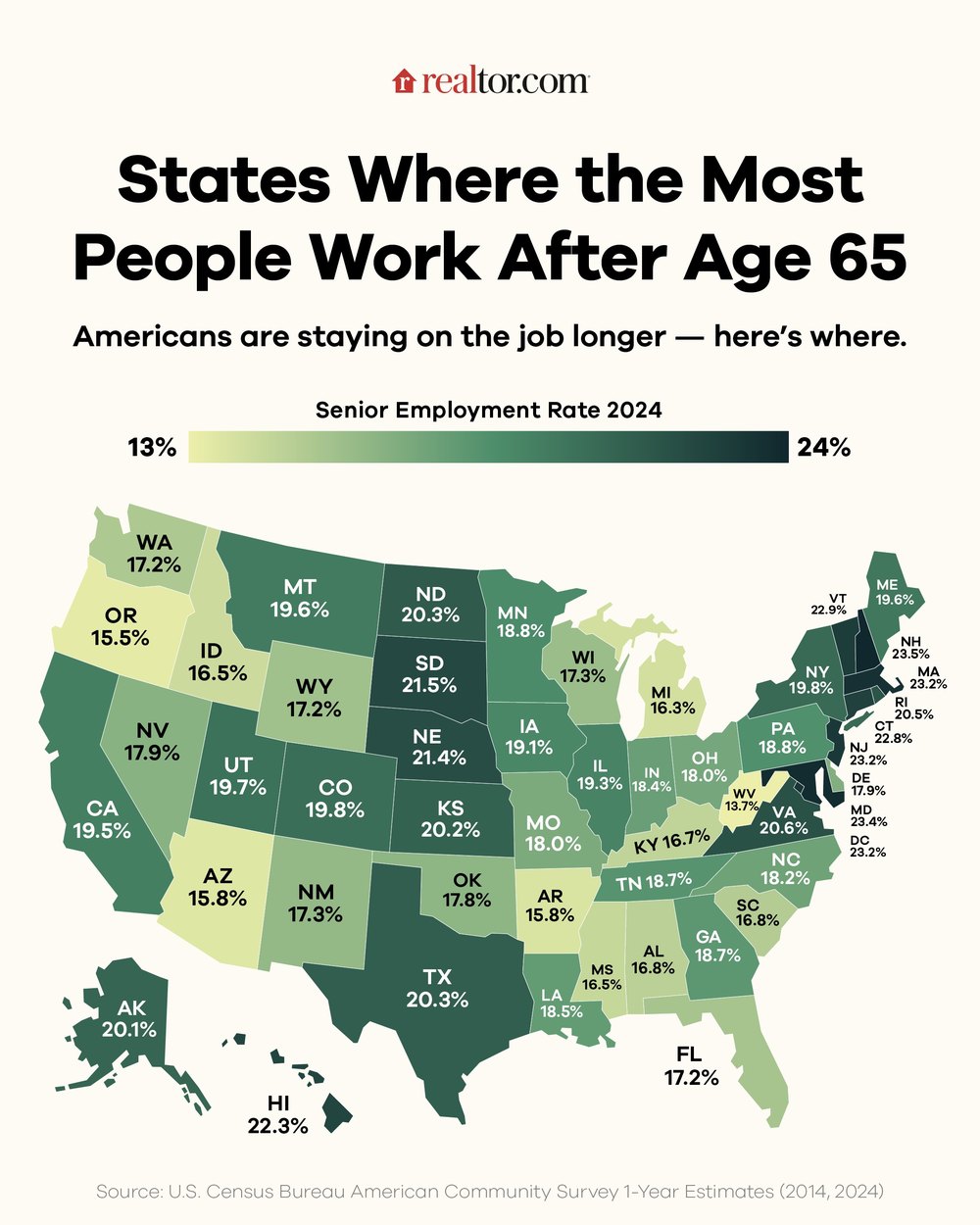
"The dream of a leisurely retirement is becoming increasingly elusive for many Americans, with a growing number of seniors finding themselves still in the workforce well past traditional retirement age. According to an analysis of Census Bureau American Community Survey data by Realtor.com®, the share of seniors ages 65 and older still in the workforce has grown in almost every state since 2014. In Alaska, 20.13% of seniors were still employed in 2024."
"This trend highlights two significant pressures on the housing market: the rising costs of homeownership, including insurance, property taxes, and maintenance, which compel older homeowners to continue working, and the resulting inventory crunch as these would-be retirees keep their homes off the market, driving up prices for everyone."
"In Alaska, the senior employment rate saw a decrease over the past decade, moving from 24.10% in 2014 to 20.13% in 2024, a change of -3.97 percentage points. This contrasts with many other states where the share of working seniors has increased. Despite the slight decrease in the employment rate, Alaska's senior population has grown significantly. According to the 2024 Census Bureau American Community Survey, the total population aged 65 and older in Alaska increased from 69,899 in 2014 to 109,415 in 2024."
"For many seniors, Social Security benefits are a critical component of their retirement income, accounting for about half (52%) of retirees' income, according to a report from the National Institute on Retirement Security. However, Social Security benefits alone are sufficient to cover living expenses in only 10 states, according to a Realtor.com analysis and the Elder Eco"
The share of Americans ages 65 and older still working has increased in almost every state since 2014. In Alaska, 20.13% of seniors were employed in 2024, down from 24.10% in 2014, yet the number of seniors rose from 69,899 to 109,415. Rising homeownership costs, including insurance, property taxes, and maintenance, can force older homeowners to keep working. As would-be retirees stay in their homes longer, housing inventory tightens and prices rise for other buyers. Social Security provides about half of retirees’ income, but benefits alone cover living expenses in only 10 states, increasing pressure to work longer.
Read at SFGATE
Unable to calculate read time
Collection
[
|
...
]