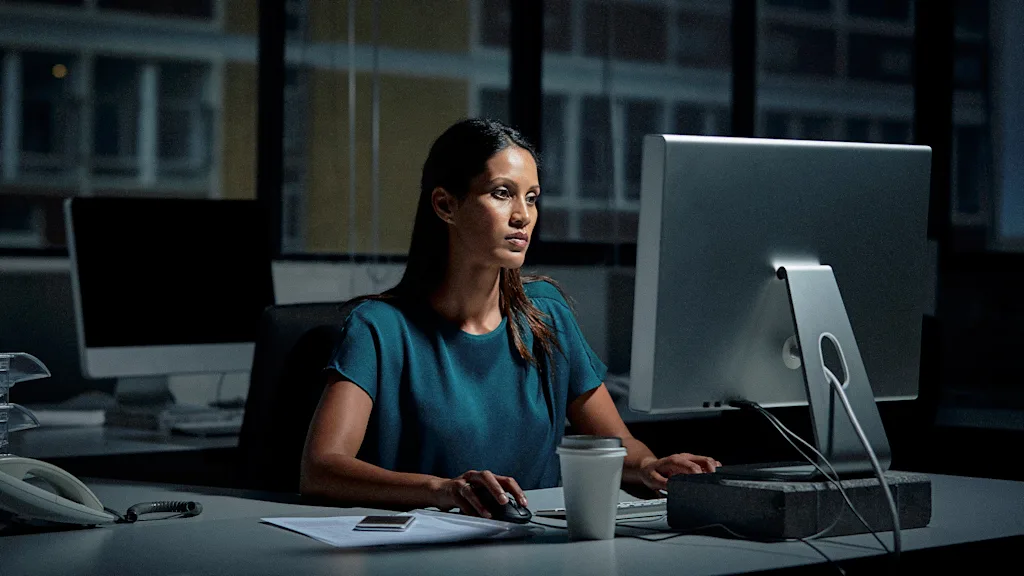
"Desk workers now spend nearly 100 hours each week looking at screens, with most reporting that digital eye strain is directly affecting their productivity. Workers experiencing visual discomfort say it reduces their output by nearly a full workday each week-a number that should give leaders pause."
"According to the research, desk workers spend roughly 93% of their waking weekday hours focused on screens. Back-to-back video calls. Endless message notifications. Constant toggling between documents, dashboards, and email threads. Even roles that once involved physical movement or conversation have shifted toward screen-based workflows."
"Over time, that level of visual demand changes how people sustain focus. Fatigue builds slowly, and when it finally shows up as distraction or irritability, leaders often interpret it as disengagement rather than overload."
Modern workplace research reveals that desk workers spend approximately 93% of their waking weekday hours focused on screens, leading to significant visual exhaustion rather than traditional disengagement. Workers report that digital eye strain directly impacts productivity, with those experiencing visual discomfort losing nearly a full workday weekly. The issue stems from modern work design featuring back-to-back video calls, constant notifications, and continuous toggling between applications. When performance declines, leaders typically attribute it to motivation or resilience gaps, overlooking the fundamental physical demand of sustained visual intensity. This visual fatigue accumulates gradually, manifesting as distraction or irritability that organizations often misinterpret as disengagement rather than recognizing it as overload from unprecedented screen-based work requirements.
Read at Fast Company
Unable to calculate read time
Collection
[
|
...
]