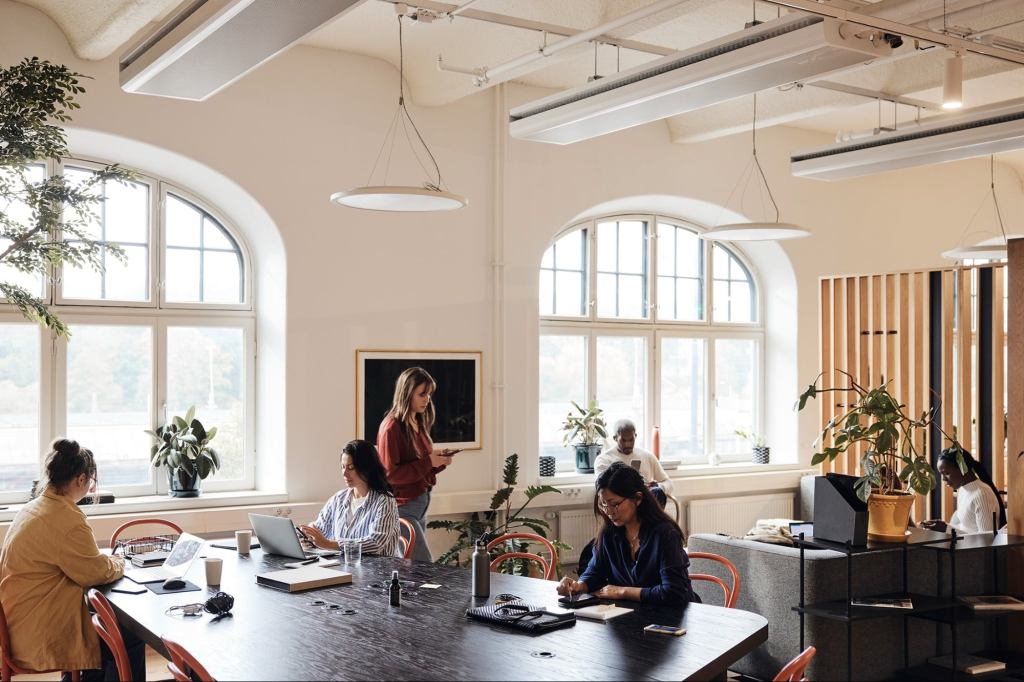
As startups grow beyond initial laptop-and-kitchen-table operations, workspace design transitions from a cost consideration to a performance driver. Founders often underestimate how quickly teams outgrow improvised arrangements, leading to meeting difficulties and onboarding challenges. Modern startup offices must adapt to hybrid work models where full-time office presence is no longer standard. Effective workspace now prioritizes collaboration, decision-making, and moments requiring in-person interaction over traditional private offices. Thoughtful space design becomes an intentional management tool that supports how early-stage technology and AI teams actually operate today, rather than following outdated office conventions.
"For many founders, the first version of their company lives on laptops and kitchen tables. Slack, Zoom and the occasional coffee-shop meeting keep it alive. That model is flexible and inexpensive - and for a while, entirely sufficient. But as a startup grows, space stops being about rent and starts being about performance."
"I've worked with hundreds of founders navigating this transition. The pattern is consistent: teams outgrow improvisation faster than they expect. Meetings become harder to run. New hires struggle to onboard. Momentum becomes harder to sustain. At that point, the workplace becomes a management tool, whether founders intend it to or not."
"Startup teams use offices differently than they did five years ago. The full team isn't likely to be in the office every day, and much of the routine work happens virtually. What draws people into a shared space now is collaboration, decision-making and moments that benefit from being together."
Read at Entrepreneur
Unable to calculate read time
Collection
[
|
...
]