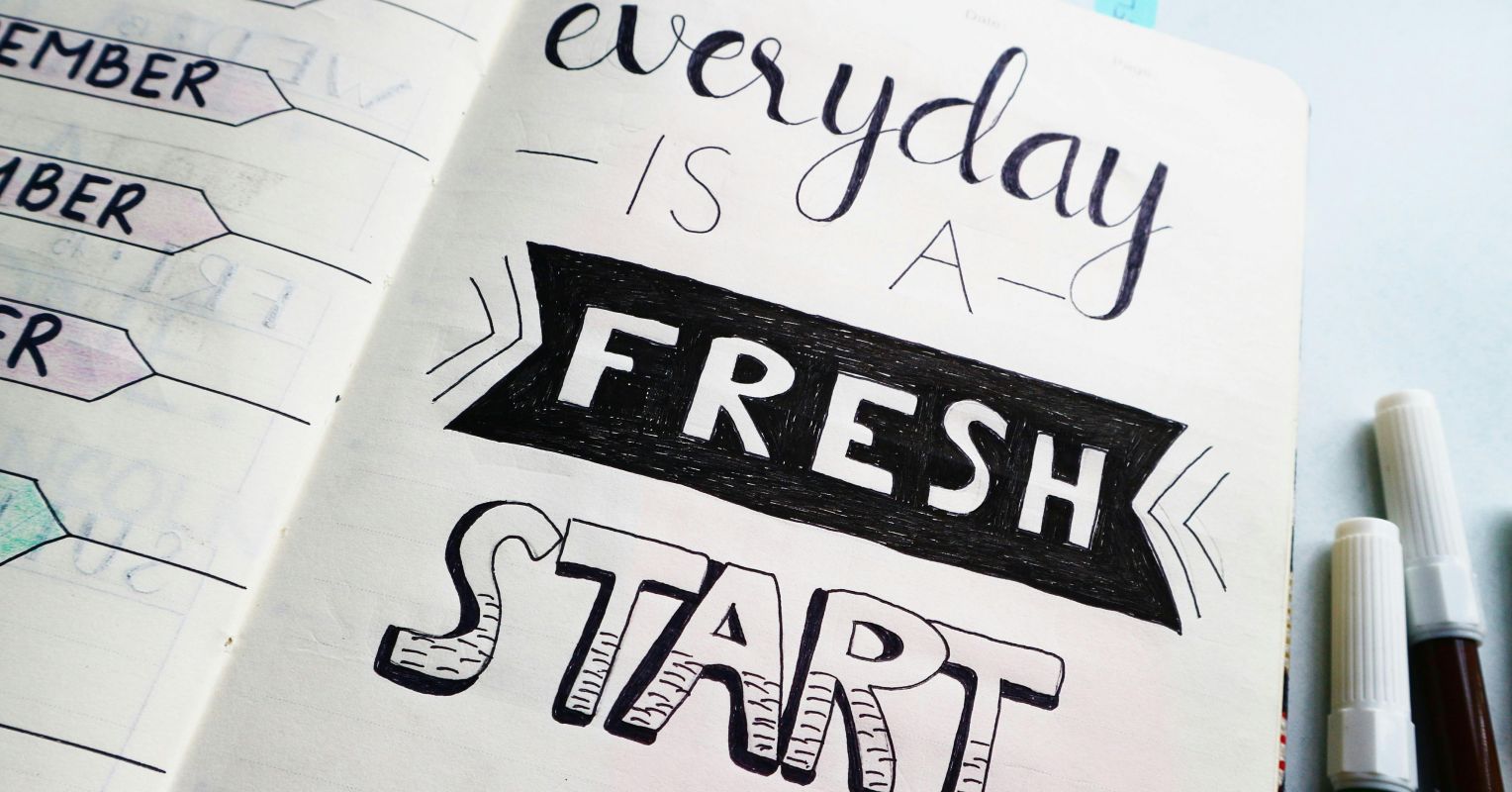
"For the most part, our resolutions revolve around the idea of taking on more. Exercise more, sleep more, learn more, be a better partner, parent, friend, or employee. These are often coupled with the doing-less list-less doomscrolling, less alcohol, less processed food-which, of course, are ultimately in service of becoming more. All these resolutions are based around achievement and optimisation. Of course, there is nothing inherently wrong with improving oneself. We are, after all, goal-oriented by nature. However, recognising that we have an innate need for growth and development doesn't address the deeper issue of which goals and why."
"A Fresh Start Research tells us that specific dates, such as the New Year or birthdays, serve as "temporal landmarks" that create a psychological boundary between past and future-a metaphorical opportunity to wipe the slate clean. This "fresh start effect" can increase our motivation to follow through on good intentions. It provides an opportunity to leave behind the version of ourselves that we are disappointed or frustrated with, and try again with renewed vigour and motivation."
New Year resets and marketing prompts encourage people to adopt more activities and improvements at the start of the year. Resolutions typically push adding behaviors—exercise, sleep, learning—or removing negative habits, often framed as achievement and optimization. Goal-setting explains how to pursue objectives but not which objectives to choose. Temporal landmarks such as New Year or birthdays create a psychological fresh-start effect that can boost motivation and provide a boundary to attempt change. Sustainable change requires examining deeper questions about whose desires drive the goals and considering subtraction—doing less—rather than continually adding tasks.
Read at Psychology Today
Unable to calculate read time
Collection
[
|
...
]