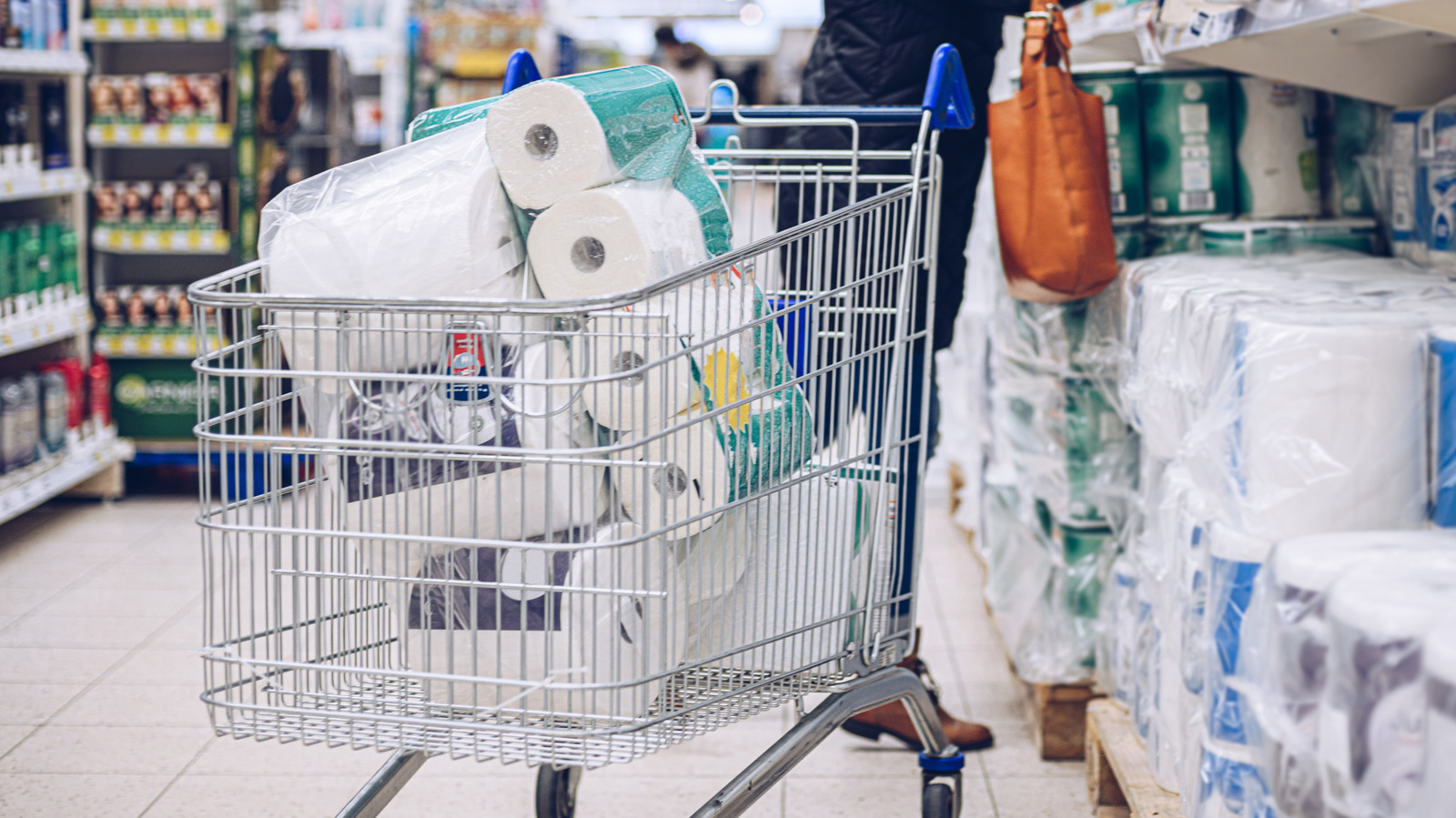
"Think back to 2020. Grocery stores looked like they'd been hit by locusts. Toilet paper? Gone. Fast forward to 2021 and suddenly everyone was stockpiling jerrycans of gas. Then a port strike happened, and boom - panic buying returned again. But the thing is, none of the stuff being bought in bulk was actually running out. There was no real shortage. Yet thousands of shoppers have recently gone into full-blown survival mode in preparation for 2026 winter storms ... again."
"Research reveals the psychology behind this phenomenon. You see, when things feel uncertain, our brains skip right past rational thinking and head straight to the worst case scenario. We immediately think: What if absolutely everything goes wrong? According to behavioral finance professor Hersh Shefrin at Santa Clara University, talking to USA Today, that's how we go from, "Maybe I need some extra supplies" to "The apocalypse is upon us" after two seconds in the toilet paper aisle."
"Fear is just one of many psychological factors that make up this perfect storm of scarcity. There's also the social-contagion aspect, per Joseph Devlin, co-founder of the London-based Applied Consumer Neuroscience Labs. When you see someone else's overflowing cart in the grocery store, your brain short-circuits. If they're buying that much, maybe you should too, right? One person's worry infects the whole store. Even if you've no intention of buying ten packs of mega-sized 3-ply, you find yourself snagging them anyway."
"Here's the cruel irony: Panic buying actually creates the shortages people are afraid of. When thousands of shoppers hit stores simultaneously and buy way more than usual, they outpace what delivery trucks can bring in. Those trucks show up to find bare shelves and the instant goods are restocked, they vanish into people's basements and garages again as the next wave of panicked buyers"
Uncertainty triggers instinctive worst-case thinking that short-circuits rational assessment and prompts people to buy far beyond actual need. Fear multiplies into social contagion: seeing others' overflowing carts signals scarcity and encourages mimicry. Common responses include stockpiling toilet paper in 2020, jerrycans of gas in 2021, and panic purchases around port strikes and predicted 2026 winter storms. When large numbers of shoppers purchase simultaneously, demand temporarily exceeds delivery capacity and shelves appear empty. Restocked goods are often hoarded in basements and garages, perpetuating shortages and validating the original fears in a self-fulfilling loop.
Read at Tasting Table
Unable to calculate read time
Collection
[
|
...
]