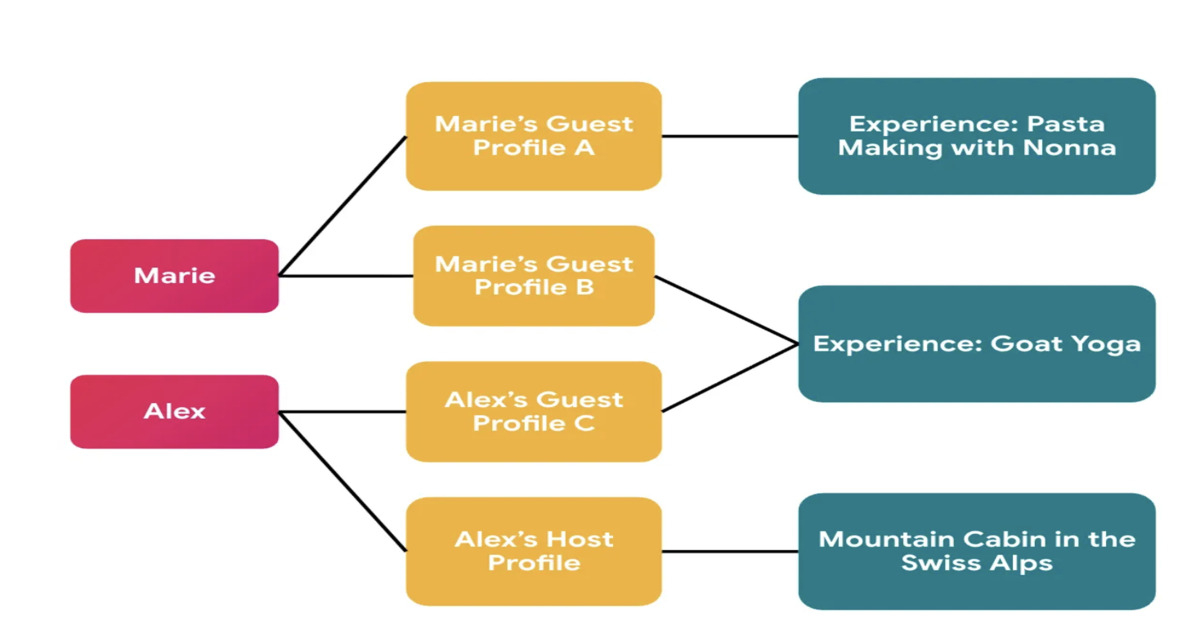
"Airbnb has introduced a redesigned identity and connection model to support new social features in Experiences while enforcing stronger privacy boundaries across its platform. The company describes a system that separates internal user identity from externally visible profiles, enabling users to interact within shared activities without exposing global identity information. The changes align with Airbnb's broader push to expand social interactions around Experiences, where participants may not know each other, increasing the need for controlled identity exposure and stronger privacy guarantees."
"According to Airbnb, the new model replaces a single global profile with multiple context-specific profiles tied to individual Experiences. Each profile represents a scoped identity that is visible only within a given context, such as a specific event or group activity. This approach prevents users from linking identities across different Experiences, effectively creating isolated social graphs rather than a unified global network. Access to profile data is determined by shared participation, ensuring that users can only view information relevant to their current interaction."
"The system is enforced through Airbnb's internal authorization framework, Himeji, which applies relationship-based access control policies at runtime. These policies evaluate whether users share a common context before granting access to profile information. By shifting enforcement to the data access layer, the platform ensures consistent privacy guarantees across services, rather than relying solely on interface-level restrictions. This design reflects a broader architectural pattern in which identity exposure is governed by context and relationships rather than by static user attributes."
Airbnb introduced a redesigned identity and connection model for Experiences that supports new social features while enforcing stronger privacy boundaries. The system separates internal user identity from externally visible profiles so participants can interact within shared activities without exposing global identity information. Instead of a single global profile, users have multiple context-specific profiles tied to individual Experiences. Each scoped profile is visible only within a given event or group activity, preventing users from linking identities across different Experiences and creating isolated social graphs. Access to profile data is granted based on shared participation. Airbnb enforces the model through an internal authorization framework that applies relationship-based access control policies at runtime, evaluating shared context before allowing access to profile information.
Read at InfoQ
Unable to calculate read time
Collection
[
|
...
]