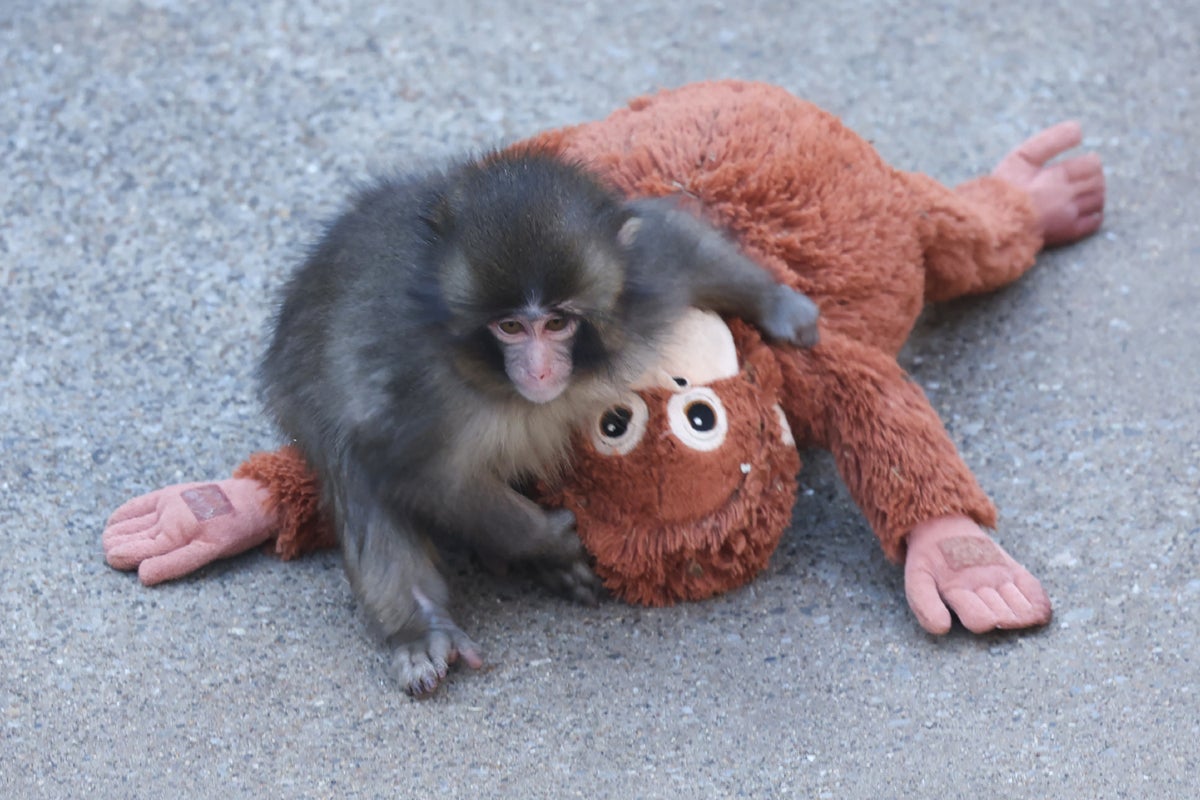
A baby macaque named Punch at a Japanese zoo became viral after clinging to an orangutan plushie following maternal abandonment. This case parallels Harry Harlow's landmark 1950s psychology experiments with rhesus monkeys. Harlow removed infant monkeys from their mothers and placed them with two surrogate mothers: a wire cage that dispensed food and a soft, terry-cloth covered doll that provided no nutrition. These experiments challenged behaviorism, the dominant psychological theory of the time, by revealing that infant monkeys preferred the soft, comforting surrogate despite lacking food provision. Harlow's findings established foundational principles of attachment theory, demonstrating that the parent-child bond depends on comfort and physical contact rather than feeding alone.
"Harlow took rhesus monkeys from birth, and removed them from their mothers. These monkeys were raised in an enclosure in which they had access to two surrogate mothers. One was a wire cage shaped into the form of a mother monkey, which could provide food and drink via a small feeder. The other was a monkey-shaped doll wrapped in terry towelling."
"The findings from his experiments underpin many of the central tenets of attachment theory, which positions the bond between parent and child as crucial in child development."
Read at theconversation.com
Unable to calculate read time
Collection
[
|
...
]