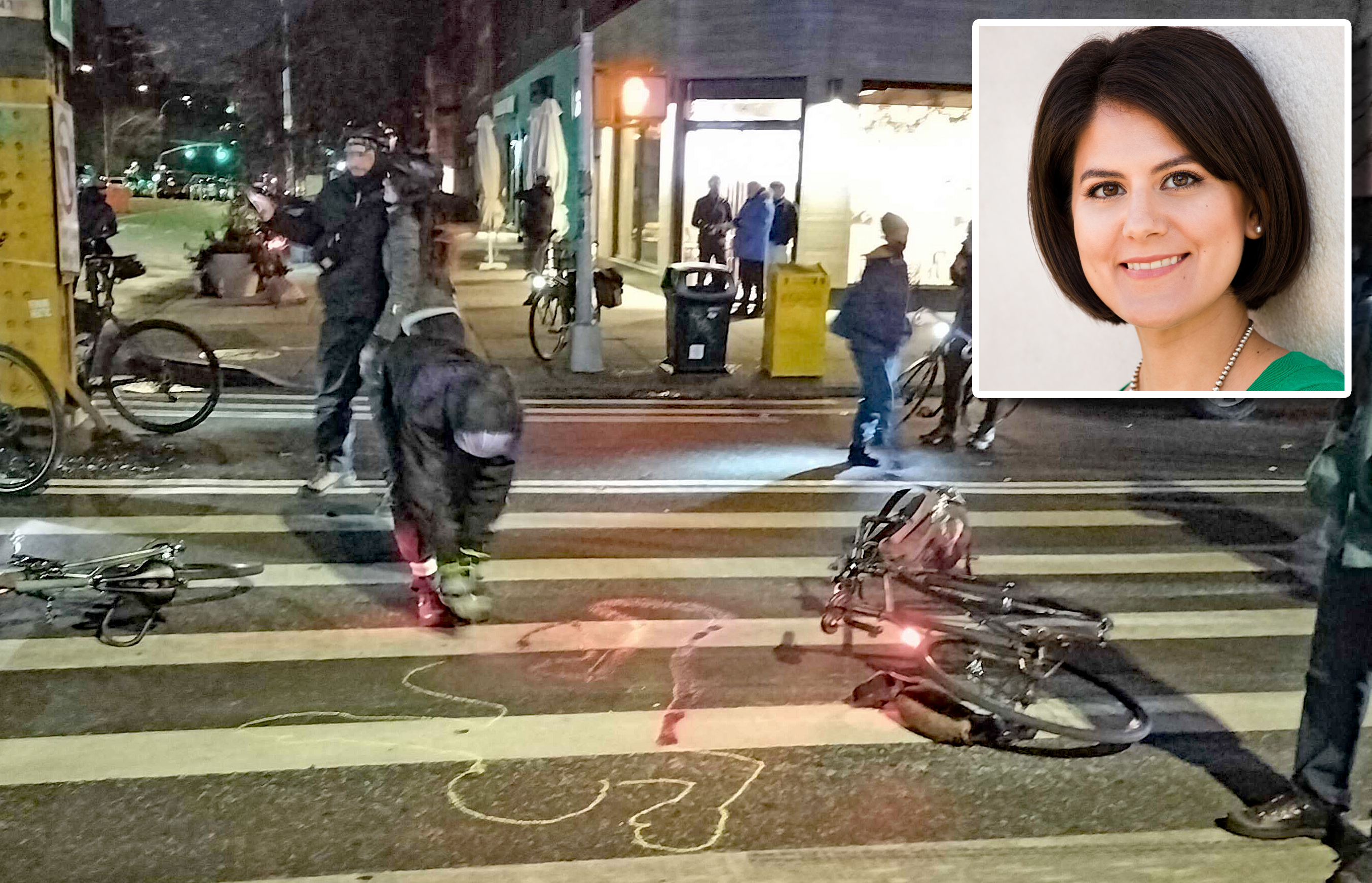
Thirty-first Street in Astoria recorded 178 injuries between 2020 and 2024, placing it among the most dangerous streets in the area. The Department of Transportation proposed daylighting corners, painted pedestrian islands, narrowed travel lanes, bike lanes, and designated loading zones to increase visibility and lower speeds. The design would have kept two parking and two travel lanes while adding two bike lanes. The street's unusual width and an ambiguous space between elevated train pillars and the sidewalk enable double-parking and unsafe passing. Drivers frequently fail to yield, use cell phones, and exploit blind spots. A judge's ruling blocked the redesign, leaving unsafe conditions unless appealed.
"The redesign proposed by the Department of Transportation would have alleviated conditions that led to a galling 178 injuries between 2020-2024, making the street in the top 10 percent of most dangerous in the area. The plan provided for daylighting corners - a treatment that increases visibility in the crosswalk - as well as painted pedestrian islands (I would have preferred cement, but anything is better than what we have now). Travel lanes would have been narrowed, which is an effective way to lower speeds."
"Currently, crossing 31st Street is harrowing. The street is unusually wide, and drivers use the space between the pillars of the elevated train and the sidewalk to double-park, idle, and even pass on the right - so in addition to crossing a busy two-way street, my family also has to worry about this ambiguous space. The redesign would have imposed order."
Read at Streetsblog
Unable to calculate read time
Collection
[
|
...
]