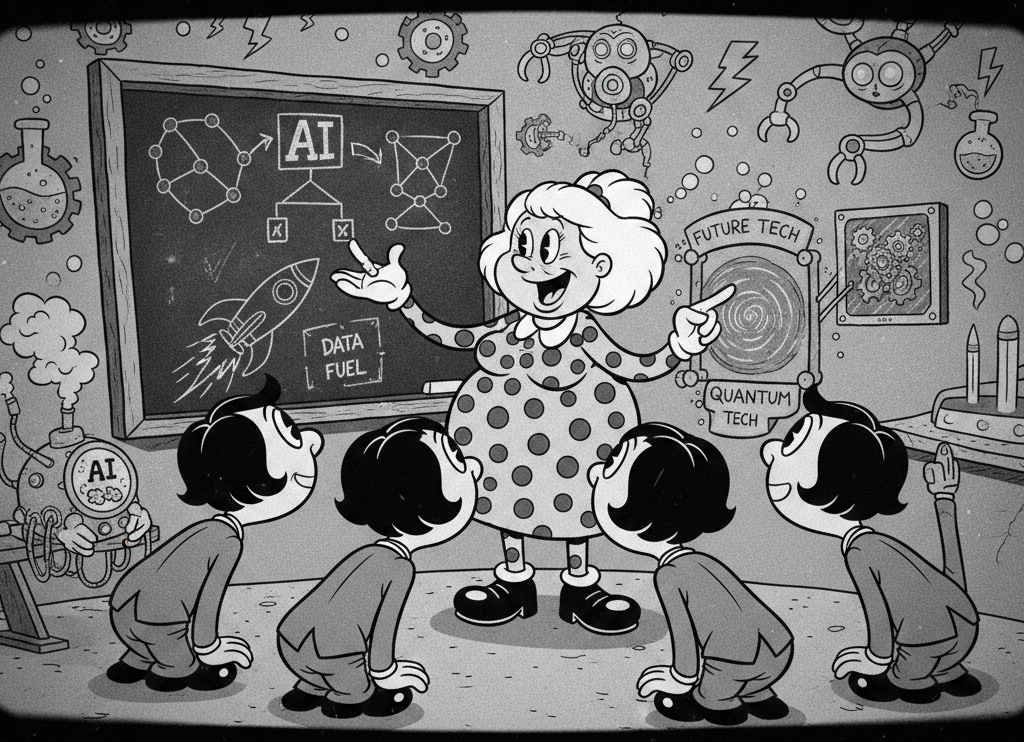
"Her domain expertise stretches across 50 years. Starting as a designer specialising in woodcraft and furniture, she eventually made the bold transition into design education. That focus eventually shifted from "craft" to "people" when she stepped into the role of a school principal. Later, she transformed again, learning to design complex systems as a "system owner" and was responsible for the processes and requirements used by teachers across an entire school network."
"But it is her willingness to master new frontiers like Artificial Intelligence (AI) and Organisational Development (OD) that makes her rare. How many of us can say we have a 70-year-old peer with deep, institutional knowledge who is also the first to experiment with the future?"
"We often marvel at these figures as "exceptions", assuming their achievements are unattainable due to luck or circumstance. However, looking beyond their accolades lies a "secret" to their success: one that combines three familiar psychological and professional frameworks."
Expertise evolves through continuous reinvention across multiple domains rather than specialization in a single field. A 70-year-old colleague exemplifies this trajectory, transitioning from woodcraft design to education, systems thinking, and emerging technologies like AI. Success in rapidly changing fields requires combining psychological frameworks including Maslow's hierarchy of needs, particularly its lesser-known pinnacle of self-actualization and transcendence. Designers must move beyond ego-driven attachment to specific toolsets and methodologies, recognizing that wisdom gained through diverse experiences remains evergreen. The ability to master new frontiers while maintaining institutional knowledge creates rare professional value. This approach contrasts with viewing accomplished individuals as exceptions, instead revealing a replicable pattern of continuous growth and adaptation.
Read at Medium
Unable to calculate read time
Collection
[
|
...
]