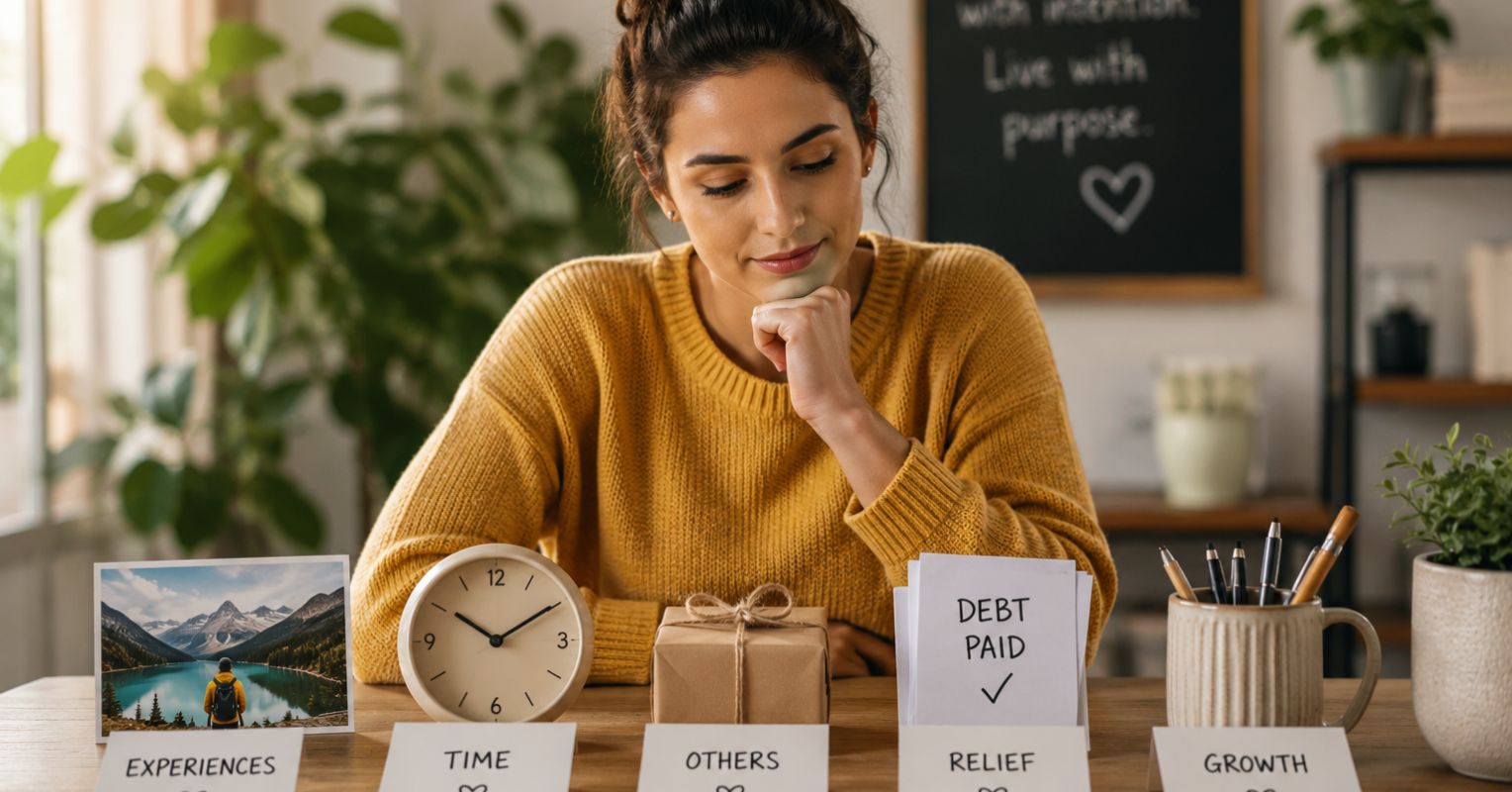
"Experiential purchases are things like trips, concerts, comedy shows, or amusement parks. Experiences cultivate pleasant memories for us to look back on, in addition to providing happiness in the moment. Three reasons that experiences provide happiness is because: Experiences tend to be social. Sociality is a key ingredient for happiness. Experiences are less comparable to what others have, minimizing upward comparisons and regretful thinking. Experiences are adapted to less quickly. Experiences are bound to space and time (e.g., going to Disneyland for the day), whereas we become accustomed to material purchases through repeated daily use."
"Imagine you've just received your cherished tax refund. You want to spend this money, yet the possibilities for deploying your newfound funds seem unlimited. You could go the practical route and get new tires for your car, which you've been putting off. You could choose the fun option and take your romantic partner on a weekend getaway. There is also a strong case to be made for using the funds to chop down a pesky outstanding debt. Which choice would you make? And which choice would still feel good a week after having made it?"
"Social science research provides an empirically backed framework for understanding the best return on investment spending when it comes to well-being. Here are five spending strategies that have been shown to help people improve their mood and their lives: 1: Spending on Experiences. Spending a little more money on experiences and a little less on material items is a strong spending principle backed by data."
"Many people don't consistently budget or think carefully about purchases. Money can be used as a tool to increase happiness. These five different tactics can help you spend money in ways that maximize happiness."
Many people spend without consistent budgeting or careful consideration. Money can be used as a tool to increase happiness and improve well-being. Social science research provides a framework for spending choices that yield better returns for mood. Spending more on experiences and less on material items can increase happiness because experiences are often social, less comparable to others’ possessions, and adapt more slowly. Buying time by paying to avoid unpleasant chores can reduce stress and free attention for enjoyable activities. Reducing outstanding debt can improve peace of mind and lessen ongoing financial strain. Careful planning and choosing purchases that align with personal values can help spending feel good not only immediately, but also after time passes.
#personal-finance #happiness-and-well-being #consumer-behavior #experiences-vs-material-goods #debt-reduction
Read at Psychology Today
Unable to calculate read time
Collection
[
|
...
]