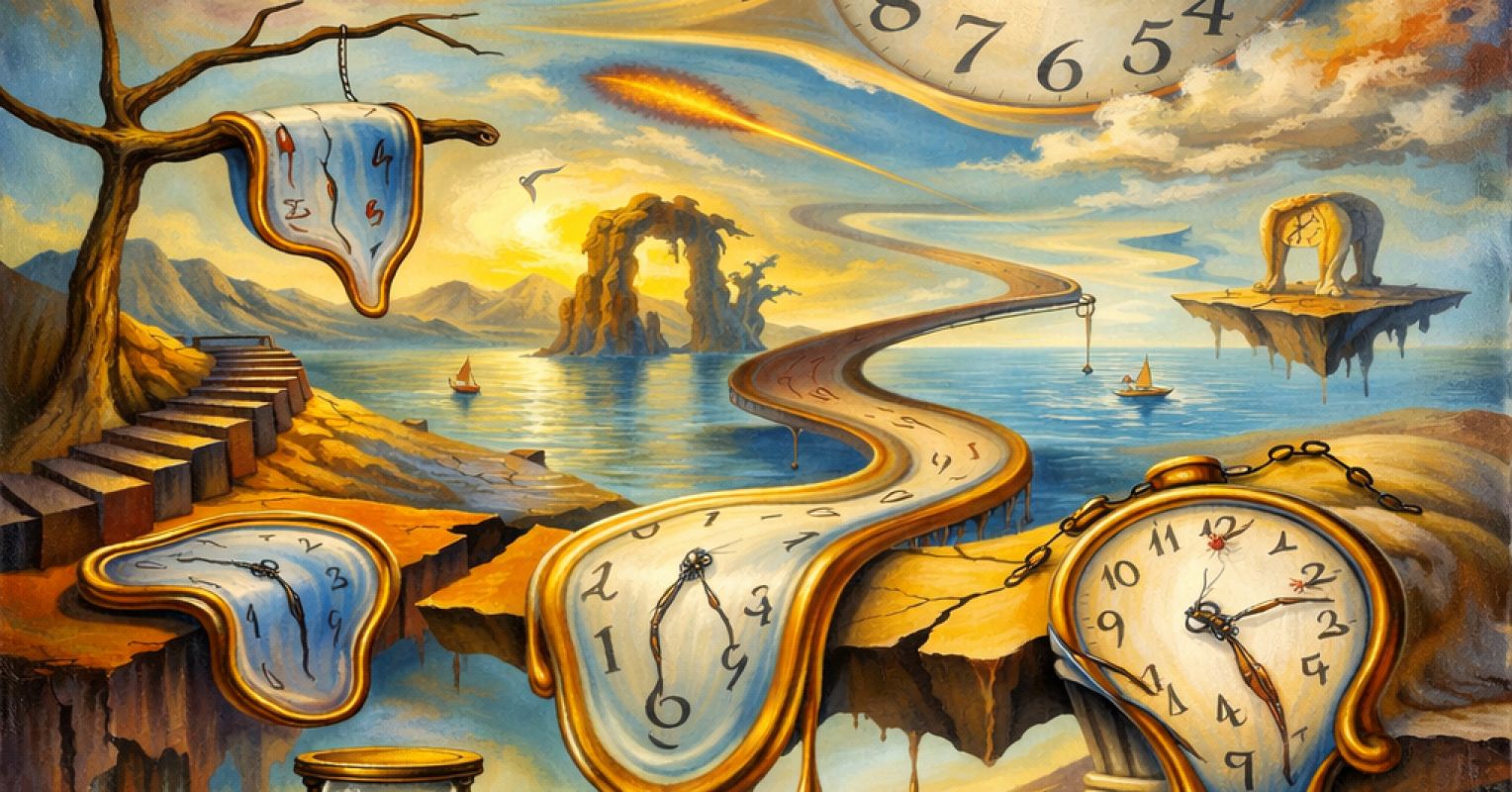
Humans historically lived according to day-night and seasonal rhythms rather than clocks and schedules. The conception of time as a scarce, measurable resource emerged recently and imposes planning, tracking, and optimization on daily life. Human brains evolved to focus on the immediate environment for survival, prioritizing present-moment cues over abstract timelines. Persistent scheduling and perceived deadlines activate danger responses, narrow attention, and increase chronic stress and mental health risk. The mismatch between evolved cognitive systems and modern temporal demands erodes resilience. Reducing dominance of clocked time and easing relentless scheduling may restore cognitive flexibility and emotional well-being more effectively than efficiency optimization.
"For much of our existence, clocks and calendars did not exist to mark time. Instead, we lived according to the cycle of day and night. Weather, hunger, or seasons dictated when we ate, slept, and moved season to season continuing to survive. As humans, we have always lived spontaneously, in tune with natural rhythms, not according to an artificial, structured format."
"The brain has been constructed to respond to the present moment. The brain does not react to external timelines or anticipated timelines because that's not how humans evolved. The way in which the brain evolved for memory, attention, and emotion was to promote immediate survival by focusing on environmental factors like danger. Animals exist in the wild by reading their environment and following established patterns."
Read at Psychology Today
Unable to calculate read time
Collection
[
|
...
]