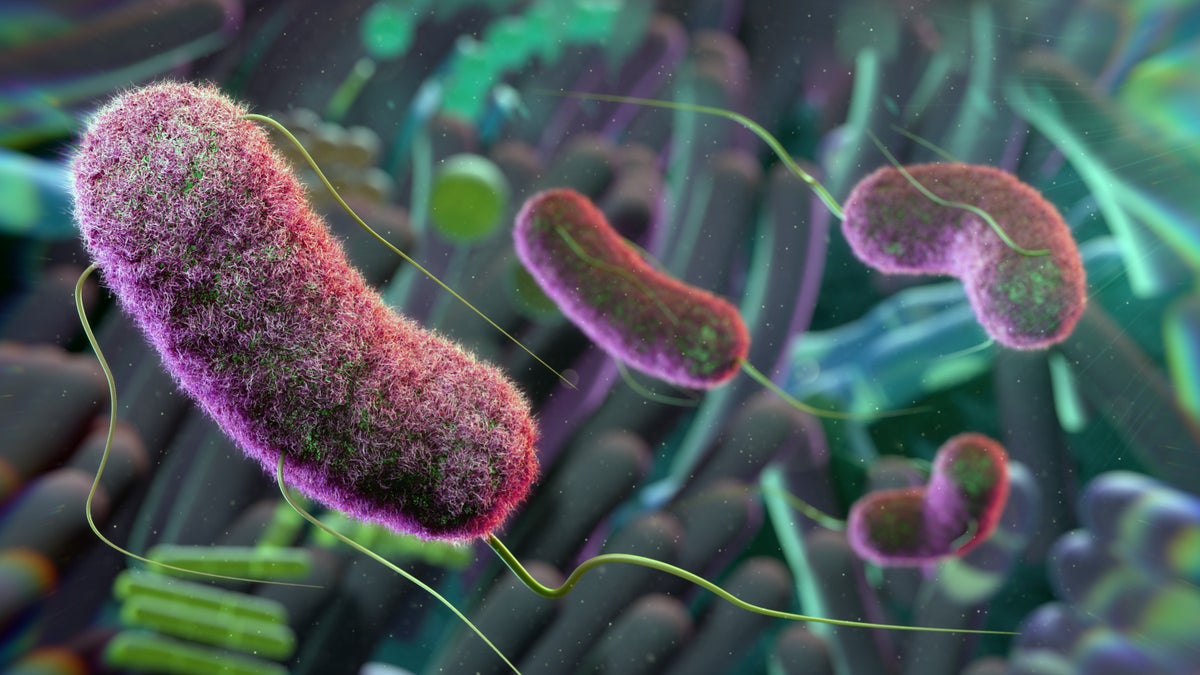
"Young, two-month-old lab mice housed with older, 18-month-old mice showed really impaired cognition. Researchers exposed young mice raised in a sterile, microbe-free environment to gut bacteria from old mice, causing the younger animals to perform worse on cognitive tests, as if they had prematurely aged, just like the cohoused mice."
"When young mice that were housed with older mice were given antibiotics, however, the effect was erased. And older, microbe-free mice still had good memory skills. Taken together, the results suggest that bacteria in the older mice's gut made young mice perform like they had an old brain."
"By sequencing the bacteria found in older mice's feces, the researchers identified a culprit—a species of bacteria called Parabacteroides goldsteinii. When the researchers exposed young mice that were raised in a sterile environment or treated with antibiotics to P. goldsteinii, the mice again performed worse in cognitive tests."
Age-related cognitive decline varies among individuals, with genetics playing a partial role. Research in mice reveals that gut bacteria significantly influence brain aging and memory retention. Young mice exposed to bacteria from older mice showed impaired cognition similar to aged animals. Antibiotics reversed this effect, while older microbe-free mice maintained normal memory. Researchers identified Parabacteroides goldsteinii as the culprit bacterium responsible for cognitive decline. This species triggers inflammation that disrupts the vagus nerve, the communication pathway between brain and gut. The findings suggest gut microbiota composition directly impacts cognitive aging through brain-gut signaling mechanisms.
Read at www.scientificamerican.com
Unable to calculate read time
Collection
[
|
...
]