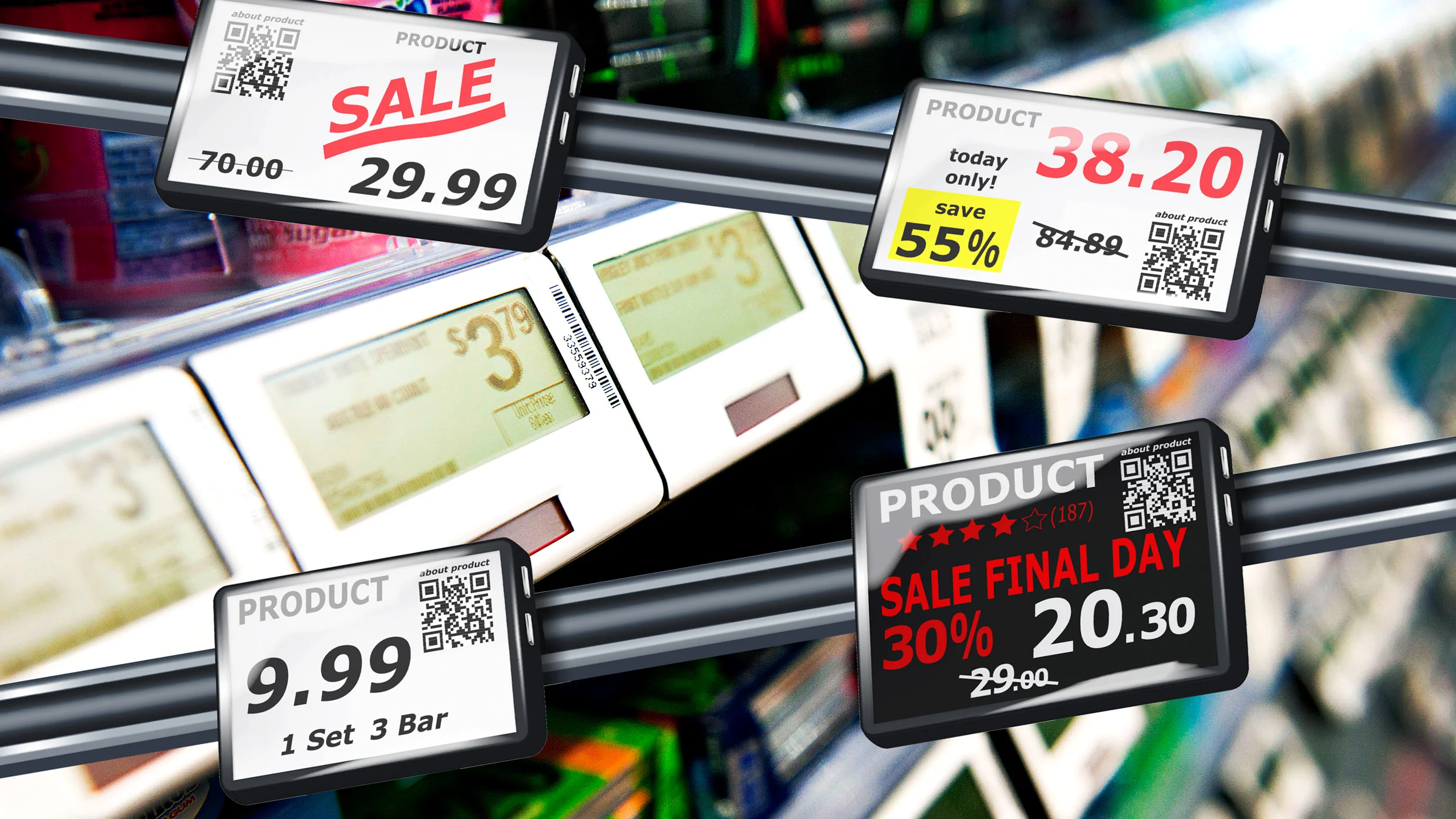
"Perusing the grocery aisle in the Westside Market on 23rd Street in Manhattan, you might not even notice the screens. They look just like paper price labels and, alongside a bar code, use a handwriting-style font we've come to associate with a certain merchant folksiness. They're not particularly bright or showy. The only clues that they're not ordinary sticky shelf labels are a barely distinguishable light bulb and, on some, a small QR code."
"These are electronic shelf labels, chip-enabled screens that some stores are now using to display product prices. Unlike their paper predecessors, the prices aren't printed in ink but rendered in pixels, and they can change instantaneously, at any time. The labels also come with additional features. An LED light can switch on to flag something, perhaps a product that needs restocking, explains Vusion, the company that made the labels Westside Market is now using."
"Of course, these labels aren't just labels, but end-points of a much larger effort to digitize every way we now interface with products. "You have a network in the store. You send the information that you want to transmit to the labels, and there you go," says Finn Wikander, the chief product officer at Pricer, another company that's manufacturing ESLs with the hope of making them a fixture of 21st century shopping."
Electronic shelf labels are chip-enabled screens used to display product prices and update them instantly. The screens resemble paper price labels and use familiar fonts and bar codes to convey a merchantly aesthetic. Some labels include subtle light-bulb icons, LEDs for flagging restocking needs, and QR codes linking to product information or personalized shopping lists. The labels function as endpoints on an in-store network that receives transmitted pricing and status information. Retailers adopt the technology to automate price changes, reduce labor, and react quickly to tariffs and inflation. The rollout has generated consumer anxiety despite vendor assurances.
Read at Fast Company
Unable to calculate read time
Collection
[
|
...
]