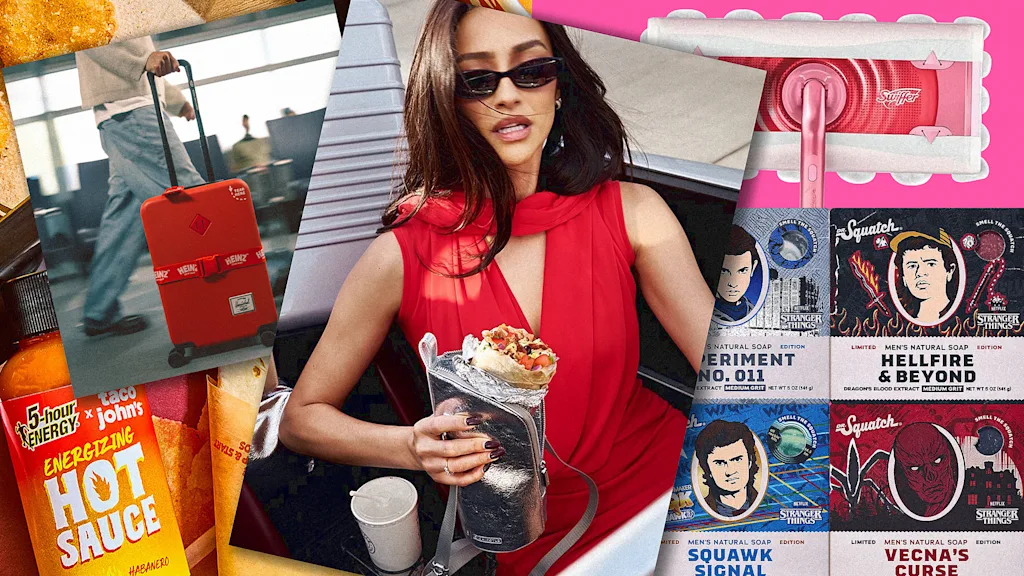
"A few years ago, the art of the brand collab most often involved bringing together two brands that already had overlapping design styles, fanbases, or product categories. Recall partnerships like Nike and Apple's successful 2016 Series 2 Watch launch, for example; or Dolce & Gabbana's elevated designs for Smeg in 2019; or even Lego's 2020 collection with Ikea. All of these pairings make some measure of intuitive sense. But over the past couple of years, something has clearly changed."
"As the online attention economy becomes increasingly saturated through the daily deluge of marketing content on platforms like TikTok and Instagram Reels, it's becoming more and more difficult for brand collabs to make a splash and reach widespread audiences the way they might've in years past. So, brands have started adopting a new tack: rather than selecting partners that make obvious sense within their brand world, they're opting for collabs with the most shock value possible."
Brand collaborations once paired companies with overlapping design styles, fanbases, or product categories, yielding intuitive partnerships like Nike and Apple's 2016 Series 2 Watch, Dolce & Gabbana's Smeg designs in 2019, and Lego's 2020 collection with Ikea. The online attention economy has become saturated by short-form marketing content, making it harder for collaborations to gain broad exposure. As a result, brands increasingly pursue shock-value pairings that prioritize viral surprise over organic fit. The goal often shifts from driving trial to prompting consumers to notice and then return to the original product, producing odd, seemingly random collaborations.
Read at Fast Company
Unable to calculate read time
Collection
[
|
...
]