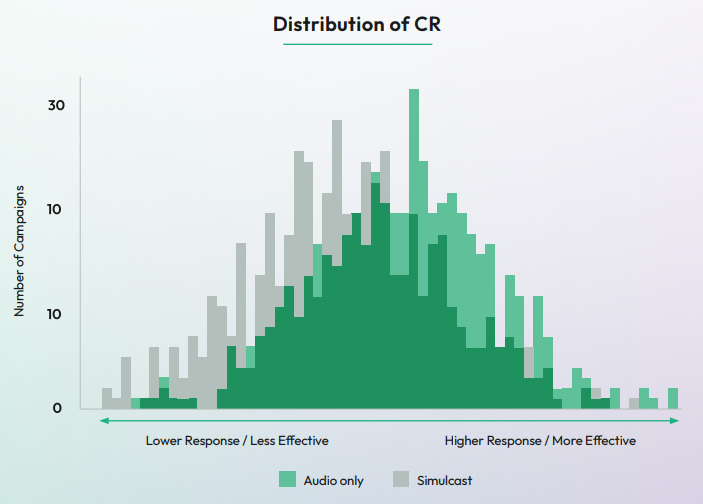
"There's no doubt that YouTube podcasts offer a lot of value for advertisers. Simulcasts can bring scale, reach new audiences, offer supplemental exposure, deliver different kinds of product messaging and integrations, and more. However, this analysis shows at least that video content should not be assumed to be better, and underscores the importance of being mindful about biases in media planning and growth imperatives."
"This work addresses a basic discontinuity of measurement: Audio and video measurement of podcast consumption are not measured the same way. The study asserts that the "widely adopted pixel-measurement approach falls down [in video] because these pixels are not supported on YouTube." Despite the disconnect, some marketers assign all measurement signals with equal legitimacy. That's the mistake this study seeks to reveal and solve."
Audio and video podcast consumption are measured differently, creating a discontinuity in measurement. Pixel-based measurement is widely adopted but is not supported on YouTube, reducing the reliability of video view signals. Simulcasts on YouTube can provide scale, new audiences, and varied product messaging, but video should not be assumed superior to audio. Some marketers treat all measurement signals as equally legitimate despite the disconnect, producing biased media planning. Measured by promo code redemptions and post-purchase survey responses, ads embedded in YouTube views may be 18–25% less effective than ads in audio downloads at driving website purchases.
Read at RAIN News
Unable to calculate read time
Collection
[
|
...
]