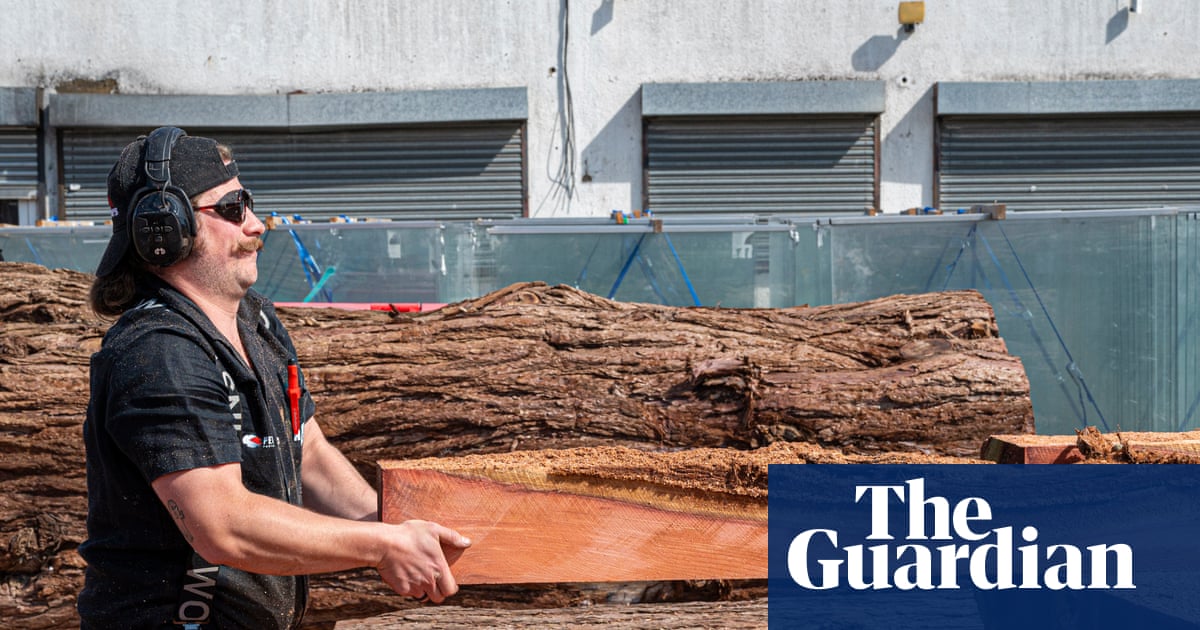
A construction project in south London faced constant tree felling and supply logistics that required sourcing wood from Ashdown Forest despite trees being removed next to the site. The building industry often follows institutional logic shaped by insurance, safety standards, and liability, which limits incentives to reuse materials. Renovating existing buildings and reusing materials is a stated ambition, yet construction produces about 62% of the UK’s waste, with some recycled and much sent to landfill. After this experience, Joel de Mowbray founded Yes Make, converting a milk float into a logging and milling vehicle to process urban trees into local timber. The collective salvaged 12 tonnes of valuable wood from the old Smithfield meat market. Yes Make later partnered with Resolve Collective to supply recycled materials for cultural institutions and with Material for architecture and research.
"He was working on a lovely building project, part of Lambeth council's scheme to make streets more pedestrian-friendly. De Mowbray was installing a public wooden seating area in an underused stretch of street. The council were doing treeworks the entire time we were building, felling trees right next to us, he says. But we had to go to Ashdown Forest for our supplies. That felt bonkers to me: they were creating the exact material we needed next to our site."
"There's what I call street logic you see a tree being felled and have a use for that wood and then there's institutional logic which is dictated by insurance, safety standards and company liability. There's a very rigid system but there's no incentive to change. De Mowbray is different, though. After the south London experience he founded Yes Make, a design collective milling urban trees to provide local timber for building projects."
"The ambition is to renovate existing buildings rather than demolish them and to reuse as much material as possible. Instead, the construction industry produces around 62% of the UK's waste. A lot gets recycled but a lot also ends up in landfill. Everyone with experience of the building industry has similar stories."
"We converted a 1980s electric milk float into a logging vehicle to mill and transport wood. We got a reputation for salvage and were invited to the old Smithfield meat market when the building was stripped. We took away 12 tonnes of mahogany, teak and afromosia that was going in the skip."
Read at www.theguardian.com
Unable to calculate read time
Collection
[
|
...
]