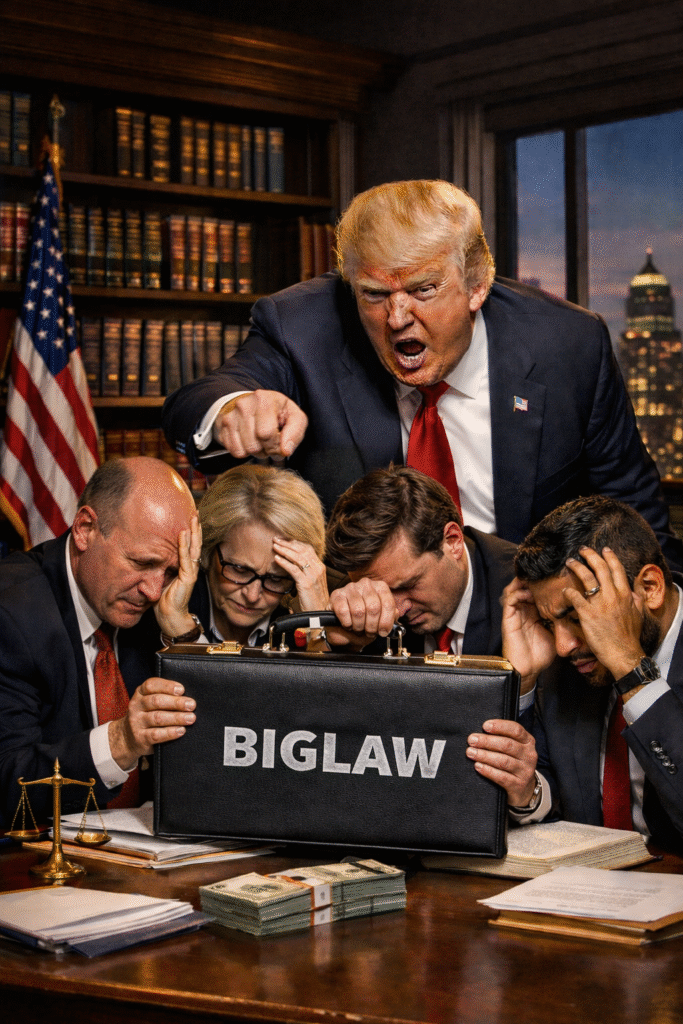
"“Even if it is for improper motives, it is ultimately unreviewable,” Kambli told the court, as reported by Reuters."
"The DOJ's position, as articulated by government attorney Abhishek Kambli before Chief Judge Sri Srinivasan and Judges Cornelia Pillard and Neomi Rao, boiled down to two core claims. First: a law firm's commercial associations, including the lawyers it hires, are not protected by the First Amendment. Second: if the president invokes national security to justify revoking security clearances, the courts have no authority to review that decision, even if the motive is nakedly improper."
"Which brings us to Paul Clement. The four firms that had the actual courage to fight back against Donald Trump's retaliatory executive orders - Perkins Coie, Jenner & Block, WilmerHale, and Susman Godfrey - were repped at the appellate argument by the former Bush Solicitor General who has been in this fight since the beginning, despite his conservative bona fides. He did not leave anything on the table today."
DOJ presented two main positions in consolidated cases involving executive orders. It argued that law firms’ commercial associations, including the lawyers they hire, are not protected by the First Amendment. It also argued that when a president invokes national security to revoke security clearances, courts lack authority to review the decision, even if the motive is improper. The government attorney stated that improper motives do not make the action reviewable. The firms challenging the orders were represented by Paul Clement, who argued against the government’s approach and emphasized the risks of allowing presidential motive-based claims to be insulated from judicial review.
Read at Above the Law
Unable to calculate read time
Collection
[
|
...
]