"Nineteen-year-old Mabel Tanaka has always used nature as a means of calming her volatile emotions, decompressing in the silence of the placid pond near her house with her beloved grandmother by her side. But as Mabel grows from a sullen teen to a young adult, her coping mechanisms fall away one by one. Her parents move away, her grandmother dies, and the pond, the last stable place in her life, is deserted by the wildlife that once gave her so much comfort, and scheduled to be paved over for a new highway."
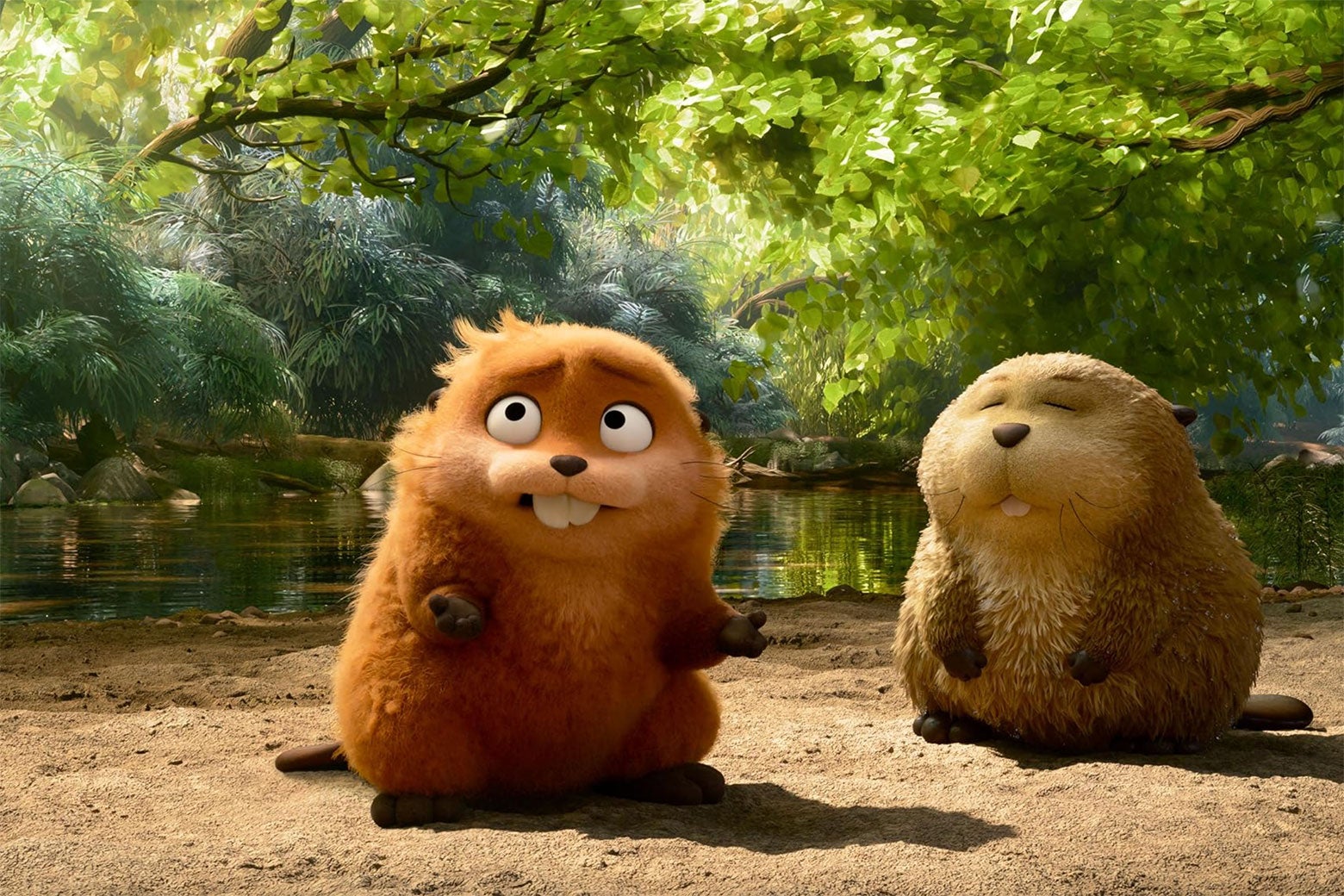
"Through a series of coincidences that the screenplay, by Jesse Andrews, never requires you to take seriously, Mabel discovers that her college biology professor has developed a technology that allows humans to transfer their consciousness into mechanical animals-animals like the beaver, a keystone species whose dams create the ecosystem that other forms of pond life inhabit."
"The world Mabel discovers in her borrowed beaver body is not the peaceful one she'd imagined. True, the animals live in relative peace and harmony. But they're also resigned to aspects of existence that humans spend most of their conscious hours trying to deny."
Hoppers tells the story of Mabel Tanaka, a nineteen-year-old who has relied on nature, particularly a pond near her home, to manage her emotional volatility. After losing her grandmother, her parents relocating, and the pond facing destruction for highway development, Mabel discovers a technology allowing consciousness transfer into mechanical animals. She enters a mechano-beaver to investigate the pond's vanished wildlife and restore the ecosystem. Her journey reveals a natural world far harsher than her idealized memories, where survival involves accepting predation and death as fundamental aspects of existence rather than tragedies to prevent.
#pixar-animation #grief-and-loss #nature-and-ecosystem #consciousness-transfer-technology #coming-of-age
Read at Slate Magazine
Unable to calculate read time
Collection
[
|
...
]