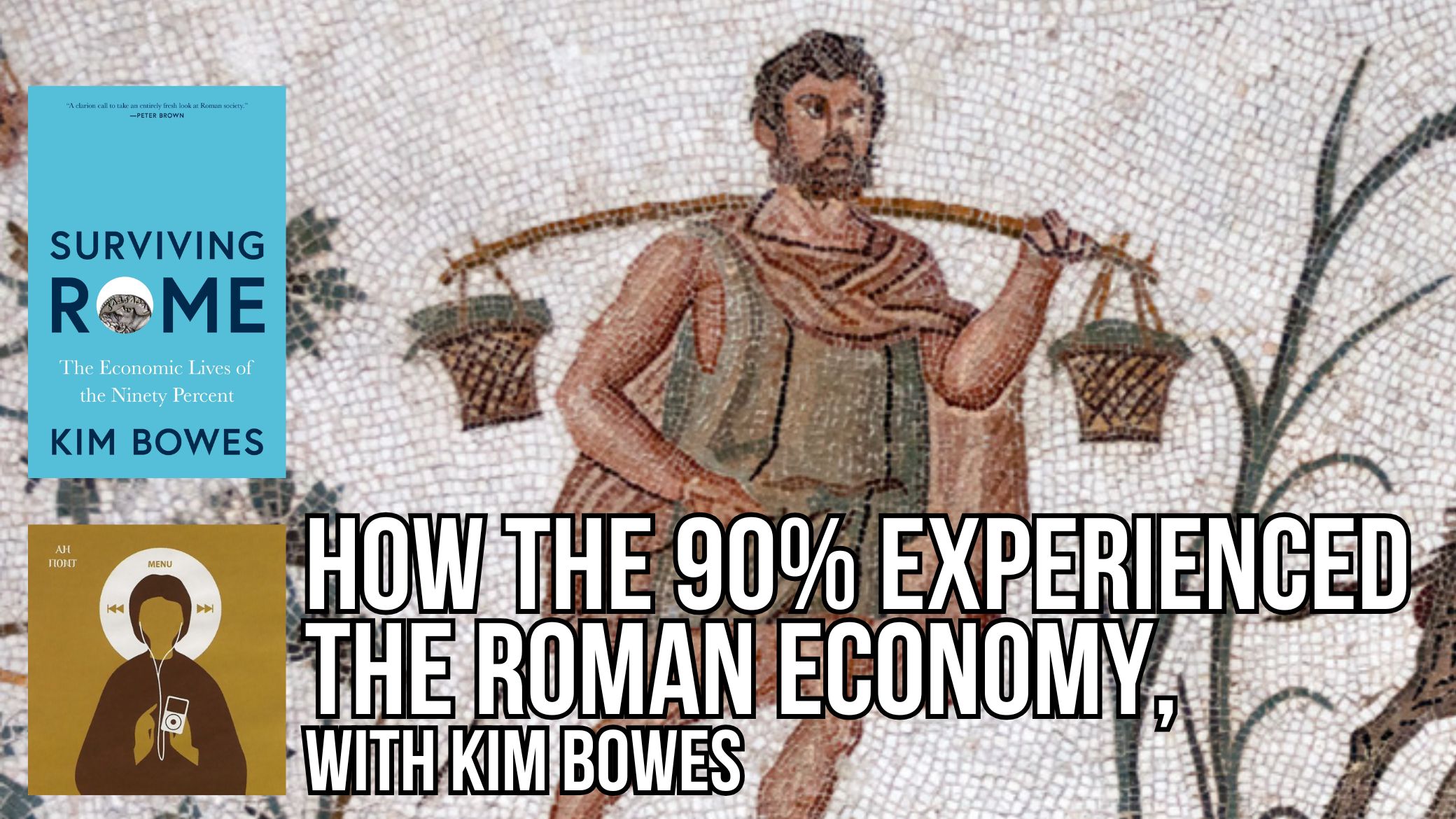
A model of the Roman imperial economy centers on the everyday economic lives of the ninety percent of the population. Skeletal evidence and material culture reveal health, consumption, and labor patterns that varied by class and location. Monetization operated unevenly, shaping access to markets, wages, and credit and influencing household economies. Levels of consumption ranged from modest affluence for some to precarious subsistence for many. Economic experience depended on labor type, regional integration, and resource access, producing layered patterns of vulnerability, resilience, and differential wellbeing across imperial populations.
"A conversation with Kim Bowes about her recent book, Surviving Rome: The Economic Lives of the Ninety Percent, which presents a brilliant new model of the Roman imperial economy, specifically for how the majority of the population experienced it. We talk about the skeletal evidence, monetization, affluence and precariousness, and levels of consumption."
"Top Image: Roman mosaic at the Bardo National Museum. Photo by Jerzystrzelecki / Wikimedia Commons Kim Bowes is professor of archaeology and ancient history at the University of Pennsylvania. Her new book, Surviving Rome: The Economic Lives of the Ninety Percent, is published through Princeton University Press. Byzantium & Friends is hosted by Anthony Kaldellis, a Professor at the University of Chicago."
Read at Medievalists.net
Unable to calculate read time
Collection
[
|
...
]