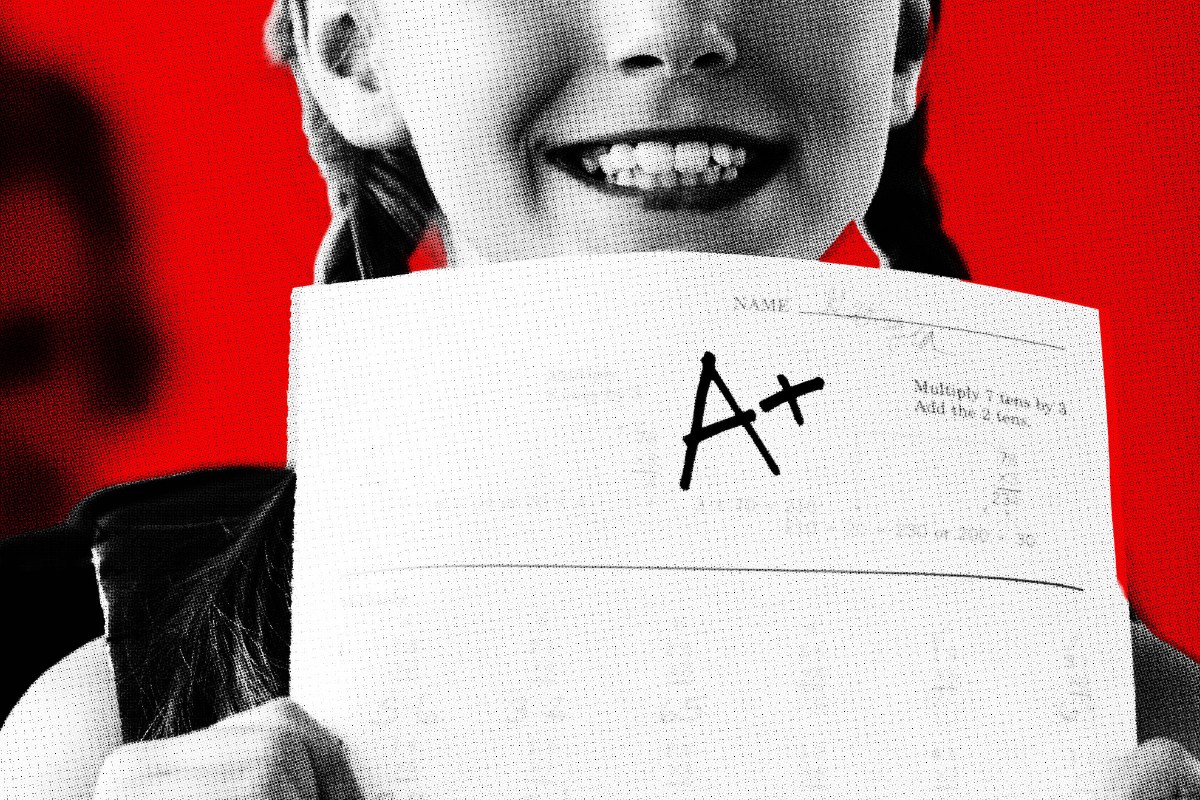
"Today, widely available AI chatbots make cheating on your homework and churning out entire essays easier than ever. If students don't outright ask an AI for answers, then they're asking one for tips and inspiration, or to double-check their work. The result, besides a damaged generation of kids being robbed of their own education? Grade inflation."
"A new study from the University of California, Berkeley found that the percent of A grades in college classes that're "AI exposed," or vulnerable to AI cheating, has shot up by about 30 percent since the release of ChatGPT. The upshot: students are using AI to get better grades, not better their minds."
""As much as AI is helping people become more productive, to produce more, I think it may harm their learning," Igor Chirikov, a senior researcher at UC Berkeley's Center for Studies in Higher Education and the study's sole author, told The Wall Street Journal."
"In the study, Chirikov examined the course syllabi and data on more than 500,000 grades from a university in Texas between 2018 and 2025. He then identified which courses were more vulnerable to AI cheating, which were typically in the humanities and engineering. Before 2023, the first full year of ChatGPT's release, both groups trended about the same. From that year onward, though, the A grades in the AI-exposed group spiked by about four percent."
Widely available AI chatbots make it easier for students to cheat on homework and generate essays. Students may ask AI for answers, tips, inspiration, or ways to double-check work. A UC Berkeley study finds that the share of A grades in college courses vulnerable to AI cheating rose by about 30 percent since ChatGPT’s release. The study links this change to learning harm, with AI helping productivity while potentially reducing learning. Employers respond by raising minimum GPA requirements, placing students who learn without AI at a disadvantage. The study analyzes course syllabi and more than 500,000 grades from a Texas university from 2018 to 2025, identifying AI-exposed courses often in humanities and engineering.
Read at Futurism
Unable to calculate read time
Collection
[
|
...
]