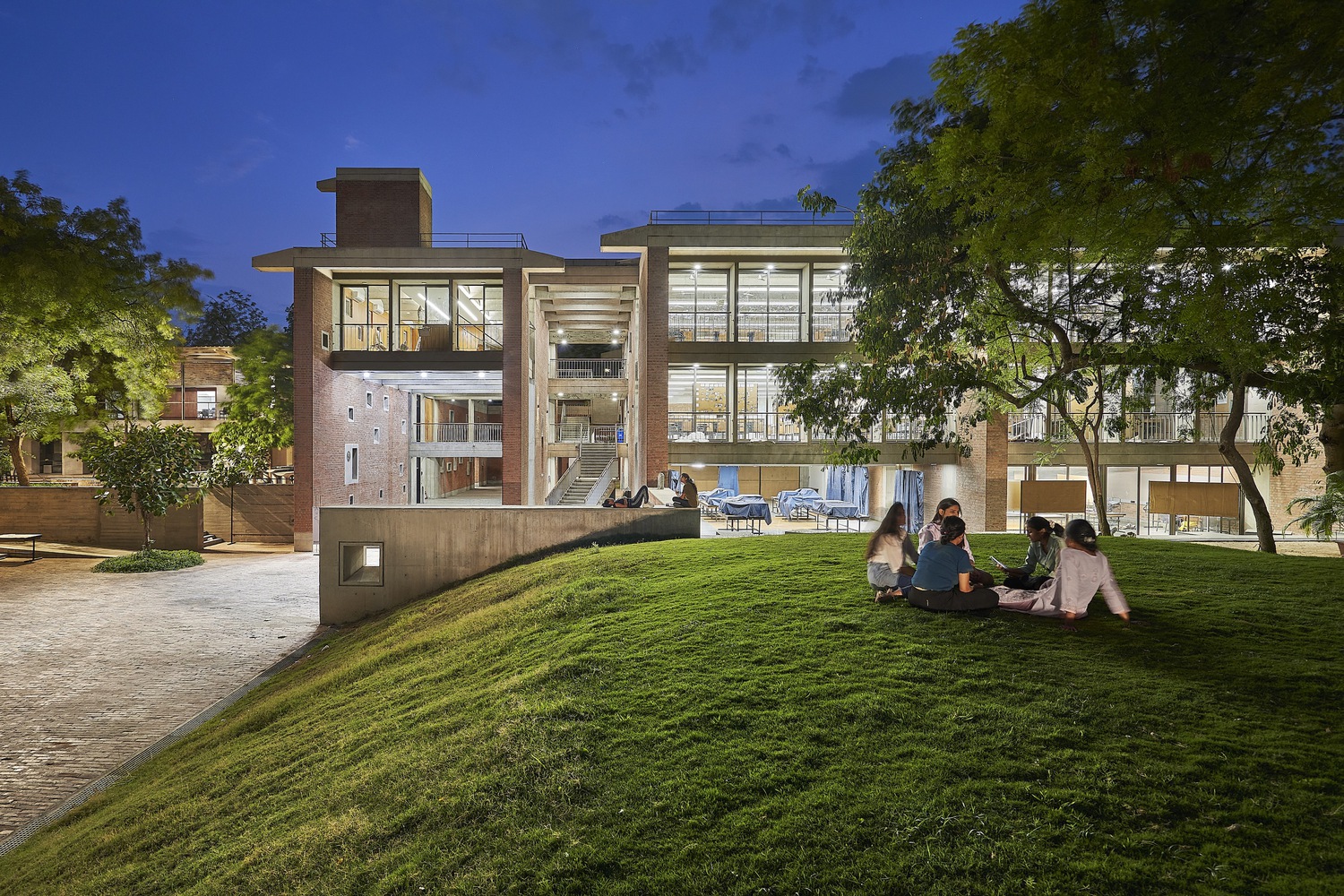
After independence, newly formed nations across South Asia and Africa used universities as major sites for architectural experimentation. Campuses functioned as more than educational institutions, operating as controlled territories where states tested how modernity could be organized for citizens, institutions, and the built environment. Their scale allowed them to work like miniature cities, combining housing, infrastructure, landscapes, circulation systems, and public space. This enabled modernism to be evaluated as an environmental, political, and social system rather than only as a visual style. In India, Chandigarh linked governance, learning, and civic identity through planned institutional sectors. Campuses also educated the bureaucrats and technocrats who carried developmental ambitions into physical form. Climate-driven adaptation reshaped imported modernist assumptions.
"Across South Asia and Africa, newly formed nations turned campuses into testing grounds for entirely new ways of imagining collective life. These campuses functioned as more than educational institutions. They became territories where states tested how modernity might be organized, for citizens to gather, institutions to function, climate to shape architecture, and imported ideas to transform local realities."
"Unlike isolated civic buildings, campuses offered something rare: scale. They operated like miniature cities, containing housing, infrastructure, landscapes, circulation systems, and public space within a controlled framework. For architects working in newly independent nations, this made universities ideal sites for experimentation. Modernism could be tested as an environmental, political, and social system rather than reduced to style."
"When Jawaharlal Nehru described Chandigarh as symbolic of a new nation freed from colonial tradition, he was not only referring to its monumental Capitol Complex. The city's educational and institutional sectors formed part of the same vision: a planned environment where governance, learning, and civic identity could be reorganized through architecture. Universities increasingly operated as extensions of statecraft."
"It was the way they transformed modernism once it encountered climate. Many architects arriving from Europe brought with them the assumptions of the International Style: glass facades, univers"
Read at ArchDaily
Unable to calculate read time
Collection
[
|
...
]