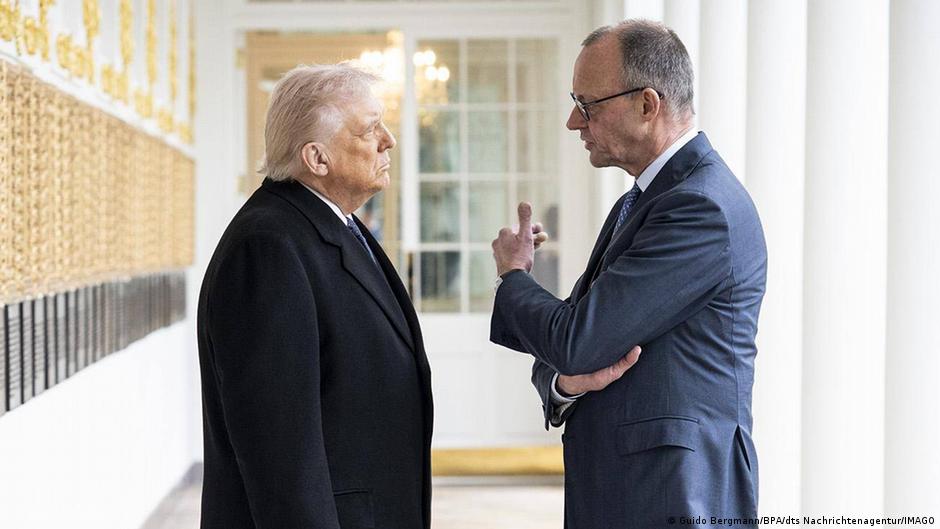
"It is not so much about how the German government really assesses the Israeli-American course of action, rather it is about calming the transatlantic relationship. Above all, Merz did not want to publicly anger or contradict Trump."
"Friedrich Merz is displaying a type of quiet tolerance of Trump's approach. He does not fully approve of it, expresses doubts, but does not condemn it. This is not an entirely new approach."
"In reality, the chancellor arguably has a situational relationship with international law. Following the US attack on Venezuela in January and the abduction of its leader Nicolas Maduro, the chancellor evasively labeled the legal situation 'complicated,' despite this military intervention also being unanimously considered to be against international law."
German Chancellor Friedrich Merz declined to publicly challenge the US-Israeli attack on Iran despite expert consensus that it violated international law. Instead, he characterized the situation as a "dilemma," noting that international legal measures had failed to constrain Iran's leadership. While Merz frequently laments the erosion of multilateralism and rules-based international order in public forums, his actual approach demonstrates selective tolerance of Trump's military interventions. Following similar incidents—including US actions against Venezuela and Israeli strikes on Iranian nuclear facilities—Merz uses ambiguous language like "complicated" rather than direct condemnation. Analysts attribute this pattern to prioritizing transatlantic stability over consistent application of international law principles.
#international-law #us-iran-relations #german-foreign-policy #transatlantic-relations #multilateralism
Read at www.dw.com
Unable to calculate read time
Collection
[
|
...
]