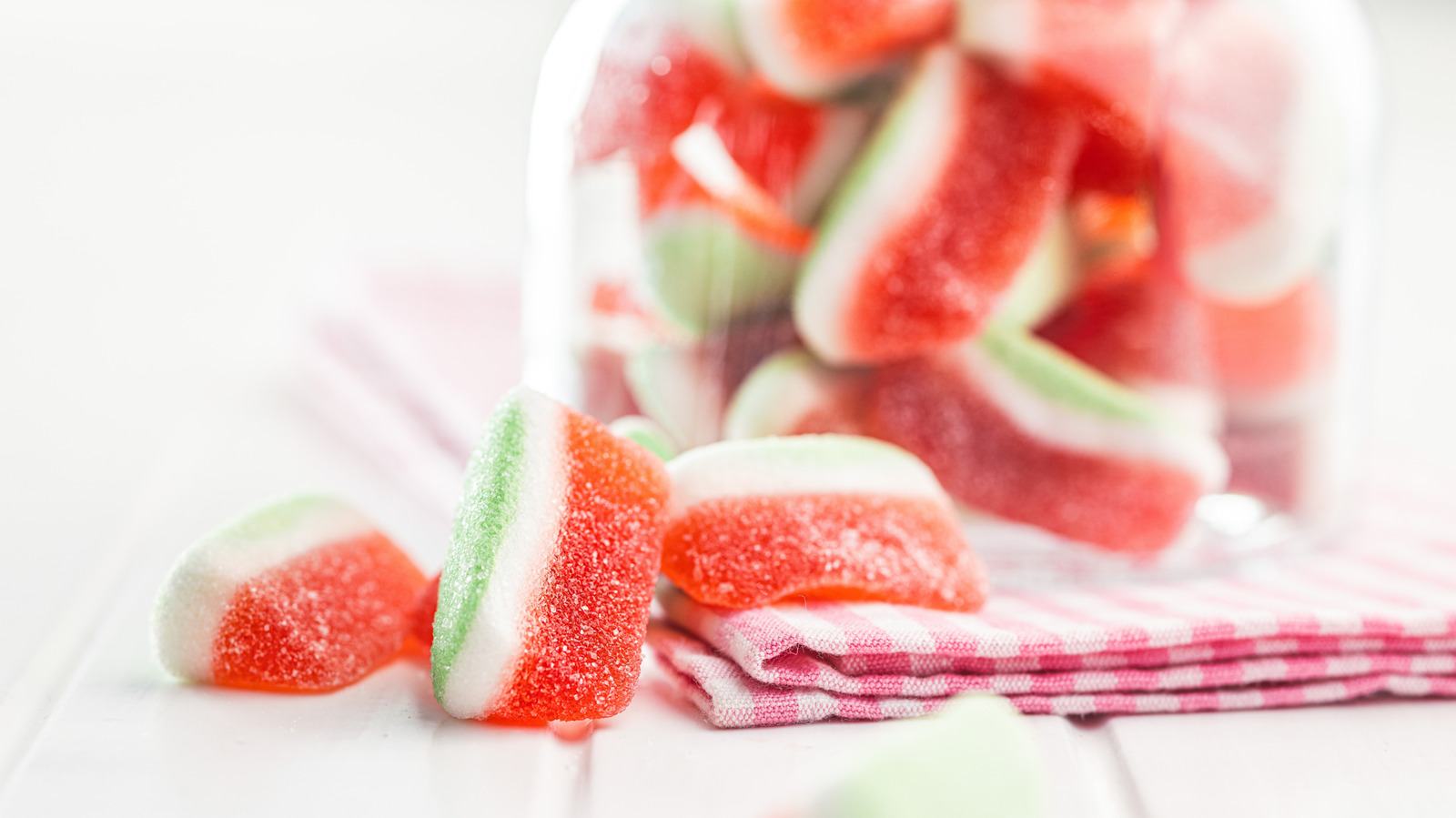
"We've become accustomed to fruit-flavored foods tasting nothing like their fruity counterparts, from artificial banana essence to cherry-flavored things tasting more like medicine than fruit, but what specifically makes artificial watermelon taste so off-base from its authentic fruity muse? Well, it's simply because we don't yet have the capabilities to synthesize watermelon's complex flavor, which includes compounds like (Z)-3-hexenol, citrulline, and amino acids."
"While there has been work done to synthesize watermelon's complex flavor and aroma as much as possible, there are also challenges to getting those compounds to be stable enough to become a food additive. Watermelon aldehyde (seriously, that's its name) is the molecule that scientists have come closest to when trying to mimic watermelon's aroma - but it is not stable enough to be used as an additive."
Real watermelon flavor arises from a complex mix of volatile compounds, amino acids, and molecules such as (Z)-3-hexenol, citrulline, and lycopene breakdown products. Flavor chemists commonly recreate watermelon notes using simpler, stable compounds like ethyl butyrate and artificial sweeteners, producing familiar candy flavors that differ markedly from fresh fruit. Attempts to synthesize authentic watermelon aroma have identified candidates like watermelon aldehyde, but stability and additive-safety issues prevent many natural-like molecules from commercial use. Varietal differences, such as red watermelons producing citral from lycopene and orange types containing beta-carotene, further complicate defining a single 'watermelon' flavor profile.
Read at Tasting Table
Unable to calculate read time
Collection
[
|
...
]