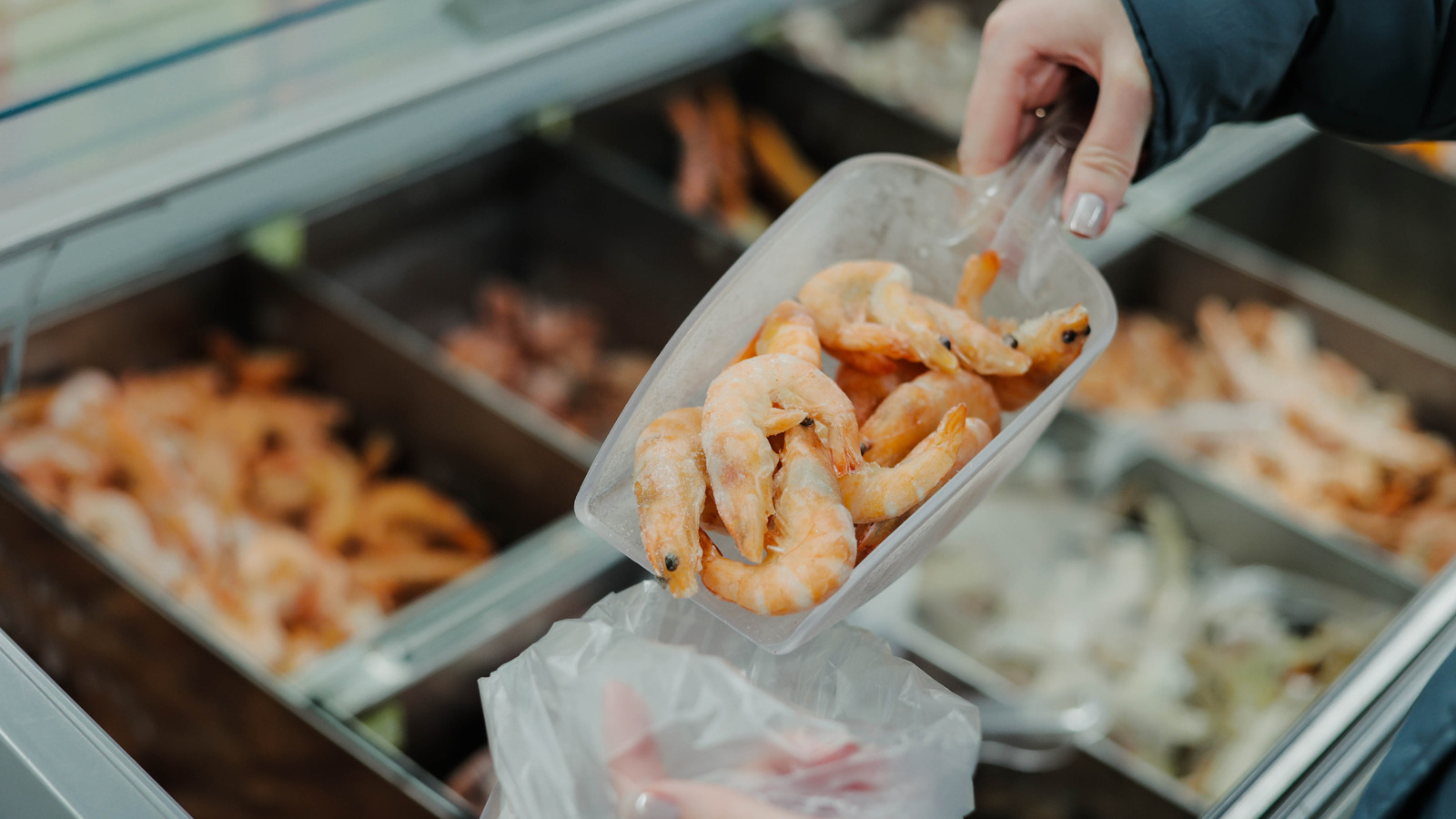
"Seafood spoils faster than land animals, and fresh seafood goes bad more quickly than frozen. To find out why that is, and how you can make sure your seafood is fresh and safe, Tasting Table spoke with Wesley Rose, the Director of Perishables for Whole Foods Market. Rose says that seafood is "more perishable than other animal proteins" primarily due to the difference in "moisture content, enzymes, and fat content in fish" when compared to that of beef, poultry, and pork."
"The ocean is a cold, dark place, and fish (and the bacteria living in and on them) have adapted to survive low temperatures. Your home refrigerator is likely kept at about 37-40 degrees Fahrenheit, which is not cold enough to sufficiently inhibit bacterial growth in seafood. As soon as a fish dies, oxygen, bacteria, and enzymes will begin degrading the fats and proteins in the fish."
"To safely keep seafood in the fridge so it stays fresh for as long as possible, Rose recommends, "storing seafood in an airtight container in the cold part of the fridge, typically the bottom shelf against the back wall is the best spot for seafood to stay fresh.""
Seafood spoils more quickly than land animal proteins because fish have higher moisture, different enzyme activity, and different fat composition. Cold-adapted bacteria that live on fish continue to grow at typical refrigerator temperatures of 37–40°F, so household fridges may not sufficiently inhibit bacterial growth. Spoilage begins immediately after death as oxygen, bacteria, and enzymes degrade fats and proteins, producing foul odors and increasing foodborne illness risk. Store-bought seafood is often already several days old and loses longevity once purchased. Store seafood in an airtight container in the coldest part of the fridge or keep it on ice to maximize freshness.
Read at Tasting Table
Unable to calculate read time
Collection
[
|
...
]