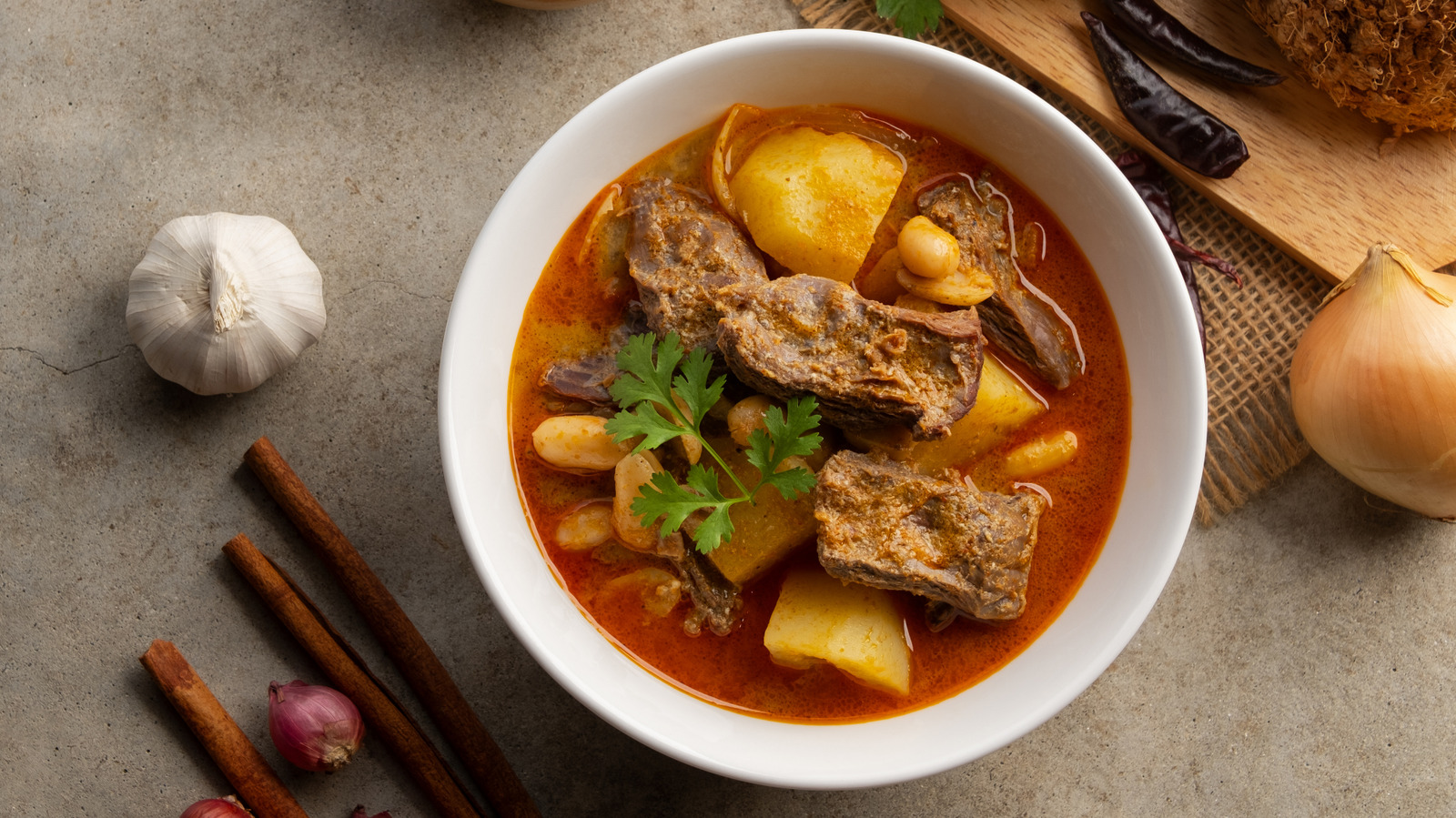
"Curry is something of a paradox. It's a word that was born of misunderstanding between cultures, and yet it has come to name and define dishes all around the world. Indian and Thai dishes are often labeled as curries, but so too are dishes from Japan, the Caribbean, and everywhere in between. To understand the differences between Thai and Indian curries, as well as all of the other types of curry the world over, we must start with the history."
"Before colonizers arrived in South Asia, there was no such thing as curry. Some of the modern dishes that we think of as curry already existed - saag has been around for several millenia at least - but they were known by the specific names of each dish. There was no broad category of "curry" within which to lump them. That came about from colonizers misunderstanding the meaning of the Tamil word "kari.""
"In short, "kari" means "black" in Tamil, but the word was likely being used to describe a saucy dish stewed with spicy black pepper. A lack of understanding of the language both changed the form of the word, with the Brits turning it into "curry," and led to that term being used to describe all manner of South Asian dishes that were made with a spicy sauce. With the loose origins of the term "curry" in mind, it becomes easier to see how it came to describe such a wide variety of foods in so many cuisines."
Curries began as specific regional dishes with distinct names rather than a single category. Colonial contact transformed the Tamil word "kari" into the English term "curry" and applied that label broadly to saucy, spiced South Asian preparations. That renaming created a convenient but imprecise category that obscured original dish identities. The loose origin of the term allowed it to expand beyond South Asia and to be used for a wide variety of global dishes, including Indian, Thai, Japanese, and Caribbean preparations, despite their differing ingredients and traditions.
Read at Tasting Table
Unable to calculate read time
Collection
[
|
...
]