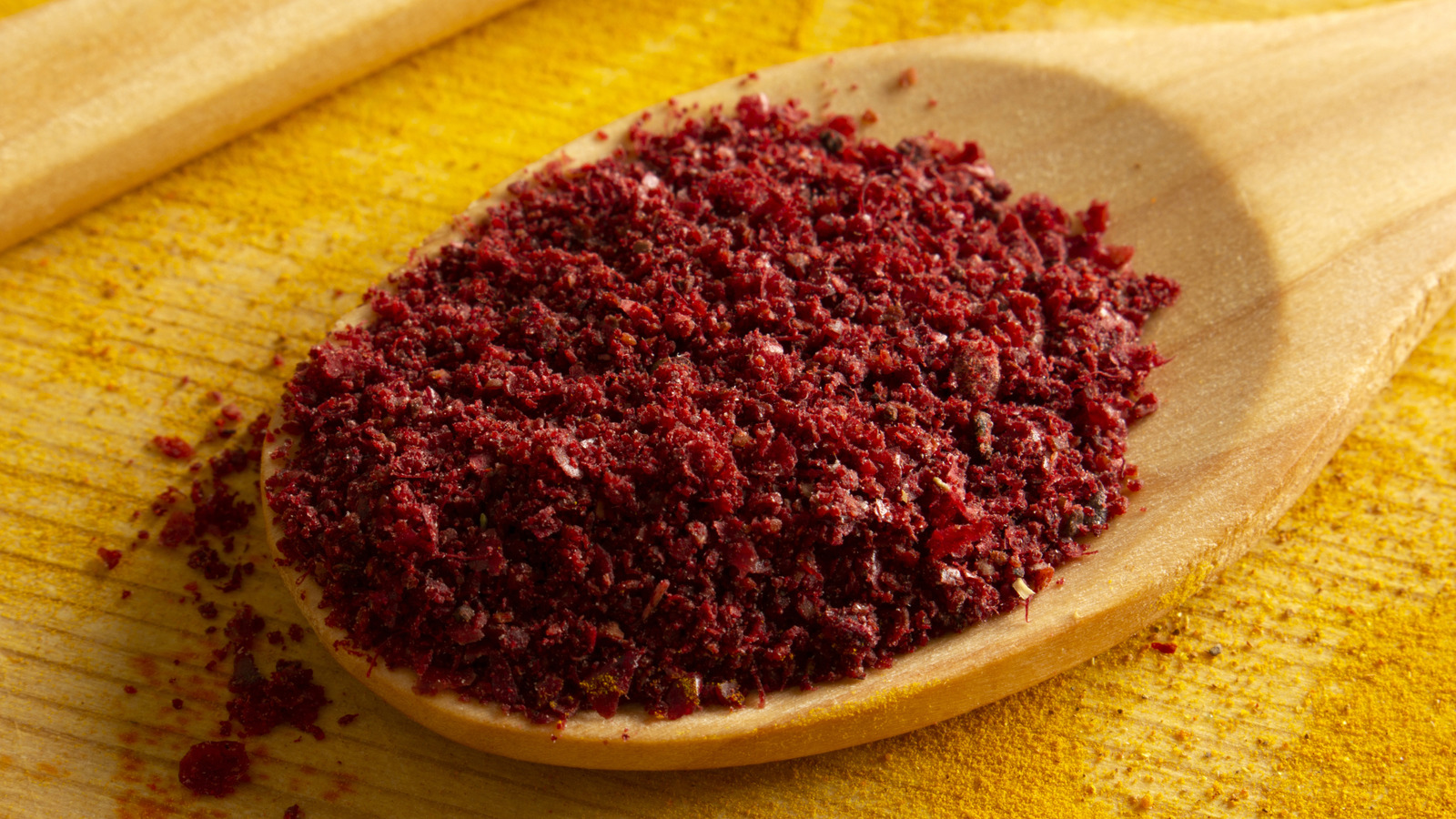
"If you've ever ordered a kebab and found that it came sprinkled with a red powder that tasted bright and tangy - almost like lemon - then chances are you've had sumac (Rhus copallina, R. glabra, R. typhina) before. This spice is made from the dried berries of a tree that's commonly found in parts of Western Asia and the Mediterranean, and it can liven up a wide variety of dishes, from the aforementioned kebab to simple salads that need a pop of flavor."
"If you see a recipe that calls for sumac, chances are good that it requires dried, not fresh, sumac. In the United States, you're not likely to find fresh sumac berries at the grocery store anyway. That being said, there is a type of sumac that grows in North America, and the berries can sometimes be used to make "sumac-ade," a tangy drink similar to lemonade. To get your hands on those berries, though, you'll likely have to locate an actual sumac tree."
"Dried, ground sumac is much more common and therefore easier to find. It's similarly tangy and fresh to its fresh counterpart, but it can take on different flavors depending on what it's mixed with. In Palestine, "ballady" sumac is dried, ground sumac that's pure, not combined with other ingredients. This variety tends to be pricier than its flour-enhanced counterparts, but the flavor is much stronger and more pronounced."
Sumac is a spice made from the dried berries of several Rhus species, including R. copallina, R. glabra, and R. typhina. The spice offers a bold, tangy, lemon-like flavor that brightens kebabs, salads, and many other dishes. Fresh sumac berries are uncommon in U.S. grocery stores, though a North American variety can be used to make a tart drink called sumac-ade. Dried, ground sumac is widely available and varies in intensity depending on processing. Palestinian ballady sumac is pure, stronger, and pricier than flour-extended blends. Pure sumac provides a pronounced acidity and aromatic complexity.
Read at Tasting Table
Unable to calculate read time
Collection
[
|
...
]