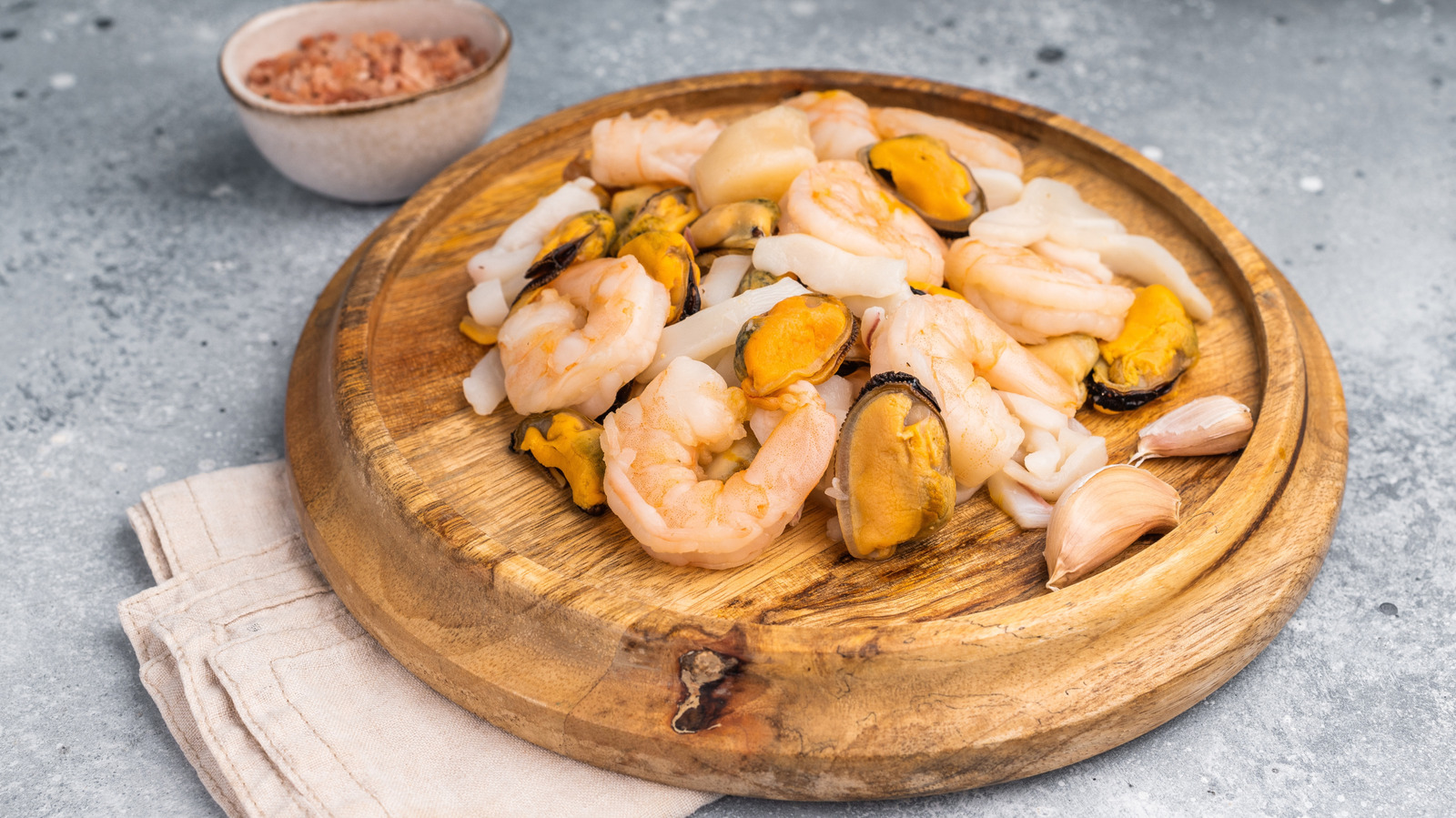
"'A lot of people will typically just either put a fish on a plate and Saran-wrap it ... or they'll just Saran-wrap the fish,' Le explains. 'What I like to do is wrap my fish in a paper towel; it absorbs all the moisture.' Le adds that the moisture released by the fish will start to degrade it over time."
"When seafood is frozen, its moisture solidifies into ice crystals, which can melt and release moisture with any temperature fluctuations. That moisture can then freeze back up and create more ice, damaging the fish's cell walls and changing its structure. Seafood that's been exposed to that much moisture can therefore take on a soggy, unappealing texture. 'If you wrap it [in a paper towel],' Le notes, 'it helps preserve it a little bit.' After that, use Saran Wrap to seal it further."
Paper towels absorb moisture released by fish and reduce freezer-induced damage when wrapped around seafood prior to sealing. Freezing converts moisture into ice crystals that can melt and refreeze during temperature fluctuations, creating additional ice that damages cell walls and alters texture. Removing air from a freezer bag minimizes oxygen exposure, which can harm flavor and increase bacterial risk. Vacuum sealing is ideal but unnecessary; using a paper towel, tight plastic wrap, and a well-sealed freezer bag provides practical preservation. Properly stored seafood can maintain peak freshness for about four to six months, depending on the fish type.
Read at Tasting Table
Unable to calculate read time
Collection
[
|
...
]